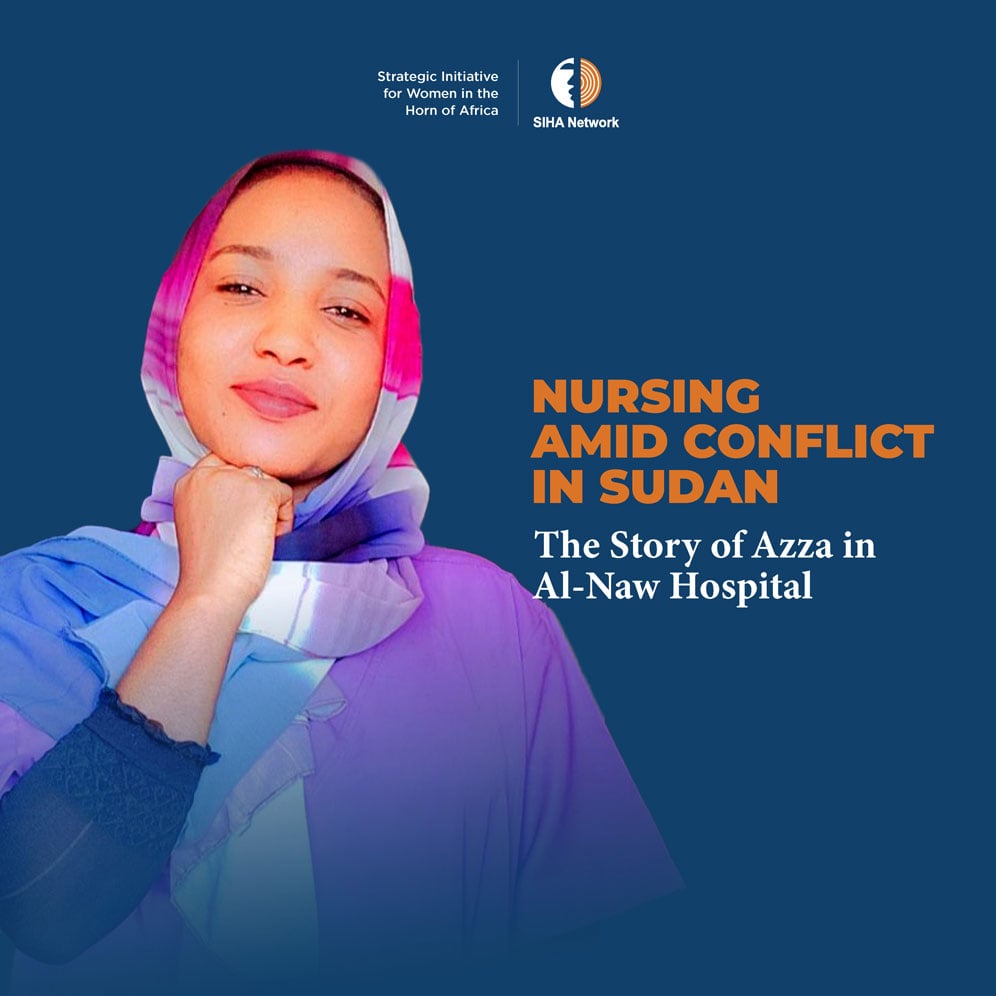
Nursing Amid Conflict in Sudan: The Story of Azza in Al-Naw Hospital

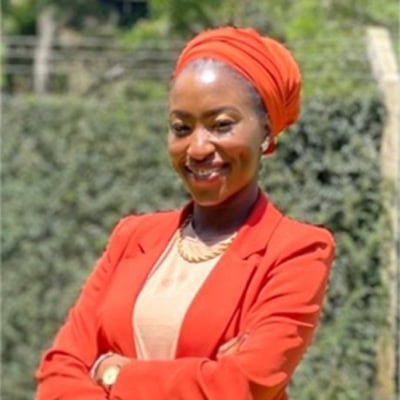
Azza Abdullah is a 29-year old nurse from Omdurman. She worked at Al-Naw hospital for a few months during the early days of the war, in Khartoum State. 

This is her story 

When the war began on April 15, 2023, Azza Abdullah had previously been working at a hospital in Omdurman, however, within the first week of fighting, Al-Naw Hospital was overwhelmed with those in critical condition and issued an urgent notice calling for doctors, nurses and other medical professionals to volunteer their services to the hospital. Azza did not hesitate and took immediate steps to support.  

Within a few months, Al-Naw became the only major functioning hospital in all of Khartoum State. As reported by the World Health Organization (WHO), in the first ten (10) months of the war, 70% of medical facilities were inoperable or beyond the reach of communities. Health care professionals were also targeted with kidnaping, death and intimidation as millions fled Khartoum, the epicenter of the war, searching for safety. 

Largely operated by volunteers from the area and receiving some support through crowd-sourcing and international organizations, Al-Naw Hospital became a beacon for hope amid conflict and destruction. This was made possible because of people like Azza who worked hard amid turmoil, daily bombardment and even during a direct artillery attack fired at the Hospital. 

My first time entering Al-Naw was during the war. It was very difficult. Many times, it was impossible to go home so I would just stay in the hospital. There was also ongoing fighting. In the first month, I also treated [Rapid Support Force] RSF soldiers. We have an oath so we treat everyone,” Azza recalled. 

Powered by Volunteers  

After the initial shock of the hostilities, people in the area quickly ensembled as a united front and began to organize themselves in service to the community. Volunteers became critically important in the hospital. Azza believes that this collective and very communal effort held the hospital together during the most difficult times. 

They [the volunteers] provided transport for us to make sure we got home at times of insecurity and lack of fuel, they did everything from cleaning the hospital to transporting oxygen for patients.” Azza recollected.  

She also added, “Al-Naw was driven by the community. In the beginning, there was no food available. The youth from the surrounding neighborhoods would bring food …to us. They would even make food for us in the houses around the hospital. This food was for the nurses and even the patients.” 

Working at Al-Naw Hospital during this exceptionally dark time was not easy, but Azza continued to show up to meet this challenge daily.  

The biggest challenge we faced in the early days was the lack of oxygen tanks. The patients were in desperate need and we would literally wait for people to die because it was unavailable. In the first days, people died due to shock and not just gunshots … fatality was very high. When they hear the fighting, they get scared. I remember one woman, [who] heard the fighting …she fell in the bathroom, broke her leg and entered into a diabetic coma. She died when she couldn’t get oxygen. The cases that needed surgical interventions were better than those needing oxygen,” Azza detailed.  

Azza shared her shock, remembering when a member of the Hospital’s operational staff came to open the accounting office during those early days. “I remember telling her, look you can’t charge people now, we are here as volunteers so we are not making money, not only that but we [need to] raise funds to buy medicine for those with chronic diseases.”  

Witnessing the War from Within 

Working under pressure is something that Azza is used to, but working under constant bombardment and siege is exceptionally difficult to endure. Although the war never officially reached Karari where Al-Naw Hospital is located, the drone strikes were endless and the Hospital was overwhelmed with patients from the frontline.  

According to Azza, “We worked when there was fighting and the sounds were very loud. I also remember the pressure we faced because our hospital also accepted some military patients even though it’s a civilian hospital. The military patients wanted priority and we would be intimidated. We were also accused of treating RSF soldiers. So it was a lot of tension. Our ability to move between the hospital and our homes was also challenged. We had to use dark streets and many times, we would be stopped at checkpoints – soldiers looked at us with suspicion.”  

Azza kept going because she believed that the work she did was needed. She also received immeasurable support from her family who would make sure she was safe. Sometimes they would even send food with her to the Hospital.   

The majority of the volunteers in the hospital were [women], they did a lot. I felt that the female volunteers were more than the male volunteers. The staff was also majority female. The female volunteers, mostly from the 8th neighborhood where the hospital lies, engaged in significant free labour to make the hospital a better environment,” Azza recalled in admiration.  

Together, Azza and the rest of the volunteers bravely took on the most heart retching cases.  

One of the volunteers at the hospital … literally slept at the hospital and [he] never went home [which allowed him] to continue taking care of people. A bomb fell on his family’s home and he brought [his family] to the hospital. They were all injured, it was very sad. [In] another case, I was working and then saw a friend of mine, she was in her wedding toub, the red Jirtik toub and I asked her why she was here … she said that her father fell sick and he had a heart condition. We tried our best because the entire hospital was occupied by the newly-weds. In the end, he [her father] passed away. We were all touched, even the patients,” recalled Abdullah.  

A Call to Action: The Critical Need for Better Healthcare Remains  

Working in Khartoum State during the war and later in Sinja, Sennar State exposed Azza to how compromised the health care system in Sudan is.  

I wish I could become a minister to make it better. We need to work on … infrastructure such as the sewage system. We need a better culture and to build awareness to ensure that we don’t have ongoing pandemics which I believe is a constant problem [causing] stress to our healthcare system and to … communities,” Azza observed.  

In addition to her professional work, Azza also opened a Takia or a community kitchen in Sinja. When it ran, the Takia provided food, sanitary pads, dignity kits and a safe space for women and girls to meet and organize.  

We had a lot of displaced in Sinja, but now many of them have returned and for this reason, my Takia came to an end. In its place, I organize monthly food baskets for families still in the area,” Azza explained.  

Ultimately, Azza’s story illustrates the power of volunteerism and the critical impact that is created when individuals open their hands and hearts towards serving the community at pivotal times of need. 

Note: SIHA Network gave Azza Abdullah two (2) small grants to support her Takia or community kitchen.  
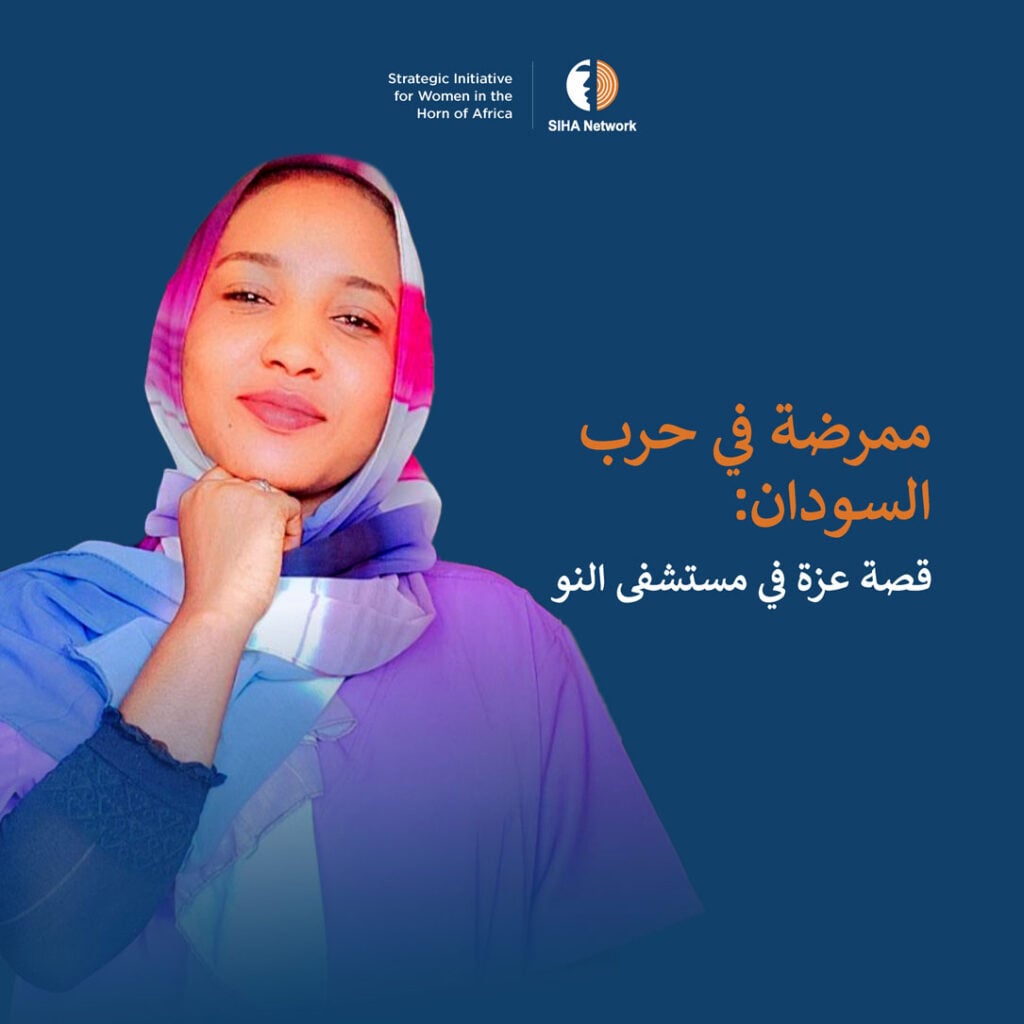
 

ممرضة في زمن الحرب في السودان: قصة عزة في مستشفى النو

عزة عبد الله ممرضة تبلغ من العمر ٢٩ عامًا، من أم درمان. عملت في مستشفى النو لعدة أشهر خلال الفترة الأولى للحرب في ولاية الخرطوم.

هذه قصتها.

عندما اندلعت الحرب في ١٥ أبريل ٢٠٢٣، كانت عزة عبد الله تعمل في أحد مستشفيات أم درمان، إلا أنه خلال الأسبوع الأول من القتال امتلأ مستشفى النّو بالمصابين في حالات حرجة مما دفع فريق مستشفى النو لإطلاق نداء عاجل يدعو الأطباء والممرضين وغيرهم من العاملين والعاملات في المجال الطبي إلى التطوع في المستشفى. لم تتردد عزة في تقديم الدعم وتطوّعت فورًا.

وخلال بضعة أشهر، أصبح  النو هو المستشفى الكبير الوحيد العامل في ولاية الخرطوم بأكملها. ووفقًا لمنظّمة الصحّة العالمية  فقد أصبحت ٧٠٪ من المرافق الطبيّة غير قابلة للتشغيل أو خارج نطاق وصول المجتمعات خلال الأشهر العشرة الأولى من الحرب. كما تعرّض العاملون في القطاع الصحي للاستهداف عبر الاختطاف والقتل والترويع، في وقتٍ فرّ فيه الملايين من الخرطوم، بؤرة الصراع، بحثًا عن الأمان. 

اعتمد المستشفى إلى حدٍّ كبير على المتطوعين والمتطوعات من المنطقة، مع تلقيه بعض الدعم عبر التمويل الجماعي ودعم المنظمات الدولية، ليتحوّل إلى منارة أمل وسط الحرب والدمار. ولم يكن ذلك ممكنًا لولا أشخاص مثل عزة، ممن واصلوا العمل وسط الاضطراب، والقصف اليومي، وحتى خلال تعرّض المستشفى للقصف المدفعي المباشر. 

تقول عزة: «كانت تلك المرة الأولى التي أدخل فيها مستشفى النو خلال الحرب. لقد كان الأمر صعبًا جدًا. وفي كثير من الأحيان، كان من المستحيل العودة إلى المنزل؛ لذلك كنت أبقى في المستشفى. وكانت هناك اشتباكات مستمرة. وفي الشهر الأول، عالجت جنود قوات الدعم السريع أيضًا. لدينا قسم طبي مهني يفرض علينا تقديم الرعاية للجميع.»

جهود جماعية يقودها المتطوعون والمتطوعات

بعد الصدمة الأولى للاشتباكات، سارع سكان المنطقة إلى التكاتف وتنظيم أنفسهم. وأصبح المتطوعون والمتطوعات عنصرًا بالغ الأهمية في عمل المستشفى. وترى عزة أنّ هذا الجهد الجماعي، القائم على روح المجتمع، هو ما حافظ على تماسك المستشفى في أصعب اللحظات.

تستعيد عزة ذكرياتها قائلة: «كان المتطوعون والمتطوعات يوفّرون لنا وسائل نقل لضمان عودتنا إلى منازلنا في أوقات انعدام الأمن وشحّ الوقود. كانوا يقومون بكل شيء، من تنظيف المستشفى إلى نقل أسطوانات الأكسجين للمرضى».

وتضيف: «كان مستشفى النو مدفوعًا بالعمل المجتمعي. في البداية لم يكن هناك طعام. وكان الشباب من الأحياء المجاورة يجلبون لنا الطعام، بل وكان بعضهم يطهو لنا في البيوت المحيطة بالمستشفى. وكان هذا الطعام للممرضات، وحتى للمرضى».

لم يكن العمل في مستشفى النو خلال تلك الفترة القاتمة أمرًا سهلًا، لكن عزة واصلت العمل يومًا بعد يوم لمواجهة هذا الواقع.

 «أكبر تحدٍّ واجهناه في الأيام الأولى كان النقص الحاد في أسطوانات الأكسجين. كان المرضى في حاجة ماسة إليها، وكنا للأسف الشديد نتوقع أن يفارق بعضهم الحياة بسبب عدم توفرها. في الأيام الأولى، لم يكن الموت نتيجة طلقات الرصاص فقط، بل نتيجة الصدمة أيضًا، وكانت معدلات الوفيات مرتفعة جدًا. عندما يسمع الناس صوت الاشتباكات، ينتابهم خوف شديد. أتذكّر امرأة سمعت إطلاق النار، فسقطت في الحمّام، وكسرت ساقها، ودخلت في غيبوبة سكّر. وقد توفيت لأنها لم تتمكن من الحصول على الأكسجين. وكانت الحالات التي تحتاج إلى تدخل جراحي أفضل حالًا من تلك التي تحتاج إلى الأكسجين،» تروي عزة.

كما تستذكر عزة صدمتها حين جاءت إحدى العاملات في الطاقم الإداري للمستشفى لفتح مكتب الحسابات خلال تلك الأيام الأولى. وتقول: «أتذكر أنني قلت لها: لا يمكنك تحصيل أي رسوم من الناس في هذه الظروف. نحن نعمل هنا كمتطوعين، ولا نحصل على أي مقابل. بل على العكس، كنا نحاول جمع التبرعات لشراء الأدوية للمرضى المصابين بأمراض مزمنة».

مشاهدة الحرب عن قرب

اعتادت عزة العمل تحت الضغط، أمّا العمل تحت القصف المستمر والحصار كان أمرًا بالغ القسوة. فعلى الرغم من أنّ الحرب لم تصل رسميًا إلى منطقة كرري، حيث يقع مستشفى النو، إلا أنّ القصف الجوي باستخدام الطائرات المسيرة لم يتوقف، وكان المستشفى يستقبل أعدادًا هائلة من المرضى القادمين من مناطق الاشتباكات في الولاية.

تقول عزة: «كنا نعمل في أوقات الاشتباكات، وكانت الأصوات عالية جدًا. وأتذكّر الضغط الكبير الذي واجهناه لأن مستشفانا، رغم كونه مستشفى مدنيًا، استقبل بعض المرضى العسكريين. وكانوا يطالبون بأن تكون الأولوية لهم، وكنا نتعرض للتهديد والترهيب. كما اتُّهمنا بعلاج جنود الدعم السريع. لذلك كان التوتر حاضرًا بشكل دائم. وحتى تنقّلنا بين المستشفى ومنازلنا كان بالغ الصعوبة؛ كنا نضطر إلى استخدام شوارع مظلمة، وكثيرًا ما أُوقفنا عند نقاط التفتيش، حيث كان الجنود ينظرون إلينا بريبة».

استمرت عزة في عملها لأنها كانت تؤمن أنّ العمل الذي تقوم به جوهريّ، كما وجدت المساندة من أسرتها، التي كانت حريصة على الاطمئنان عليها وضمان سلامتها، وأحيانًا كانت ترسل معها الطعام إلى المستشفى.

وتستعيد عزة بإعجابٍ قائلةً: «كانت الغالبية العظمى من المتطوعين في المستشفى من النساء والفتيات. لقد قدّمن الكثير. شعرت بأن عدد المتطوعات كان أكبر من عدد المتطوعين، وكذلك كان معظم الطاقم من النساء. فالمتطوعات، ومعظمهن من الحارة الثامنة حيث يقع المستشفى، قمن بعمل تطوعي واسع ودون مقابل، من أجل جعل بيئة المستشفى أفضل».

سويًا، واجهت عزة وبقية المتطوعين والمتطوعات أصعب الحالات وأكثرها إيلامًا.

تروي قائلة: «أحد المتطوعين كان ينام في المستشفى ولم يعد إلى منزله قط، حتى يتمكن من مواصلة تقديم الرعاية للمرضى. سقطت قنبلة على منزل عائلته فأحضرهم إلى المستشفى. كانوا جميعًا مصابين، وكان المشهد مؤلمًا للغاية. وفي حالة أخرى، بينما كنت أعمل، رأيت إحدى صديقاتي تدخل المستشفى وهي ترتدي ثوب زفافها، ثوب الجرتك الأحمر. سألتها لماذا هي هنا، فأخبرتني أن والدها مريض ويعاني من مشكلة في القلب. بذلنا قصارى جهدنا، لكن المستشفى كان مكتظًا، وفي النهاية وافته المنيّة. تأثرنا جميعًا، حتى المرضى.»

نداء للتحرّك: الحاجة الملحّة إلى تحسين الرعاية الصحية

كشف عمل عزة في ولاية الخرطوم خلال الحرب، ثم لاحقًا في سنجة بولاية سنّار، مدى هشاشة نظام الرعاية الصحية في السودان.

تقول عزة: «أتمنى لو أستطيع أن أصبح وزيرة لأُسهم في تحسين هذا الوضع. نحن بحاجة إلى العمل على البنية التحتية، مثل أنظمة الصرف الصحي. كما نحتاج إلى ثقافة أفضل، وإلى رفع الوعي، لضمان عدم استمرار الأوبئة، التي أراها مشكلة مزمنة تُثقل كاهل نظام الرعاية الصحية وتُرهق المجتمعات».

إلى جانب عملها في المجال الطبّي، بادرت عزة إلى افتتاح تكيّة (مطبخ مجتمعي) في سنجة. وقدّمت التكيّة الطعام، والفوط الصحية، وحقائب الكرامة، إلى جانب توفير مساحة آمنة للنساء والفتيات للاجتماع والتنظيم. وتوضح عزة: «كان هناك عدد كبير من النازحين في سنجة، لكن كثيرين منهم عادوا الآن، ولهذا توقّف عمل التكيّة. وبدلًا من ذلك، أصبحت أنظّم سلالًا غذائية شهرية للأسر التي لا تزال في المنطقة».

قصة عزة كيف يمكن للعمل الطوعي أن يتحوّل إلى استجابة مجتمعية فاعلة في أوقات الشدّة، حين يتقدّم الأفراد، ولا سيما النساء، الصفوف الأمامية لخدمة المجتمعات.

ملاحظة:

قدّمت شبكة صيحة لعزة عبد الله منحتين صغيرتين (٢) دعمًا لتكيّتها/مطبخها المجتمعي.
Share the Post:

Ayan Mohamed Djama

Legal and Social Consultant

Ayan Mohamed Djama is a Legal and Social Consultant with strong expertise in judicial, port, and associative matters, and solid experience in designing, managing, and evaluating high-impact social, legal, and educational programmes. Internationally trained in Senegal, Kenya, France, and the United States, she supports NGOs, institutions, and private sector actors while leading community initiatives focused on the training, empowerment, and leadership of young women, girls, and youth to foster more just, inclusive, and resilient societies.

Bibiana Joseph Awad

SOUTH SUDAN PROJECTS OFFICER

Bibiana Joseph Awad holds a Master’s degree in Education in Emergency from the University of Juba. She is an activist and the Projects Officer at the SIHA Network in South Sudan, where she oversees critical initiatives focused on supporting survivors of gender-based violence (GBV). Bibiana manages the One Stop Centre at Wau Teaching Hospital, a facility that provides comprehensive services to GBV survivors, including medical care, psychosocial support, and legal assistance. She works closely with local communities, healthcare providers, legal institutions, and women’s coalitions to address the urgent challenges of GBV in South Sudan.

Through the One Stop Centre, Bibiana has strengthened the capacity of service providers and protection groups while advocating for the rights of women and girls affected by violence. In her free time, she enjoys reading books, listening to music, and engaging on social media.

Jackie Bless Pinyoloya

UGANDA PROJECT OFFICER

Jackie Bless Pinyoloya is the Project Officer at SIHA Network in Uganda; where she passionately champions feminist principles and gender justice. With a solid foundation in gender issues, advocacy, and economic empowerment for women, Jackie brings a wealth of expertise, particularly in the informal sector.

Currently pursuing a Master’s Degree in Gender Studies at Makerere University School of Women and Gender Studies, Jackie is committed to advancing her knowledge and understanding of gender dynamics. She also holds a Bachelor of Arts (BA) in Social Sciences with a major in Gender Studies from Makerere University Kampala, reflecting her dedication to exploring and addressing social inequalities.

In her role, Jackie combines her academic background with practical experience, contributing significantly to the organization’s mission of promoting gender equality and empowerment. Her dedication to feminist principles is evident in her work towards creating positive change in the lives of women in Arua and beyond.

Adla Abubker

SUDAN PROTECTION & EMERGENCY RESPONSE COORDINATOR

Adla Abubker is a women’s rights activist from Sudan with more than 15 years’ experience of working toward gender equality in Sudan. She holds a Bachelor’s Degree in Rural Development from Ahfad University for Women in Sudan. Her areas of expertise include working with grassroots communities, women’s economic empowerment, gender activism and negotiating with men to change inequitable attitudes.

Currently, Ms Abubker a Program Officer with SIHA in Sudan, where she oversees SIHA’s work on building women movement, and women in Islam, reforming gender-discriminatory legislation, and engaging youth on issues of gender, religion, and race. She believes that the link between religion and law is in dire need of reform, and that discriminatory interpretations of Islam are a root cause of violence against women in Sudan.

Neimat Abas

SUDAN COUNTRY COORDINATOR

Neimat Abas brings over ten years of experience in the nonprofit sector. She holds a bachelor’s degree in law from Juba University and a master’s degree in Gender and Governance from Ahfad University for Women in Sudan, where her research focused on women’s political participation at the local level. Neimat is currently the Coordinator for the SIHA Network in Sudan.

Before joining SIHA Network, Neimat worked with the Arab Association for Constitutional Law in Tunisia, Oxfam America in Sudan, and Women for Women International in Washington, DC. She has played a key role in the development, implementation, and ongoing enhancement of high-quality women’s empowerment programs in eight conflict-affected countries.

Neimat has also been actively involved in the leadership of the Students Association and various political and civil society organizations for several years. As a result, she has developed strong skills in working with university students to organize political campaigns, raise public awareness about civil rights, and build democratic organizations and institutions.

Yousef Ahmed Abdi (Timacade)

SOMALI REGION PROGRAMME COORDINATOR

Yousef Ahmed Abdi (Timacade) is a Lawyer and Legal Analyst holding a Master’s Degree in Law and Executive Management. Over the past decade, he has consistently demonstrated dedication through his work with national and international non-governmental organizations, focusing on critical areas such as human rights, program management, and research within Somalia and Somaliland.

Currently serving as the Somali Region Programme Coordinator for the SIHA Network, Yousef embodies not only legal prowess but also a deep commitment to women’s human rights advocacy. He is also known for his prolific blogging and commentary, dedicated to raising awareness about human rights issues. His unwavering dedication to gender equality propels him into the role of advocate for marginalized communities, striving to amplify their voices and effect transformative change. Yousef specializes in championing egalitarian ideals and advancing progressive reforms in the Somali region, with a particular emphasis on achieving gender parity.

Yousef is a valued member of the editorial board of the Women in Islam journal. His numerous writings delve into the intricacies of human rights, particularly those affecting Muslim women.

Zemdena Abebe

ETHIOPIA PROGRAM COORDINATOR

Zemdena Abebe is the founder of Afri-colors, a social-enterprise startup, curating made-in-Africa products, crafted by women. As a Pan-Africanist -womanist- she refuses to be erased and amplifies the voices of women through her research, writing, multimedia -storytelling, organizing, and activism: disrupting intersecting oppressive systems. Her social justice advocacy work started in high school; Chaired Addis Ababa Girls’ Forum– which facilitated discussions amongst girls laying the foundation for legislative intervention against sexual abuse in Ethiopia. As the first women president of Addis Ababa University Students’ Union: she reaffirmed the need and organized various youth-led movements despite the hostile university context. One of the 22 young African women selected as part of the writing for social change workshop organized by AWDF and FEMRITE in Kampala, Uganda. An alumnus of the prestigious Mandela Washington Fellowship.

Amongst her multilayered affiliations, she sits on the advisory council of ActionAid Ethiopia. Previously, she worked with UNICEF Ethiopia and consulted many other local and international organizations such as the EU, FEMNET.HBF, FHS, TRUST AFRICA, etc. Volunteered for the African Union (African Academy of languages in Bamako, Mali: as a research and Marketing Assistant. Zemdena is a graduate of Political Science & International Relations, who often likes to dance her way to freedom. Asserting the notion that African women, girls & non-binary folks have the right to a life free of heteronormative -capitalist -anti-black -patriarchal terror based on their overlapping otherness: her work reaffirms that human progress is achieved through imagining a better world through the realization of a transnational strong justice-centered human kinship. Zemdena’s writings of resistance can be found on Pambazuka, Africa is a Country, HBF, African Feminism et al

Ramatoulie Isatou Jallow

REGIONAL ADVOCACY & RESEARCH OFFICER

Ramatoulie Isatou Jallow (L.L.M Graduate in National Security Law, Georgetown, 2023 and in Human Rights and Democratization in Africa University of Pretoria, Centre for Human Rights, 2021) is a peace practitioner and attorney from Botswana and the Gambia, specializing in human rights, democratization, national security, conflict prevention and women, peace and security. In her previous professional experiences, she worked for the African Union, the United States Institute for Peace, and the Georgetown Center for National Security. Immediately before joining SIHA Network, Ramatoulie was also the Mary Frances Berry Senior Fellow at the Center for Ethics and Rule of Law, affiliated with the Annenberg Public Policy Center at the University of Pennsylvania. Here she led research on the military coups in the Sahel and West African region, civic education in the military and indefinite detention.

Her publications include Covid- 19 and Intrastate Armed Conflicts in Africa, Beyond the Outbreak: Creating a Sustainable Peace Culture in Botswana and Intergenerational Peacebuilding Among Women: Leveraging the Power of Collaboration, which she co-authored.

Outside of work, Ramatoulie is an avid reader, lover of poetry, culture, art and music.

Martin Maate Bwambale

REGIONAL HUMAN RESOURCE OFFICER

Martin Maate Bwambale is the Regional Human Resource Officer at SIHA Network, with over 8 years of progressive HR experience in both the private and not-for-profit sectors across the Greater Horn of Africa. As a member of the Human Resource Managers Association of Uganda, Martin is passionate about creating human capital-centric environments that foster a positive employee experience and contribute to the achievement of organizational goals. He is dedicated to helping individuals unlock their potential and become better versions of themselves by implementing sound HR practices and policies.

One of Martin’s key accomplishments includes serving as the Chairperson of the HR COVID-19 SOP Taskforce Committee, which was established by the Uganda INGO Country Directors Forum. He played a vital role in drafting standard operating procedures for workplace COVID-19 prevention, response, and control, as well as work-from-home policies, which were adopted in 2022.

Martin holds a Bachelor of Business Administration in Production and Operations from Bugema University and is currently pursuing a Master of Business Administration in Human Resource Management at Cavendish University.

Outside of his professional life, Martin enjoys playing soccer with C Club, a corporate soccer team in Kampala, Uganda, for health, leisure, and networking. He is also passionate about singing and traveling.

REGIONAL SENIOR FINANCE OFFICER

REGIONAL SENIOR FINANCE OFFICER

Sauda Kayaga is SIHA Network’s Regional Senior Finance Officer. A trained Statistician, she holds a bachelor’s degree in Statistics from Makerere University. Sauda has 2 years of experience in statistical research and analysis, 3 years in cashiering and banking, and over 5 years in project financial management. She has a strong aptitude for working with complex financial modelling and analysis and a deep understanding of financial systems and procedures. Sauda is highly passionate about her work and brings a keen attention to detail and expertise to every aspect of her role.

Justine Namuyanja

REGIONAL PROCUREMENT & COMPLIANCE OFFICER

Justine Namuyanja is the Procurement & Compliance Officer at SIHA Network, bringing over a decade of experience to the organization. Throughout her career at SIHA, she has made significant contributions to the finance, procurement, administration, human resources, and compliance sectors. Justine has consistently demonstrated her ability to manage procurement processes efficiently while ensuring compliance with both internal and external standards. Her expertise also includes optimizing operational workflows and improving the transparency and efficiency of financial systems, all of which are essential to the success of SIHA’s work. Justine’s role is also critical in upholding the integrity and accountability of SIHA’s operations.

Sandra Nassali

REGIONAL ADVOCACY & COMMUNICATIONS COORDINATOR

Sandra is an accomplished communication professional passionate about building knowledge and conducting strategic advocacy initiatives that advance the rights of women and girls.

In addition to feminist activism works, she has, in the last 15 years, pursued her career ambitions in areas of climate change mitigation and adaptation, agriculture and food security, social enterprise development, public health, as well as ICT for Development.

Sandra holds a Master of Arts in Development Journalism and Communication (Strategic & Corporate Communication Management major), plus a Bachelor of Mass Communication (Public Relations & Marketing major) from Makerere University in Kampala Uganda.

Furthermore, she holds a Post Graduate Diploma in ICT for Development and Social Good from the Spanish Telecentres and ICT Spaces Academy in Spain.

Twitter: @SandraNassali

Shinaz Rehema Ali-Zaids

REGIONAL GRANTS AND CAPACITY BUILDING COORDINATOR

Shinaz Rehema Ali-Zaids (She/Her) is a passionate and dedicated advocate for social justice. Her professional journey has focused on women’s rights, marginalized communities, natural resource governance, and climate change. With over a decade of experience in the women’s funding sector, she has offered strategic guidance to international organizations on community-driven, participatory grantmaking.

Deeply committed to her local Nubian community, Shinaz actively engages in local initiatives and serves on various boards to amplify the voices of marginalized groups. Her work addressing human rights gaps at the grassroots level has shaped her passion for strengthening social systems that protect the rights of vulnerable populations. A strong advocate for wellness, Shinaz prioritizes self-care and collective care within teams, recognizing that sustainable social change is rooted in both individual and collective well-being.

Throughout her career, Shinaz has collaborated closely with women to develop long-term, sustainable solutions to their most pressing needs. Her expertise in movement building has been key to expanding programs across diverse regions of Africa. In her current role as the Regional Grants and Capacity Building Coordinator, she supports SIHA Network’s country teams in executing impactful work and scaling their initiatives. Shinaz also provides critical support to women and communities in conflict and post-conflict settings, ensuring their safety, security, and ongoing activism in advancing women’s rights.

Mercy Apiyo Owuor

REGIONAL COORDINATOR: MONITORING, EVALUATION & LEARNING

Mercy is a Public Health Professional with a keen interest in gender equality, equity, and social inclusion. She has over 15 years of experience in programme design and management, as well as monitoring, learning, and evaluation.

This is expertise Mercy has gathered by managing and coordinating multiple projects while working with government entities and civil society organisations at the grassroots, national, and international levels.

Mercy holds a Master of Community Health and Development from the Great Lakes University of Kisumu, and a Bachelor’s Degree in Sociology from Moi University in Eldoret Kenya.

Twitter: @MercyOwuor2

Mayada Eltayeb

HEAD OF FINANCE & ADMINISTRATION

Mayada Eltayeb is the Head of Finance and Administration at SIHA Network. She joined the organization in 2008 with over a decade of experience in finance and organizational management, leading SIHA’s strategic financial planning and resource management. Born in Sudan and raised in the United Arab Emirates, Mayada earned her bachelor’s degree in accounting from Ahfad University in Sudan in 2005.

Before joining SIHA, she had gained extensive experience working with various audit and accounting firms, refining her skills in financial analysis and reporting. Under her leadership, SIHA’s Finance and Administration division has strengthened financial processes and policies, ensuring compliance, transparency, and the effective allocation of resources. Mayada’s efforts have been pivotal in supporting the organization’s sustainability and operational excellence. She has also completed several specialized training courses in NGO financial management in Uganda and South Africa, further enhancing her expertise and leadership capabilities.

Faizat Badmus-Busari

REGIONAL PROGRAMME MANAGER

Faizat Badmus-Busari is the Regional Programme Manager at SIHA Network. With a strong background in program management and a Doctor of Juridical Science (SJD) degree from Emory University School of Law, she expertly navigates the crossroads of gender, law, religion, and social justice, serving marginalized communities, especially women and girls.

Before SIHA, Faizat held significant positions in international organizations like The Carter Center and various United Nations agencies. There, she managed projects ranging from grassroots efforts to global initiatives, focusing on gender equity, social inclusion, democracy, and human rights. At SIHA, she oversees the network’s regional programs, ensuring the mission and vision are effectively carried out across the Horn of Africa. Faizat brings her extensive gender-transformative, legal, and program management expertise to the role. Guided by a belief in collective action and intersectional feminism, Faizat collaborates with organizations and partners to promote women’s rights, peacebuilding, and social justice in the region.

Hala Al-Karib

REGIONAL DIRECTOR

Hala Al karib was born and raised in Sudan and later lived in Canada. She currently lives and works in Uganda. She has lived and worked in South Sudan, Kenya and Egypt as well the Eastern and Horn of Africa for over 20 years. Hala’s work specifically focuses on women and girls rights activism and social movement as well as refugees and displaced persons and minority community’s challenges. She has wide and comprehensive expertise on the Horn and Eastern Africa regions, as a civil society worker/activist, and social and gender research practitioner. Her educational background is on Human rights, women studies and Psychology. In addition to her work as the Regional Director of SIHA Network, she worked for various international and regional organizations/institutions among them; The College of Social & Economic Studies, Juba University in South Sudan where she worked as a Research Assistant; The sociology department at the American University in Cairo as an Assistant Researcher; Immigrant Women of Saskatchewan Inc. in Canada as the Program Director; Trocaire, an Irish Organization as Grant Officer based in Sudan. She has also worked as a consultant with various international and UN Humanitarian organizations, including; Goal Ireland, World University Services, Accord International and Concern International.

She is a regular contributor to many online and print media outlets. Her writing is focused on activism, women’s rights and social justice. Some of her recent articles are published in: Aljazeera, Open Democracy, Sudan Tribune The Pambazuka, the New Humanitarian and the East African Newspaper. She is the Editorial head of SIHA Journal – Women in Islam in the Horn of Africa (Arabic & English).

Twitter: @Halayalkarib

Kadra Omar

Kadra is a Social Worker from Djibouti currently working with the Ministry of the Promotion of Women & Family Welfare & Social Affairs- Djibouti. She is also a member of the Djiboutian Women’s Union. Kadra currently serves on the Program Advisory.

Dr. Lyn Ossome

Dr. Lyn Ossome is the Director of the Makerere Institute of Social Research (MISR), Makerere University. She received her PhD in Political Studies from Wits University. Her specializations and taught courses are in the fields of feminist political economy and feminist political theory, with particular research interests in land and agrarian studies, gendered labour, queer feminist histories and the political economy of gendered violence. She currently serves on the Program Advisory

Aluel Atem

Aluel Atem is a seasoned development economist, blogger, and African Feminist Activist hailing from South Sudan. With over eight years of dedicated experience, her primary focus has been on gender and conflict transformation. Currently serving as a Senior Program Officer at the United States Institute of Peace (USIP), Aluel holds the role of USIP’s In-country (Kenya) lead for the Border Security Training Program (BSTP). In addition to her role at USIP, Aluel is a co-founder of two women’s rights initiatives: Ma’ Mara Sakit Village and Crown the Woman-South Sudan, both based in South Sudan.

Rose Baryamutuma

Rose is a programme monitoring and evaluation expert with over 15 years of experience providing specialized services for program design, organization capacity assessments, facilitating training and M&E. She has also provided technical support to institutions to develop and cost strategic plans. Rose has broad research experience/evaluation in the areas of HIV and AIDS, Sexual and Reproductive Health. As GBV Focal Person she provides technical support to the GBV National TWG on general program and M&E specifically.

Kimberley Armstrong

Kimberley Armstrong holds a PhD in Anthropology from McGill University in Canada. Her research focused on transitional justice, conflict, and displacement in Northern Uganda, with previous studies on rural-to-urban migration of women in Senegal. She is currently working with the Ministry of Social Development and Poverty Reduction in Vancouver, British Columbia, Canada, as the Manager of Program Evaluation and Reporting. Prior to joining the Ministry, she served as SIHA Network’s Regional Programmes Manager for over six years.

Jemimah Naburri-Kaheru

Currently serving as the Association for Women’s Rights in Development [AWID]’s Deputy Director of Human Resources, is an accomplished international Human Rights [HR] strategist with a significant experience in the Horn of Africa region. With a background in Development Studies from Makerere University (Uganda) and an ongoing MBA in Human Resource Management, Jemimah is dedicated to continuous professional development. Her contributions to building high-performance workforces and her leadership in international HR make her an invaluable asset to any global enterprise. Additionally, Jemimah serves as the Program Advisor, supporting with operations at SIHA Network.

Abdifatah Hassan Ali

Abdifatah is a Somali human rights defender with extensive experience in advocacy within the civil society arena. He is the Founder of the Digital Shelter – a local initiative founded in March 2018 by activists who are passionate about the intersection between technology and human rights in Somalia with the aim of promoting digital safety, digital rights and inclusion and internet freedom in the growing digital civic space of Somalia. He holds a Masters Degree in Human rights. Currently works for the UN as a Human rights officer in Somalia

Guleid Ahmed Jama

​Guleid is an active human rights defender and an Attorney at law the Xaqdoon Law Firm​, based​ in Somaliland. He is the ​C​o-founder and former ​C​hairperson of Human Rights Center (HRC), a human rights advocacy organization ​also based in Somaliland. ​​Guleid currently serv​es​ as a Program Advisor.

Asmahan Hassen

Ms. Asmahan is one of the founders of SIHA, currently serving as Advisor to the SIHA Board. She is currently Chairperson of Nagaad Network in Somaliland. She has also served as Chairperson of the Somaliland Women’s Research and Action Group (SOWRAG). Asmahan is actively involved in the Somaliland women rights arena as a women human rights defender. Her tenure spans 23 years. She is a graduate of Arts and Humanities from the University of Khartoum.

Peace Twine Kyamureku

Peace Twine Kyamureku is the Executive Director of the Ruth Fund Uganda. She is a secondary school teacher by profession, holding a Master of Arts Degree from Makerere University and has trained in Gender, Human Rights and Civil Society Studies. She currently serves on the Advisory to the SIHA Board.

Saba Gebremedhin

Saba is currently the Executive Director of the Network of Ethiopian Women’s Associations (NEWA), a member organization of SIHA Network. Saba is a Lawyer in the Ethiopian Courts of Law by training and profession having served as a Special Prosecutor. She is also one of the founders of the Ethiopian Women Lawyers Association (EWLA). In her tenure, she has served as a Consultant at the IGAD Gender Unit and the African Union Women, Gender and Development Directorate (WGDD).

Kaltun Hassan

Ms. Kaltun is a Gender Expert and Women Rights Activist from Somaliland. She has served in a number of positions within civil society organizations advocating for, and working in women’s rights, gender equality, and peace-building. She serves on the Board of Directors of Women Advocacy and Progress organization (WAAPO). Kaltun was recently re-elected as the only woman on the Somaliland Electoral Commission.

Fadwo Hassan

Fadwo Hassan Jimale is a Somali woman rights activist with experience spanning 10 years in gender-mainstreaming and social protection of women and children in Somalia. I have Ten (10) years’ experience in excellence of general protection and development of gender mainstreaming. Her experience in GBV survivor work in Somalia has necessitated her participation in women’s movement-building work particularly with the women and Child Cluster in Somalia. Fadwo has represented SIHA in a number of national and regional spaces contributing to SIHA’s mandate of advocating for the acknowledgment of women rights in view of the lived realities of women and girls in the region.

Rigbe Gebrehewariat Hagos

Rigbe is a passionate women rights activist from Ethiopia, trained as a Lawyer and Social Worker, who has dedicated her career to advocating for people with disabilities, especially women. She works to spread awareness about people with disabilities and what they are able to achieve. She is the Co-founder and treasurer of Ethiopian Lawyers with Disabilities Association (ELDA), Co-founder and board chair of Setawit and a member of the United Nations Women Civil Society Advisory Group She is also a 2016 Mandela Washington Fellow. Rigbe sits on the Board of Directors of the Ethiopian Women Lawyers Association (EWLA) – a member of SIHA Network. She currently serves on the SIHA Board of Directors.

Zabib Loro Musa

Zabib Loro Musa is the Executive Director of Women for Justice and Equality (WOJE), a feminist advocacy organization dedicated to advancing and advocating for the rights of women in marginalized communities across South Sudan. At WOJE, she leads the organization’s efforts to implement the Women’s Peace and Security agenda in grassroots communities throughout South Sudan.

Keltun Qasim

Kaltun Qasim is the Director of Women’s Human Rights Education and Environment in Somaliland. Her organization works in different rural and urban centres in Somaliland and has been a member of SIHA for more than 10 years.

Lillian Byarugaba Adriko

Lilian Byarugaba Adriko is the CEO of FIDA-Uganda and is a very well known woman advocate and rights defender in the country playing a significant role in improving the status of women by promoting their socio-economic rights and justice and advancing gender equality within Uganda.

Omayma Elmardi

Ms. Omayma Amin Elmardi is the Director at the National Sudanese Women Association (NSWA) a member organisation of SIHA Network. She holds a Bachelors of Science from Cairo University – Khartoum branch, a Post-graduate Diploma in Development Studies and a Master of Science in Development Planning from the Development Studies and Research Institute (DSRI) University of Khartoum. Omayma currently serves as the Chairperson of the SIHA Board of Directors.