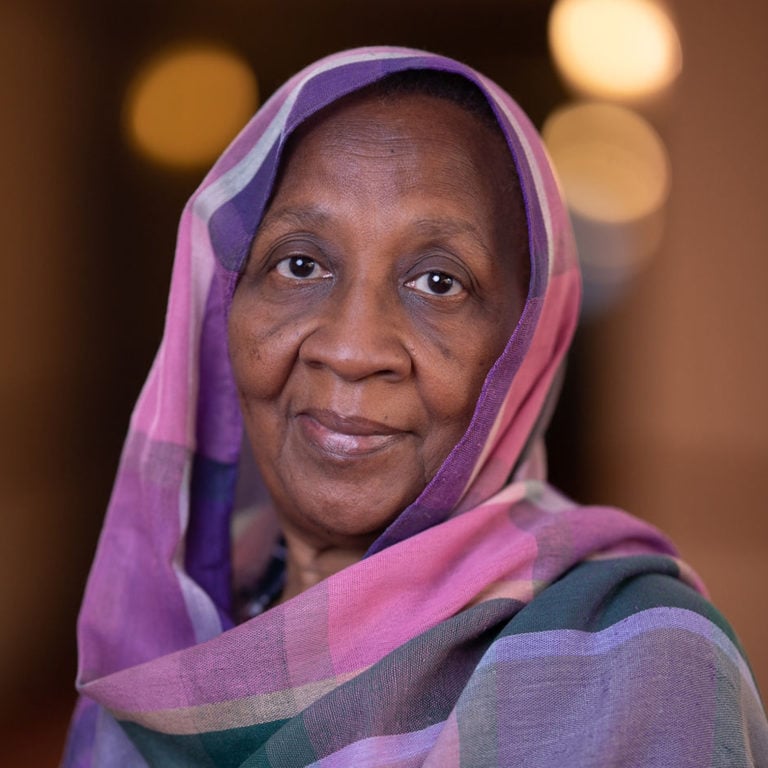
From crisis to action: Story of Zahra, a Sudanese woman at the forefront of humanitarian support

Arabic Version below


“My transition from Sudan to Chad was brutal, marked with uncertainty and an overwhelming sense of sadness. I witnessed violence and human rights violations against my community, including rape, killing, burning, displacement, and torture of women, children, men, and even animals. The scenes were indescribable, akin to Judgment Day,” Zahra painfully narrates.

Zahra was always a pillar of strength for her community in Sudan’s West Darfur. A woman of resilience and grace, Zahra possesses a great work ethic, tirelessly striving to support vulnerable populations such as persons with disabilities, older persons, women, and children

Prior to the war, she lived a stable life, working in an organization dedicated to the reduction of gender-based violence (GBV), where she helped establish safe spaces for women and girls, as well as mobile spaces for nomadic communities.

Zahra’s passion for social issues and advocacy earned her endearing names like “Mother of the Disabled,” “The Noble Lady,” and “Miss Rose.”

But the war changed everything.

Challenges Zahra faced as a woman during the ongoing conflict and its impacts

Zahra was suddenly uprooted from her home after the conflict started. She lost her possessions, comfort, and sense of security.

The war wreaked havoc on her family and the broader community, breaking everyone apart from their loved ones.

Zahra tells us that she has not seen her seven siblings in over a year and a half due to the eruption of unexpected armed clashes and the overall deterioration of security.

Getting basic needs became a struggle as the war affected supply chains, making food and water scarce, attributed to soaring prices and the collapse of local markets.

Healthcare systems, already fragile, were heavily affected. There was close to no functioning hospitals or medication.

Every day was a test of her resilience, and even though she had no choice but to cope with the new realities of her life, her scars, both inside and out, remained.

Transitioning from Sudan to Chad

Zahra fled Sudan with her remaining family and headed for Chad in search of safety.

On their way to Chad, her family was attacked and robbed. Devastatingly, her uncle and son (17 years old) were killed by the Rapid Support Forces (RSF).

She painfully recalls searching for eight days for her son before she found out that he had been killed. Moreover, she was unable to bury him due to the astounding unrest caused by the war.

For over two months, she lived in utter shock, not able to comprehend life, but her faith and community became her lifeline. With time, she found her strength.

She then started supporting women and girls who experienced trauma on their way to Chad.

Strategies used to cope with the trauma and difficulties

Zahra adopted psychological and social mechanisms to cope with the trauma she experienced. She acknowledged her feelings and relied on friends, her faith, and support groups to ease the isolation she experienced.

She restructured her daily routine and identified her strengths, which aided her growth through the challenges.

She cultivated hope by reminding herself that the hardships would pass one day. In the meantime, she invested in her traditional crafts skills and set long-term goals for her children, family, and community.

Role of women in conflict and peacebuilding

Zahra tells us that women play essential roles in both conflicts and peacebuilding. Though they bear the brunt of wars, they also have the ability to lead and rebuild their communities by managing resources, caring for families, and seeking humanitarian aid.

She also notes women as effective mediators. They strengthen social ties within affected communities and promote peace across generations.

Women are essential partners in peace negotiations. Their voices are critical for justice, equity, and lasting peace,” she insists.

Collective initiatives in addressing challenges faced by the community

Zahra has been heavily involved in initiatives like Save Al-Geneina and For You, which provided medical services to injured people from Darfur and psychological support for victims of war.

One of their notable initiatives was led by Sudanese doctors, social workers, and midwives in the Adré camp in eastern Chad. It supports the injured and educates the community about the consequences of war.

Motivation and passion for women-focused initiatives

Despite facing challenges, including a lack of adequate centers in refugee camps and limited economic opportunities, Zahra draws her motivation from her human and ethical responsibilities. This has been with support from organizations like the Strategic Initiative for Women in the Horn of Africa (SIHA) Network, through which she has been able to launch income-generating projects and ensure continuity for her activities.

Her initiative addresses women’s immediate future needs and promotes equality and social justice, breaking cycles of poverty and discrimination.

Zahra tells us that she is inspired by Zainab Abullah, a hero who saved women from gunfire and attacks by RSF forces. Despite losing her husband and suffering beatings, she led women to safety, and was involved in burying the dead, caring for orphans, and providing whatever needed support in Abutanji camp.

Hope for Sudan’s future despite the challenges

Despite the challenges, Zahra remains hopeful for Sudan’s future. “I believe the hardships we face today will eventually lead to a brighter future. The resilience of our people, the solidarity within our communities, and the unwavering determination of women give me hope,” she says.

Her resilience, patience, compassion, and advocacy has made her a symbol of hope.

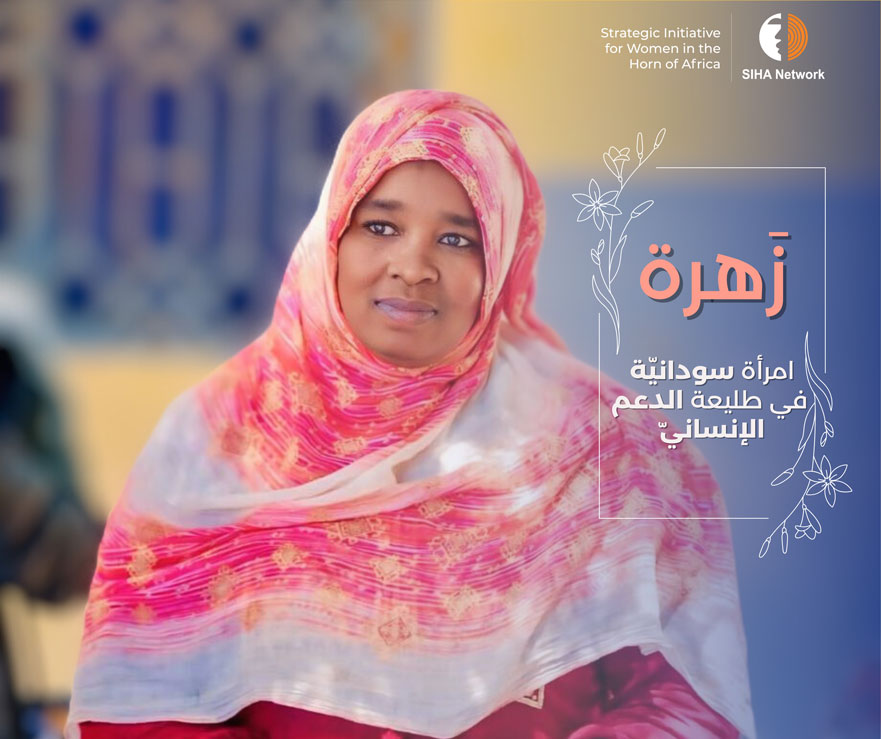
مِن الأَزمَةِ إِلَى الفِعل: قِصَّةُ زَهرَة - اِمرَأةٌ سُودَانِيَّةٌ فِي طَلِيعَةِ الدَّعمِ الإِنسَانِي
تحكي زهرة بحزنٍ موجع: “كان انتقالي من السودان إلى تشاد قاسيًا، مترعًا بالقلق والشعور العميق بالحزن. رأيتُ عنفًا وانتهاكات لحقوق الإنسان مورست على مجتمعي، مثل: الاغتصاب، والقتل، والحرق، والنزوح، والتعذيب الذي طال النساء والأطفال والرجال، بل حتى الحيوانات لم تنجُ منه. لقد كانت المشاهد لا تُوصَف، كأنها أهوال يوم القيامة”.

لطالما كانت زهرة مصدر قوة لمجتمعها في غرب دارفور؛ فهي امرأة تتحلى بصفات الصمود والكرامة، وهي نموذج في أخلاقيات العمل العالية، تنشط بلا كلل في دعم الفئات الضعيفة مثل الأشخاص ذوي الإعاقة، وكبار السن، والنساء، والأطفال.

كانت زهرة قبل الحرب تعيش حياة مستقرة وتعمل في منظمة للحدّ من العنف القائم على النوع الاجتماعي، حيث ساعدت في إنشاء مساحات آمنة للنساء والفتيات، فضلًا عن مساحات متنقلة للمجتمعات البدوية.

وقد اكتسبت زهرة بسبب شغفها بالقضايا الاجتماعية والمناصرة ألقابًا محببة مثل “أم المعاقين”، و”السيدة النبيلة”، و”مِس روز”.

ولكن الحرب غيّرت كل شيء!

التحديات التي واجهتها زهرة كامرأة خلال الصراع المستمر وتأثيراته

تَشَرَّدَت زهرة فجأة من بيتها بعد بدء الصراع؛ ففقدت ممتلكاتها وراحتها وشعورها بالأمان. وألحقت الحرب بأسرتها وبالمجتمع الأوسع اضطرابًا مدمرًا وفرّقت الجميع عن أحبائهم.

تخبرنا زهرة أنها لم ترَ إخوتها السبعة منذ أكثر من عام ونصف بسبب اندلاع الاشتباكات المسلحة المفاجئة والتدهور العام في الوضع الأمني.

كما صار توفير الاحتياجات الأساسية كفاحًا؛ إذ أثّرت الحرب على سلاسل التوريد، ممّا خلق ندرة في الطعام والماء وسبّب ارتفاعًا في الأسعار وانهيارًا للأسواق المحلية. وكذلك تأثرت بشدة نظم الرعاية الصحية، التي كانت هشة أصلًا. فلم تكد تكون هناك مستشفيات تعمل أو أدوية.

فصار كل يوم امتحانًا لصمودها، ومع أنها لم يكن أمامها خيار سوى التكيّف مع واقع حياتها الجديدة، بقيت جراحها المعنوية والحسية نازفة.

الانتقال من تشاد إلى السودان

فرّت زهرة مع ما تبقى من أسرتها من السودان إلى تشاد بحثًا عن الأمان. وفي طريقهم إلى تشاد، تعرضوا للهجوم والسرقة. والأفظع من ذلك أنّ قوات الدعم السريع قتلت عمها وابنها الذي يبلغ من العمر 17 عامًا.

تسترجع زهرة الذكريات الأليمة قائلة إنها ظلت ثمانية أيام تبحث عن ابنها قبل أن تعلم أنه قُتل. ثمّ هي لم تتمكن من دفنه بسبب الاضطرابات الهائلة التي سببتها الحرب.

ظلت زهرة لأكثر من شهرين في صدمة تامة، غير قادرة على فهم ما يحدث، لكن إيمانها ومجتمعها أصبحا شريان حياتها. ومع الوقت استعادت قوتها. ثم بدأت في دعم النساء والفتيات اللواتي عانين من الصدمات وهن في طريقهن إلى تشاد.

الاستراتيجيات التي اتبعتها في التكيّف مع الصدمة والمصاعب

اتبعت زهرة آليات نفسية واجتماعية للتكيّف مع الصدمة، مثل: البوح بالمشاعر، والاعتماد على الأصدقاء، والإيمان، ومجموعات الدعم لتخفيف الشعور بالعزلة. وأعادت تنظيم روتينها اليومي وتحديد نقاط قوتها، مِمَّا ساعدها على النهوض في أتون التحديات.

وعملت على بعث الأمل في نفسها بتذكيرها بأنّ المصاعب ستمر يومًا ما. وفي غضون ذلك، استثمرت في مهاراتها الحرفية التقليدية ووضعت أهدافًا طويلة المدى لأطفالها وعائلتها ومجتمعها.

دور المرأة في الصراعات وبناء السلام

تخبرنا زهرة أنّ النساء يلعبن أدوارًا أساسية في كل من الصراعات وبناء السلام. فعلى الرغم من تحملهن العبء الأكبر في الحروب، إلا أن لديهن القدرة على قيادة مجتمعاتهن وإعادة بنائها من خلال إدارة الموارد، ورعاية الأسر، والبحث عن المساعدات الإنسانية.

وتذكر زهرة أيضًا أن النساء يستطعن النهوض بدور الوساطة الفعَّالة. فيقوّين الروابط الاجتماعية داخل المجتمعات المتضررة ويعززن السلام من جيل إلى آخر. إذ تؤكد أنّ “النساء شريكات أساسيات في مفاوضات السلام وأصواتهن حاسمة في تحقيق العدالة والمساواة والسلام الدائم”.

المبادرات الجماعية في التصدي للتحديات المجتمعية

شاركت زهرة مشاركة قوية في مبادرات مثل مبادرة “أنقذوا الجنينة” ومبادرة “من أجلك”، التي وفرّت خدمات طبية للمصابين من دارفور ودعمًا نفسيًا لضحايا الحرب. وكانت إحدى مبادراتهم البارزة بقيادة أطباء سودانيين، وعاملين اجتماعيين، وقابلات في مخيم أدري بشرقي تشاد. وتدعم هذه المبادرة المصابين وتعمل على تثقيف المجتمع بشأن عواقب الحرب.

الدافع والشغف للمبادرات تركّز على النساء

رغم التحديات التي تشمل نقص المراكز المجهزة في مخيمات اللاجئين ومحدودية الفرص الاقتصادية، تستمد زهرة دافعها من مسؤولياتها الإنسانية والأخلاقية. وقد ساعدها في ذلك الدعم المقدّم من منظمات مثل المبادرة الاستراتيجية لنساء القرن الإفريقي (صيحة)، التي مكّنتها من إطلاق مشاريع مدرّة للدخل وضمان استمرارية أنشطتها. وتهتم مبادرتها بالاحتياجات المستقبلية الفورية للنساء وتعزيز المساواة والعدالة الاجتماعية ممّا يكسر حلقة الفقر والتمييز.

تخبرنا زهرة أنّها تستلهم شغفها من زينب عبد الله، البطلة التي أنقذت النساء من إطلاق النار وهجمات قوات الدعم السريع. إذ على الرغم من فقدانها لزوجها وتعرضها للضرب، قادت النساء إلى بر الأمان، وشاركت في دفن الموتى، ورعاية الأيتام، وتقديم أي دعم مطلوب في معسكر أبو تنقي.

الأمل في مستقبل السودان رغم التحديات

تبقى زهرة متفائلة بمستقبل السودان رغم كل التحديات، وتقول: “أؤمن بأنّ المصاعب التي نواجهها اليوم ستفضي في آخر المطاف إلى مستقبل أكثر إشراقًا؛ فصمود شعبنا والتضامن داخل مجتمعاتنا والعزيمة الراسخة للنساء يمنحني الأمل”.

صارت زهرة بصمودها وصبرها وتعاطفها وبما تقوم به من أعمال المناصرة رمزًا للأمل.
Share the Post:

Ayan Mohamed Djama

Legal and Social Consultant

Ayan Mohamed Djama is a Legal and Social Consultant with strong expertise in judicial, port, and associative matters, and solid experience in designing, managing, and evaluating high-impact social, legal, and educational programmes. Internationally trained in Senegal, Kenya, France, and the United States, she supports NGOs, institutions, and private sector actors while leading community initiatives focused on the training, empowerment, and leadership of young women, girls, and youth to foster more just, inclusive, and resilient societies.

Bibiana Joseph Awad

SOUTH SUDAN PROJECTS OFFICER

Bibiana Joseph Awad holds a Master’s degree in Education in Emergency from the University of Juba. She is an activist and the Projects Officer at the SIHA Network in South Sudan, where she oversees critical initiatives focused on supporting survivors of gender-based violence (GBV). Bibiana manages the One Stop Centre at Wau Teaching Hospital, a facility that provides comprehensive services to GBV survivors, including medical care, psychosocial support, and legal assistance. She works closely with local communities, healthcare providers, legal institutions, and women’s coalitions to address the urgent challenges of GBV in South Sudan.

Through the One Stop Centre, Bibiana has strengthened the capacity of service providers and protection groups while advocating for the rights of women and girls affected by violence. In her free time, she enjoys reading books, listening to music, and engaging on social media.

Jackie Bless Pinyoloya

UGANDA PROJECT OFFICER

Jackie Bless Pinyoloya is the Project Officer at SIHA Network in Uganda; where she passionately champions feminist principles and gender justice. With a solid foundation in gender issues, advocacy, and economic empowerment for women, Jackie brings a wealth of expertise, particularly in the informal sector.

Currently pursuing a Master’s Degree in Gender Studies at Makerere University School of Women and Gender Studies, Jackie is committed to advancing her knowledge and understanding of gender dynamics. She also holds a Bachelor of Arts (BA) in Social Sciences with a major in Gender Studies from Makerere University Kampala, reflecting her dedication to exploring and addressing social inequalities.

In her role, Jackie combines her academic background with practical experience, contributing significantly to the organization’s mission of promoting gender equality and empowerment. Her dedication to feminist principles is evident in her work towards creating positive change in the lives of women in Arua and beyond.

Adla Abubker

SUDAN PROTECTION & EMERGENCY RESPONSE COORDINATOR

Adla Abubker is a women’s rights activist from Sudan with more than 15 years’ experience of working toward gender equality in Sudan. She holds a Bachelor’s Degree in Rural Development from Ahfad University for Women in Sudan. Her areas of expertise include working with grassroots communities, women’s economic empowerment, gender activism and negotiating with men to change inequitable attitudes.

Currently, Ms Abubker a Program Officer with SIHA in Sudan, where she oversees SIHA’s work on building women movement, and women in Islam, reforming gender-discriminatory legislation, and engaging youth on issues of gender, religion, and race. She believes that the link between religion and law is in dire need of reform, and that discriminatory interpretations of Islam are a root cause of violence against women in Sudan.

Neimat Abas

SUDAN COUNTRY COORDINATOR

Neimat Abas brings over ten years of experience in the nonprofit sector. She holds a bachelor’s degree in law from Juba University and a master’s degree in Gender and Governance from Ahfad University for Women in Sudan, where her research focused on women’s political participation at the local level. Neimat is currently the Coordinator for the SIHA Network in Sudan.

Before joining SIHA Network, Neimat worked with the Arab Association for Constitutional Law in Tunisia, Oxfam America in Sudan, and Women for Women International in Washington, DC. She has played a key role in the development, implementation, and ongoing enhancement of high-quality women’s empowerment programs in eight conflict-affected countries.

Neimat has also been actively involved in the leadership of the Students Association and various political and civil society organizations for several years. As a result, she has developed strong skills in working with university students to organize political campaigns, raise public awareness about civil rights, and build democratic organizations and institutions.

Yousef Ahmed Abdi (Timacade)

SOMALI REGION PROGRAMME COORDINATOR

Yousef Ahmed Abdi (Timacade) is a Lawyer and Legal Analyst holding a Master’s Degree in Law and Executive Management. Over the past decade, he has consistently demonstrated dedication through his work with national and international non-governmental organizations, focusing on critical areas such as human rights, program management, and research within Somalia and Somaliland.

Currently serving as the Somali Region Programme Coordinator for the SIHA Network, Yousef embodies not only legal prowess but also a deep commitment to women’s human rights advocacy. He is also known for his prolific blogging and commentary, dedicated to raising awareness about human rights issues. His unwavering dedication to gender equality propels him into the role of advocate for marginalized communities, striving to amplify their voices and effect transformative change. Yousef specializes in championing egalitarian ideals and advancing progressive reforms in the Somali region, with a particular emphasis on achieving gender parity.

Yousef is a valued member of the editorial board of the Women in Islam journal. His numerous writings delve into the intricacies of human rights, particularly those affecting Muslim women.

Zemdena Abebe

ETHIOPIA PROGRAM COORDINATOR

Zemdena Abebe is the founder of Afri-colors, a social-enterprise startup, curating made-in-Africa products, crafted by women. As a Pan-Africanist -womanist- she refuses to be erased and amplifies the voices of women through her research, writing, multimedia -storytelling, organizing, and activism: disrupting intersecting oppressive systems. Her social justice advocacy work started in high school; Chaired Addis Ababa Girls’ Forum– which facilitated discussions amongst girls laying the foundation for legislative intervention against sexual abuse in Ethiopia. As the first women president of Addis Ababa University Students’ Union: she reaffirmed the need and organized various youth-led movements despite the hostile university context. One of the 22 young African women selected as part of the writing for social change workshop organized by AWDF and FEMRITE in Kampala, Uganda. An alumnus of the prestigious Mandela Washington Fellowship.

Amongst her multilayered affiliations, she sits on the advisory council of ActionAid Ethiopia. Previously, she worked with UNICEF Ethiopia and consulted many other local and international organizations such as the EU, FEMNET.HBF, FHS, TRUST AFRICA, etc. Volunteered for the African Union (African Academy of languages in Bamako, Mali: as a research and Marketing Assistant. Zemdena is a graduate of Political Science & International Relations, who often likes to dance her way to freedom. Asserting the notion that African women, girls & non-binary folks have the right to a life free of heteronormative -capitalist -anti-black -patriarchal terror based on their overlapping otherness: her work reaffirms that human progress is achieved through imagining a better world through the realization of a transnational strong justice-centered human kinship. Zemdena’s writings of resistance can be found on Pambazuka, Africa is a Country, HBF, African Feminism et al

Ramatoulie Isatou Jallow

REGIONAL ADVOCACY & RESEARCH OFFICER

Ramatoulie Isatou Jallow (L.L.M Graduate in National Security Law, Georgetown, 2023 and in Human Rights and Democratization in Africa University of Pretoria, Centre for Human Rights, 2021) is a peace practitioner and attorney from Botswana and the Gambia, specializing in human rights, democratization, national security, conflict prevention and women, peace and security. In her previous professional experiences, she worked for the African Union, the United States Institute for Peace, and the Georgetown Center for National Security. Immediately before joining SIHA Network, Ramatoulie was also the Mary Frances Berry Senior Fellow at the Center for Ethics and Rule of Law, affiliated with the Annenberg Public Policy Center at the University of Pennsylvania. Here she led research on the military coups in the Sahel and West African region, civic education in the military and indefinite detention.

Her publications include Covid- 19 and Intrastate Armed Conflicts in Africa, Beyond the Outbreak: Creating a Sustainable Peace Culture in Botswana and Intergenerational Peacebuilding Among Women: Leveraging the Power of Collaboration, which she co-authored.

Outside of work, Ramatoulie is an avid reader, lover of poetry, culture, art and music.

Martin Maate Bwambale

REGIONAL HUMAN RESOURCE OFFICER

Martin Maate Bwambale is the Regional Human Resource Officer at SIHA Network, with over 8 years of progressive HR experience in both the private and not-for-profit sectors across the Greater Horn of Africa. As a member of the Human Resource Managers Association of Uganda, Martin is passionate about creating human capital-centric environments that foster a positive employee experience and contribute to the achievement of organizational goals. He is dedicated to helping individuals unlock their potential and become better versions of themselves by implementing sound HR practices and policies.

One of Martin’s key accomplishments includes serving as the Chairperson of the HR COVID-19 SOP Taskforce Committee, which was established by the Uganda INGO Country Directors Forum. He played a vital role in drafting standard operating procedures for workplace COVID-19 prevention, response, and control, as well as work-from-home policies, which were adopted in 2022.

Martin holds a Bachelor of Business Administration in Production and Operations from Bugema University and is currently pursuing a Master of Business Administration in Human Resource Management at Cavendish University.

Outside of his professional life, Martin enjoys playing soccer with C Club, a corporate soccer team in Kampala, Uganda, for health, leisure, and networking. He is also passionate about singing and traveling.

REGIONAL SENIOR FINANCE OFFICER

REGIONAL SENIOR FINANCE OFFICER

Sauda Kayaga is SIHA Network’s Regional Senior Finance Officer. A trained Statistician, she holds a bachelor’s degree in Statistics from Makerere University. Sauda has 2 years of experience in statistical research and analysis, 3 years in cashiering and banking, and over 5 years in project financial management. She has a strong aptitude for working with complex financial modelling and analysis and a deep understanding of financial systems and procedures. Sauda is highly passionate about her work and brings a keen attention to detail and expertise to every aspect of her role.

Justine Namuyanja

REGIONAL PROCUREMENT & COMPLIANCE OFFICER

Justine Namuyanja is the Procurement & Compliance Officer at SIHA Network, bringing over a decade of experience to the organization. Throughout her career at SIHA, she has made significant contributions to the finance, procurement, administration, human resources, and compliance sectors. Justine has consistently demonstrated her ability to manage procurement processes efficiently while ensuring compliance with both internal and external standards. Her expertise also includes optimizing operational workflows and improving the transparency and efficiency of financial systems, all of which are essential to the success of SIHA’s work. Justine’s role is also critical in upholding the integrity and accountability of SIHA’s operations.

Sandra Nassali

REGIONAL ADVOCACY & COMMUNICATIONS COORDINATOR

Sandra is an accomplished communication professional passionate about building knowledge and conducting strategic advocacy initiatives that advance the rights of women and girls.

In addition to feminist activism works, she has, in the last 15 years, pursued her career ambitions in areas of climate change mitigation and adaptation, agriculture and food security, social enterprise development, public health, as well as ICT for Development.

Sandra holds a Master of Arts in Development Journalism and Communication (Strategic & Corporate Communication Management major), plus a Bachelor of Mass Communication (Public Relations & Marketing major) from Makerere University in Kampala Uganda.

Furthermore, she holds a Post Graduate Diploma in ICT for Development and Social Good from the Spanish Telecentres and ICT Spaces Academy in Spain.

Twitter: @SandraNassali

Shinaz Rehema Ali-Zaids

REGIONAL GRANTS AND CAPACITY BUILDING COORDINATOR

Shinaz Rehema Ali-Zaids (She/Her) is a passionate and dedicated advocate for social justice. Her professional journey has focused on women’s rights, marginalized communities, natural resource governance, and climate change. With over a decade of experience in the women’s funding sector, she has offered strategic guidance to international organizations on community-driven, participatory grantmaking.

Deeply committed to her local Nubian community, Shinaz actively engages in local initiatives and serves on various boards to amplify the voices of marginalized groups. Her work addressing human rights gaps at the grassroots level has shaped her passion for strengthening social systems that protect the rights of vulnerable populations. A strong advocate for wellness, Shinaz prioritizes self-care and collective care within teams, recognizing that sustainable social change is rooted in both individual and collective well-being.

Throughout her career, Shinaz has collaborated closely with women to develop long-term, sustainable solutions to their most pressing needs. Her expertise in movement building has been key to expanding programs across diverse regions of Africa. In her current role as the Regional Grants and Capacity Building Coordinator, she supports SIHA Network’s country teams in executing impactful work and scaling their initiatives. Shinaz also provides critical support to women and communities in conflict and post-conflict settings, ensuring their safety, security, and ongoing activism in advancing women’s rights.

Mercy Apiyo Owuor

REGIONAL COORDINATOR: MONITORING, EVALUATION & LEARNING

Mercy is a Public Health Professional with a keen interest in gender equality, equity, and social inclusion. She has over 15 years of experience in programme design and management, as well as monitoring, learning, and evaluation.

This is expertise Mercy has gathered by managing and coordinating multiple projects while working with government entities and civil society organisations at the grassroots, national, and international levels.

Mercy holds a Master of Community Health and Development from the Great Lakes University of Kisumu, and a Bachelor’s Degree in Sociology from Moi University in Eldoret Kenya.

Twitter: @MercyOwuor2

Mayada Eltayeb

HEAD OF FINANCE & ADMINISTRATION

Mayada Eltayeb is the Head of Finance and Administration at SIHA Network. She joined the organization in 2008 with over a decade of experience in finance and organizational management, leading SIHA’s strategic financial planning and resource management. Born in Sudan and raised in the United Arab Emirates, Mayada earned her bachelor’s degree in accounting from Ahfad University in Sudan in 2005.

Before joining SIHA, she had gained extensive experience working with various audit and accounting firms, refining her skills in financial analysis and reporting. Under her leadership, SIHA’s Finance and Administration division has strengthened financial processes and policies, ensuring compliance, transparency, and the effective allocation of resources. Mayada’s efforts have been pivotal in supporting the organization’s sustainability and operational excellence. She has also completed several specialized training courses in NGO financial management in Uganda and South Africa, further enhancing her expertise and leadership capabilities.

Faizat Badmus-Busari

REGIONAL PROGRAMME MANAGER

Faizat Badmus-Busari is the Regional Programme Manager at SIHA Network. With a strong background in program management and a Doctor of Juridical Science (SJD) degree from Emory University School of Law, she expertly navigates the crossroads of gender, law, religion, and social justice, serving marginalized communities, especially women and girls.

Before SIHA, Faizat held significant positions in international organizations like The Carter Center and various United Nations agencies. There, she managed projects ranging from grassroots efforts to global initiatives, focusing on gender equity, social inclusion, democracy, and human rights. At SIHA, she oversees the network’s regional programs, ensuring the mission and vision are effectively carried out across the Horn of Africa. Faizat brings her extensive gender-transformative, legal, and program management expertise to the role. Guided by a belief in collective action and intersectional feminism, Faizat collaborates with organizations and partners to promote women’s rights, peacebuilding, and social justice in the region.

Hala Al-Karib

REGIONAL DIRECTOR

Hala Al karib was born and raised in Sudan and later lived in Canada. She currently lives and works in Uganda. She has lived and worked in South Sudan, Kenya and Egypt as well the Eastern and Horn of Africa for over 20 years. Hala’s work specifically focuses on women and girls rights activism and social movement as well as refugees and displaced persons and minority community’s challenges. She has wide and comprehensive expertise on the Horn and Eastern Africa regions, as a civil society worker/activist, and social and gender research practitioner. Her educational background is on Human rights, women studies and Psychology. In addition to her work as the Regional Director of SIHA Network, she worked for various international and regional organizations/institutions among them; The College of Social & Economic Studies, Juba University in South Sudan where she worked as a Research Assistant; The sociology department at the American University in Cairo as an Assistant Researcher; Immigrant Women of Saskatchewan Inc. in Canada as the Program Director; Trocaire, an Irish Organization as Grant Officer based in Sudan. She has also worked as a consultant with various international and UN Humanitarian organizations, including; Goal Ireland, World University Services, Accord International and Concern International.

She is a regular contributor to many online and print media outlets. Her writing is focused on activism, women’s rights and social justice. Some of her recent articles are published in: Aljazeera, Open Democracy, Sudan Tribune The Pambazuka, the New Humanitarian and the East African Newspaper. She is the Editorial head of SIHA Journal – Women in Islam in the Horn of Africa (Arabic & English).

Twitter: @Halayalkarib

Kadra Omar

Kadra is a Social Worker from Djibouti currently working with the Ministry of the Promotion of Women & Family Welfare & Social Affairs- Djibouti. She is also a member of the Djiboutian Women’s Union. Kadra currently serves on the Program Advisory.

Dr. Lyn Ossome

Dr. Lyn Ossome is the Director of the Makerere Institute of Social Research (MISR), Makerere University. She received her PhD in Political Studies from Wits University. Her specializations and taught courses are in the fields of feminist political economy and feminist political theory, with particular research interests in land and agrarian studies, gendered labour, queer feminist histories and the political economy of gendered violence. She currently serves on the Program Advisory

Aluel Atem

Aluel Atem is a seasoned development economist, blogger, and African Feminist Activist hailing from South Sudan. With over eight years of dedicated experience, her primary focus has been on gender and conflict transformation. Currently serving as a Senior Program Officer at the United States Institute of Peace (USIP), Aluel holds the role of USIP’s In-country (Kenya) lead for the Border Security Training Program (BSTP). In addition to her role at USIP, Aluel is a co-founder of two women’s rights initiatives: Ma’ Mara Sakit Village and Crown the Woman-South Sudan, both based in South Sudan.

Rose Baryamutuma

Rose is a programme monitoring and evaluation expert with over 15 years of experience providing specialized services for program design, organization capacity assessments, facilitating training and M&E. She has also provided technical support to institutions to develop and cost strategic plans. Rose has broad research experience/evaluation in the areas of HIV and AIDS, Sexual and Reproductive Health. As GBV Focal Person she provides technical support to the GBV National TWG on general program and M&E specifically.

Kimberley Armstrong

Kimberley Armstrong holds a PhD in Anthropology from McGill University in Canada. Her research focused on transitional justice, conflict, and displacement in Northern Uganda, with previous studies on rural-to-urban migration of women in Senegal. She is currently working with the Ministry of Social Development and Poverty Reduction in Vancouver, British Columbia, Canada, as the Manager of Program Evaluation and Reporting. Prior to joining the Ministry, she served as SIHA Network’s Regional Programmes Manager for over six years.

Jemimah Naburri-Kaheru

Currently serving as the Association for Women’s Rights in Development [AWID]’s Deputy Director of Human Resources, is an accomplished international Human Rights [HR] strategist with a significant experience in the Horn of Africa region. With a background in Development Studies from Makerere University (Uganda) and an ongoing MBA in Human Resource Management, Jemimah is dedicated to continuous professional development. Her contributions to building high-performance workforces and her leadership in international HR make her an invaluable asset to any global enterprise. Additionally, Jemimah serves as the Program Advisor, supporting with operations at SIHA Network.

Abdifatah Hassan Ali

Abdifatah is a Somali human rights defender with extensive experience in advocacy within the civil society arena. He is the Founder of the Digital Shelter – a local initiative founded in March 2018 by activists who are passionate about the intersection between technology and human rights in Somalia with the aim of promoting digital safety, digital rights and inclusion and internet freedom in the growing digital civic space of Somalia. He holds a Masters Degree in Human rights. Currently works for the UN as a Human rights officer in Somalia

Guleid Ahmed Jama

​Guleid is an active human rights defender and an Attorney at law the Xaqdoon Law Firm​, based​ in Somaliland. He is the ​C​o-founder and former ​C​hairperson of Human Rights Center (HRC), a human rights advocacy organization ​also based in Somaliland. ​​Guleid currently serv​es​ as a Program Advisor.

Asmahan Hassen

Ms. Asmahan is one of the founders of SIHA, currently serving as Advisor to the SIHA Board. She is currently Chairperson of Nagaad Network in Somaliland. She has also served as Chairperson of the Somaliland Women’s Research and Action Group (SOWRAG). Asmahan is actively involved in the Somaliland women rights arena as a women human rights defender. Her tenure spans 23 years. She is a graduate of Arts and Humanities from the University of Khartoum.

Peace Twine Kyamureku

Peace Twine Kyamureku is the Executive Director of the Ruth Fund Uganda. She is a secondary school teacher by profession, holding a Master of Arts Degree from Makerere University and has trained in Gender, Human Rights and Civil Society Studies. She currently serves on the Advisory to the SIHA Board.

Saba Gebremedhin

Saba is currently the Executive Director of the Network of Ethiopian Women’s Associations (NEWA), a member organization of SIHA Network. Saba is a Lawyer in the Ethiopian Courts of Law by training and profession having served as a Special Prosecutor. She is also one of the founders of the Ethiopian Women Lawyers Association (EWLA). In her tenure, she has served as a Consultant at the IGAD Gender Unit and the African Union Women, Gender and Development Directorate (WGDD).

Kaltun Hassan

Ms. Kaltun is a Gender Expert and Women Rights Activist from Somaliland. She has served in a number of positions within civil society organizations advocating for, and working in women’s rights, gender equality, and peace-building. She serves on the Board of Directors of Women Advocacy and Progress organization (WAAPO). Kaltun was recently re-elected as the only woman on the Somaliland Electoral Commission.

Fadwo Hassan

Fadwo Hassan Jimale is a Somali woman rights activist with experience spanning 10 years in gender-mainstreaming and social protection of women and children in Somalia. I have Ten (10) years’ experience in excellence of general protection and development of gender mainstreaming. Her experience in GBV survivor work in Somalia has necessitated her participation in women’s movement-building work particularly with the women and Child Cluster in Somalia. Fadwo has represented SIHA in a number of national and regional spaces contributing to SIHA’s mandate of advocating for the acknowledgment of women rights in view of the lived realities of women and girls in the region.

Rigbe Gebrehewariat Hagos

Rigbe is a passionate women rights activist from Ethiopia, trained as a Lawyer and Social Worker, who has dedicated her career to advocating for people with disabilities, especially women. She works to spread awareness about people with disabilities and what they are able to achieve. She is the Co-founder and treasurer of Ethiopian Lawyers with Disabilities Association (ELDA), Co-founder and board chair of Setawit and a member of the United Nations Women Civil Society Advisory Group She is also a 2016 Mandela Washington Fellow. Rigbe sits on the Board of Directors of the Ethiopian Women Lawyers Association (EWLA) – a member of SIHA Network. She currently serves on the SIHA Board of Directors.

Zabib Loro Musa

Zabib Loro Musa is the Executive Director of Women for Justice and Equality (WOJE), a feminist advocacy organization dedicated to advancing and advocating for the rights of women in marginalized communities across South Sudan. At WOJE, she leads the organization’s efforts to implement the Women’s Peace and Security agenda in grassroots communities throughout South Sudan.

Keltun Qasim

Kaltun Qasim is the Director of Women’s Human Rights Education and Environment in Somaliland. Her organization works in different rural and urban centres in Somaliland and has been a member of SIHA for more than 10 years.

Lillian Byarugaba Adriko

Lilian Byarugaba Adriko is the CEO of FIDA-Uganda and is a very well known woman advocate and rights defender in the country playing a significant role in improving the status of women by promoting their socio-economic rights and justice and advancing gender equality within Uganda.

Omayma Elmardi

Ms. Omayma Amin Elmardi is the Director at the National Sudanese Women Association (NSWA) a member organisation of SIHA Network. She holds a Bachelors of Science from Cairo University – Khartoum branch, a Post-graduate Diploma in Development Studies and a Master of Science in Development Planning from the Development Studies and Research Institute (DSRI) University of Khartoum. Omayma currently serves as the Chairperson of the SIHA Board of Directors.