Statement by the Strategic Initiative for Women in the Horn of Africa (SIHA Network) – (no. OBS/433)
Your Excellencies,
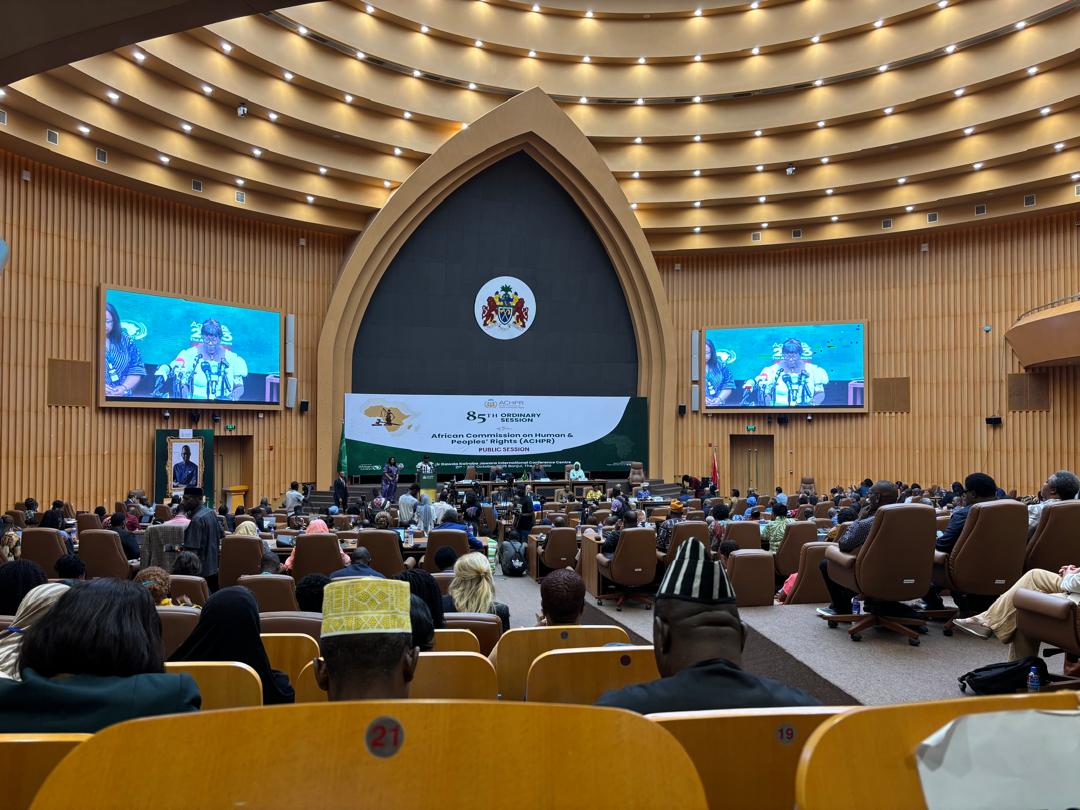
We welcome this opportunity to engage with the African Commission on Human and Peoples’ Rights (ACHPR) on the current context across the Greater Horn of Africa (GHoA) and the rights of women and girls in the region during its 87th Ordinary Session. Founded in 1995, the Strategic Initiative for Women in the Horn of Africa (SIHA) is an indigenous feminist and women’s rights network comprising more than 250 civil society organizations dedicated to advancing gender justice across Uganda, Sudan, South Sudan, Ethiopia, Djibouti and the Somali region.
In the course of our work across the GHoA, we are experiencing a wave of unprecedented conflict and instability in the region. This has been driven by a myriad of complex factors; from overall governance failures and authoritarianism to rising levels of militarization, the flow of arms and competition for critical natural resources needed in solidifying economic development. This has stirred underlying geopolitical tensions between Member States in the region and contributed to the eruption of multiple proxy wars. Connected to the African Union’s (AU) theme for this year: “Assuring Sustainable Water Availability and Safe Sanitation Systems to Achieve the Goals of Agenda 2063,” it is evident that the role of climate insecurity, manifesting in the form of drought has created significant food and water scarcity. This has played an undeniable role in exasperating conflict, instability and displacement within the region. Areas in Sudan such as El Fasher, North Darfur and Kadugli, South Kordofan have officially been declared as famine stricken.[1] In Somalia, over 6 million people currently face acute hunger amid lack of rainfall and unrest.[2]
At the centre of this rapidly deteriorating environment, women and girls are bearing the brunt of these multi-layer crises in real time. This is manifesting in abhorrent levels of sexual and gender -based violence (SGBV), particularly conflict related sexual violence (CRSV) in which our bodies are targeted as a tool for subjugation, undermining bodily autonomy, power and dignity.
In Sudan, as we pass the third-year mark of hostilities between the Rapid Support Forces (RSF), the Sudanese Armed Forces (SAF) and their allied militia, CRSV continues to be systematically leveraged as a weapon of war against women and girls. Between 2023 to 2025 alone, SIHA Network has documented over 1,294 cases of this nature, with 77% of these cases constituting rape.[3] Other forms of CRSV have included sexual slavery, exploitation, forced marriage and femicide, mostly attributed to the RSF.[4] With the collapse of sexual reproductive health services, women are dying from STIs such as HIV/AIDs and Hepatitis, and are frequently forced to carry unwanted pregnancies to term.[5] In Darfur, particularly with the fall of El Fasher into RSF control in October 2025, the RSF has deliberately targeted women and girls from the Fur, Masalit, Berti, Zaghawa and Tunjur communities based on their ethnicity.[6] As acknowledged in the United Nations (UN) Fact-Finding Mission’s latest report, this is part of the RSF’s larger campaign of genocide in wiping out native African tribes. These cycles of violence continue to spread throughout Greater Kordofan and Blue Nile. CRSV has also greatly overlapped with the alarming rates of arbitrary detention and enforced disappearance. Thousands of women and girls have been held by the RSF in the villages of Garny, Tura and Tabit, in North Darfur in hospitals and schools that have been converted into detention centers, with the true extent of this unknown due to the information black-out in RSF controlled areas and severe under-documentation.[7]
Additionally, we received reports that over 840 had been detained by SAF in abhorrent conditions across Wad Madani (Al Gezira), Khartoum, Gedaref, Port Sudan, Dilling, Kadugli and El Obeid.[8] These women were charged under the Sudanese Criminal Code of 1991 and the Anti-Terrorism Act of 2001, for allegedly collaborating with the RSF. Under these laws, women are targeted for detention based on their place of residence and ethnicity if it demonstrates any loose connection to the RSF and are often from poorer socio-economic backgrounds. Using feminist networks of lawyers, mediators and paralegals supported by SIHA Network, many of these women have been connected to independent legal representation. As a result of this, 7 women have been acquitted due to insufficient evidence, and 13 women have had death sentences overturned on appeal.[9] Our advocacy also prompted an official government directive following a visit to the prison, which led to the release of 402 women who had been arbitrarily detained on these charges.[10]
In South Sudan, new waves of violence and insecurity have emerged in recent months, especially in Upper Nile, the Western and Eastern States which has exasperated CRSV against women and girls and threatened the collapse of the country’s Revitalized Agreement on the Resolution of Conflict. According to our documentation efforts, at least two women or girls face sexual violence every single day in Western Bahr El Ghazal alone. These statistics are situated within endless cycles of intercommunal conflict and displacement, all rooted in a broader crisis of governance, militarization, and impunity. More than a decade after independence, South Sudan remains a fragile State where violence against women and girls is a reality of daily life.
In Somalia, a high prevalence of gender-based violence against women and girls continues, with the most common forms being intimate partner violence, sexual violence and physical assault.[11] This is driven by forced displacement, poverty, food insecurity and weak protection systems with internally displaced women at great risk.[12] Cases of Female Genital Mutilation (FGM) also remain at an all-time high in the country, with a prevalence rate of over 99% among women aged 15 to 49.[13] Though there is currently a Draft Anti-FGM Bill in place, which represents an important milestone in addressing this harmful practice, particularly once it is enacted, it fails create strong, zero-tolerance legal framework, with the allowance of several exceptions. Moreover, SIHA continues to receive disheartening reports of child marriage involving children as young as 8 years old. The re-introduction of the controversial Sexual Intercourse and Related Crimes Bill, and the Personal Status Bill in other Somali territories, particularly Somaliland, could potentially legalize child marriage, has also sparked national and international outrage, signalling a disturbing regression in the protection of women and girls.[14] Currently, there is also an ongoing crackdown on women human rights defenders (WHRDs) such as Ms. Sadia Moalim Ali, a tuk tuk driver and social activist who has been arbitrarily detained since April 12, 2026 for her online activism and participation in peaceful demonstrations, among many other activists in recent days.
These recurrent themes across the region are also evident in Ethiopia. Rates of GBV continue to grow and are flagged at the overall rate of 51%, consisting of emotional, physical and sexual violence against women and girls.[15] This is in addition to the ongoing crimes of sexual violence occurring in the Tigray, Amhara and Oromia, with renewed waves of unrest growing over the last year and with heightened tensions between Ethiopia and Eritrea. Moreover, the high prevalence of femicide continues. FGM statistics are at 65%, ranking Ethiopia among the top ten countries with the highest prevalence in Africa. Finally, we note that all these issues are ongoing amid increased censorship and shrinking civic space, making it increasingly difficult for women rights organizations to advance their critical work.
Noting the context of active conflict and instability, particularly in Sudan, South Sudan and Ethiopia, a common feature is that the provision of sexual reproductive health services and psychosocial support for survivors is heavily disrupted and does not cover the immediate and growing needs on the ground. Additionally, there is a deep systemic failure in holding perpetrators of sexual violence accountable which propels immunity, emboldens perpetrators and drives near perpetual cycles of violence. In the GHoA, the ground for CRSV is also fertile due to the highly patriarchal environment which forms the backdrop of this region. This manifests in the form of harmful gender laws and policies defended on the basis of religion, culture and morality. This is in addition to the low levels of women’s participation in critical decision-making roles as well as the high levels of intimidation and harassment of women WHRD, activists, and journalists by militaries, non-state armed groups, and security sector actors both on and offline. Worse still, in this current era of regression with respect to women’s rights, gender continues to be deliberately deinstitutionalized, with funding cuts that are crippling the important work of women rights, driven by the rise of anti-rights actors actively seeking to delegitimize the gender movement continentally, under the guise of protecting ‘family values and tradition,’ with the Draft African Charter on Family, Sovereignty and Values being an example of this.
While we recognise the tireless work of the ACHPR, we call on this Commission to hold Member States of the GHoA accountable in the fulfilment of their obligations under the African Charter on Human and Peoples’ Rights, specifically Article 5 (freedom from inhuman and degrading treatment), Article 16 (right to health), Article 17 (right to education) and Article 18(3) (elimination of discrimination against women).We further call on the ACHPR to do the same with respect to legal obligations under the Maputo Protocol and to continue to urge Member States such as Sudan and Somalia to ratify and fully implement its provisions as a clear demonstration of their commitment to advancing the rights of women and girls.
As a conclusion to this statement, we make the following recommendations, namely for the ACHPR to:
- Call for the immediate cessation of hostilities, the targeting of civilians and civilian infrastructure in all active conflict zones across the GHoA. To this end and particularly with respect to Sudan, we call for the immediate release of all civilians held by the warring parties, particularly women arbitrarily detained by the RSF and SAF.
- Demand Member States in the GHoA to immediately cease arms transfers which risk being used to commit atrocities, including SGBV and CRSV, particularly in Sudan, South Sudan, Ethiopia and Somalia.
- Strongly condemn and call on Member States to actively work towards combatting all crimes of SGBV, and CRSV perpetrated against women and girls across the GHoA, in line with their state obligations under the African Charter on Human and Peoples’ Rights and the Maputo Protocol.
- Strongly condemn the harassment and intimidation of WHRDs, frontline responders, survivor networks and women led grassroot organizations and call on Member States to support and ensure their protection as they further their work in safeguarding the rights women and girls, particularly in Sudan, South Sudan, Somalia and Ethiopia;
- Demand for justice and accountability against the perpetrators of these crimes in ending ongoing immunity, including those within the chain of command, with no exceptions, particularly with respect to the AU Joint Fact-Finding Mission on Sudan. To this end, we also call for continued and increased collaboration between the AU and UN Fact-Finding Missions on Sudan in the furtherance of their mandates;
[1] Action Against Hunger, “Three Years of War in Sudan: The World’s Worst Hunger Crisis,” (April 15, 2026), https://www.actionagainsthunger.org/press-releases/three-years-of-war-in-sudan-the-worlds-worst-hunger-crisis/
[2] Aljazeera, “More than 6 Million Somalis Face Hunger Amid Climate Shocks and Conflict,” (April 23, 2026), https://www.aljazeera.com/news/2026/4/23/more-than-6-million-somalis-face-hunger-amid-climate-shocks-and-conflict
[3] SIHA Network, “More than Numbers: Report on the State of Violence Against Women and Girls in Sudan,” December 10, 2026, https://sihanet.org/report-launch-more-than-numbers-report-on-the-state-of-violence-against-women-and-girls-in-sudan-2023-2025/
[4] Ibid.
[5] “Statement by Ms. Hala Al Karib, SIHA Network, Regional Director, UN Security Briefing on Sudan,” February 19, 2026, https://sihanet.org/statement-by-ms-hala-alkarbi-siha-network-regional-director-un-security-council-briefing-on-sudan/
[6] Sudan UN Fact Finding Mission, “Sudan: A War of Atrocities” ¶64-65, 68-70; Sudan FFM, A/HRC/57/CRP.6, ¶159, 182, 197.
[7] Ibid.
[8] SIHA Network, “Confidential Update 16: The Status of Women Arbitrarily Detained Across Sudan and SIHA’s Response to Directive Ordering their Release by the President of the Transitional Sovereignty Council,” January 19, 2026 (available on request).
[9] Ibid.
[10] Ibid.
[11] UNFPA, ‘Overview of GBV Data Trends and Service Provision, (GBV Information Management Systems) 2024-2025’, https://somalia.unfpa.org/sites/default/files/pub-pdf/2026-01/GBV%20Trends-%20GBVIMS.pdf
[12] Ibid.
[13] SIHA Network, “Combatting FGM in Somalia: An Analysis of the Anti-FGM Bill of 2019, A Human Rights Perspective,” September 15, 2025, https://sihanet.org/analysis-of-somalias-anti-fgm-bill-2019-a-human-rights-perspective/
[14] SIHA Network, ‘SGBV Increasing While Lawmakers let the Sexual Offences Bill (SOB) and Rape and Sexual Offences Act (SOA) gather dust on the Shelves,’ July 6, 2023, https://sihanet.org/joint-civil-society-statement-sgbv-increasing-while-lawmakers-let-sob-and-soa-gather-dust-on-the-shelves/
[15] Berhanu Wale Yirdaw and Binrew Bayuh Yimer, “GBV and Associated Factors among Women in Ethiopia: A Systematic Review and Meta-Analysis,” BMC Women’s Health, 25(1), 312 (2025), https://pubmed.ncbi.nlm.nih.gov/40615840/