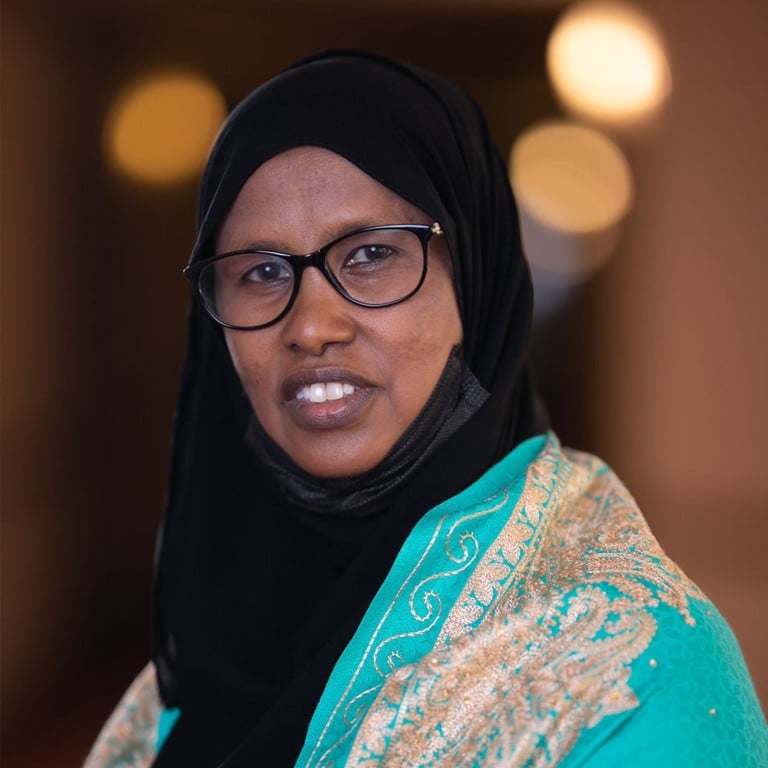
President, Excellencies,
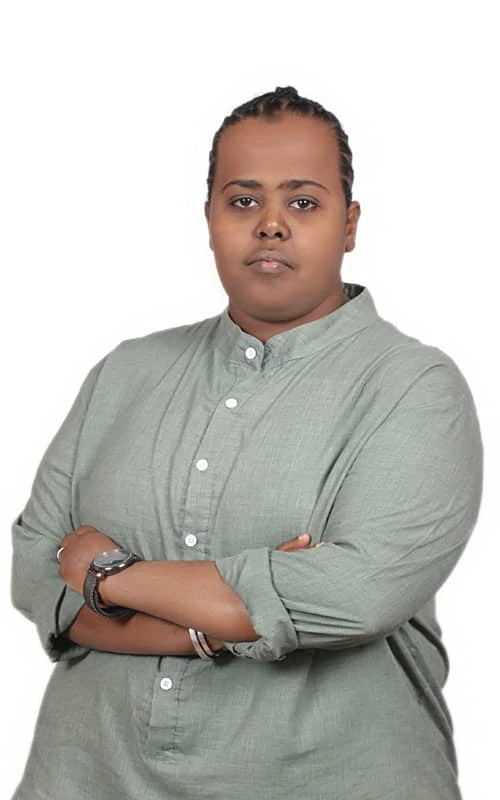
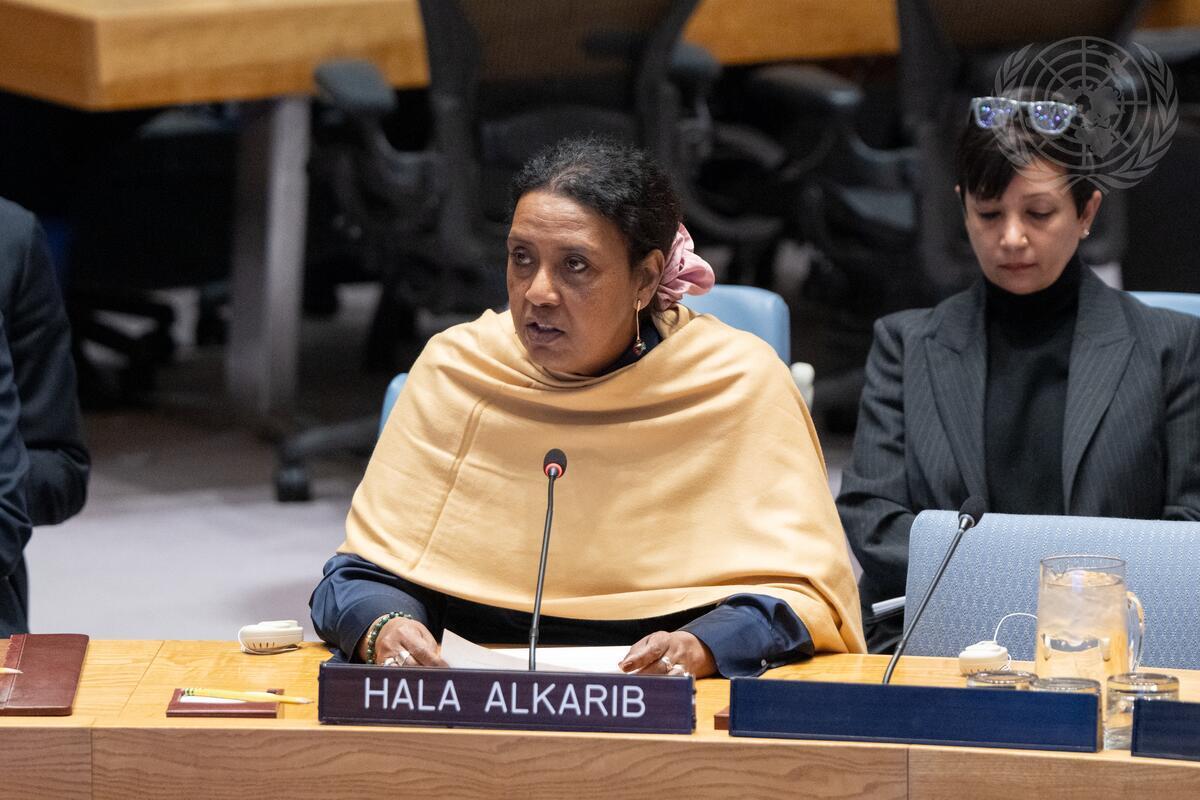
Thank you for the opportunity to brief you today. I am Hala Alkarib, a Sudanese woman, human rights defender, and regional director of the Strategic Initiative for Women in the Horn of Africa (SIHA), a grassroots feminist network. Like millions of Sudanese people, I have lost family members and my home as a result of the war.
I have had the honor of speaking to the Security Council twice before: first in September 2021,[1] when I warned of the fragility of Sudan’s democratic transition, and again in October 2023,[2] just six months after the war erupted, when I described its devastating impact on Sudanese women and girls and the growing risk of genocide. To be here a third time, only to report that the situation is even worse, is an indictment not just of the warring parties but of this Council’s inability to stop the bloodshed.
Over 1,000 days since the start of the war, despite repeated warnings, this Council has failed to act. Every red line — siege,[3] forced displacement,[4] man-made famine,[5] genocide,[6] mass rape[7] — has been crossed. As we approach a point of no return in Sudan, I am here with two messages.
One, every day this war continues, it destroys the lives and brutalizes the bodies of Sudanese women and girls.
And two: The worst atrocities that have already taken place during this war risk happening again, with civilians paying the price. For instance, the Rapid Support Forces’ (RSF) atrocities in El Geneina,[8] or in El Fasher, where the scale of the killing was so shocking that pools of blood were seen from space.[9] And now, Greater Kordofan and Blue Nile, where drone attacks by all parties are killing civilians and destroying hospitals, schools and markets.[10] The escalation of the conflict is already destabilizing the entire region. Unless you act now, you will have more blood on your hands.
Let me start with the first: Women, regardless of who they are, face systemic violence by all actors. They are targeted for their ethnicity, the color of their skin, being poor, their ability, and their political affiliation, among other factors.
Sexual and gender-based violence against Sudanese women and girls is a central feature of the conflict. Such violence, including rape, torture, enslavement, trafficking, detention, abductions and killings, continues.[11] Since the beginning of the war, we at SIHA have documented over 1,294 cases of conflict-related sexual violence against women and girls, perpetrated primarily by the RSF and their allies.[12]
In Darfur, the RSF and their allies have deliberately targeted women and girls from the Fur, Masalit, Berti, Zaghawa and Tunjur communities[13] on the basis of their ethnicity.[14] As the UN Fact-Finding Mission confirmed in a report today, this is part of a strategy of genocide aimed at eradicating native African communities, one that we — as civil society — have seen in Darfur for decades, and have warned you about for years.[15] We fear that the RSF will continue their genocidal violence throughout Greater Kordofan and Blue Nile.
Sexual violence, arbitrary detention and enforced disappearance of women in areas under RSF control remain severely underdocumented due to the RSF’s deliberate restriction of access, targeted communications blackout, and retaliation against those who speak out.[16] Still, we know that thousands of women and children have been detained in the villages of Garny, Tura and Tabit in North Darfur,[17] and that the RSF has turned hospitals, schools and other sites into detention centers.[18] Forced and child marriage to RSF soldiers is also frequently linked to abduction and enforced disappearance.[19]
The suffering of women doesn’t end by escaping to safer areas or after the RSF is driven out of specific regions; they must still contend with entrenched legal discrimination.[20]
Between August 2024–December 2025, we received reports of more than 840 women being detained by the local police and military intelligence in areas controlled by the Sudanese Armed Forces (SAF), including Wad Madani (Al Gezira), Khartoum, Gedaref, Port Sudan, Dilling, Kadugli and El Obeid.[21] Many of these women are accused of being RSF collaborators, often based solely on their ethnicity[22] or the fact that they were unable to escape when the RSF took control. Women detained by the SAF are frequently subjected to degrading treatment, including ethnic slurs, and physical assaults during interrogation, and lack the means for legal representation to contest their detention.[23]
The collapse of the healthcare system[24] means that survivors of sexual and gender-based violence lack adequate medical care and psychosocial support. Without access to necessary sexual and reproductive health care,[25] including post-rape care,[26] women are dying of hepatitis, HIV/AIDS, syphilis and other STIs. Without access to emergency contraception and safe abortion,[27] survivors are forced to carry unwanted pregnancies to term.
Even women volunteers and frontline workers, who are instrumental in assisting survivors, are being targeted — killed, raped, detained or forcibly disappeared.[28]
This horrific sexual violence has not only destroyed lives, it has ripped apart our communities.
This brings me to my second point. None of this will stop without immediate action from you, the international community.
Excellencies, unchecked external interference in this conflict allows these atrocities to continue. The Panel of Experts and international NGOs have documented the flow of weapons and military equipment into Darfur, including by the United Arab Emirates, in violation of this Council’s arms embargo.[29] You can stop the violence by pressuring the RSF’s powerful backers with economic, political and criminal consequences.
This Security Council must act immediately to stop the violence in Sudan by taking the following actions:
- Demand an immediate cessation of hostilities and targeting of civilians and civilian infrastructure, including the use of starvation and sexual violence as weapons of war. Demand the release of all civilians held by warring parties, particularly women held by the RSF in conditions amounting to sexual slavery. Deploy a mission with a clear mandate to protect civilians across Sudan, especially Darfur, in collaboration with the African Union.
- Call on all Member States to immediately cease arms transfers that risk being used to commit war crimes, crimes against humanity or genocide, including sexual and gender-based violence. Expand the arms embargo to the whole of Sudan, and hold violators accountable, including through targeted sanctions. And stop Sudan from being a playground for regional actors.
- Demand safe, immediate and sustained humanitarian access. Condemn all assaults on aid delivery, including the recent attack on a World Food Programme convoy in North Kordofan.[30] Urgently provide support and resources to Sudanese women-led organizations, including emergency response rooms, so that they can continue their life-saving work.
- Hold all perpetrators accountable for genocide and other international crimes, including all forms of gender-based violence.[31] Support accountability efforts, including the ongoing work of the International Criminal Court, and call on all parties to allow access for independent monitors and investigators, including the Independent International Fact-Finding Mission for Sudan.
This war aims to strip women of their agency. You must therefore ensure that Sudanese women in all their diversity are meaningfully included in all efforts to resolve the conflict.[32]
This Council must do everything in its power to prevent further atrocities, and to ensure that Sudan is not forgotten. I urge you to meet more frequently to focus attention on Sudan, consider a country visit, and include women’s rights in all your decisions on this conflict. Most importantly, you must ensure that any end to this conflict does not come at the expense of accountability or respect for international law and that it is overseen by the UN.
Excellencies, as you seek solutions to the war in Sudan, I urge you to remember that I, like thousands of other Sudanese women and men, have dedicated my life to challenging oppression and dictatorship. We have repeatedly proven that we can lead Sudan’s struggle for peace and democracy. The future of Sudan must be written by its own people. Thank you.
[1] UN Security Council Briefing on Sudan by Hala Al-Karib, 13 September 2021, https://www.womenpeacesecurity.org/resource/un-security-council-briefing-sudan-hala-al-karib/.
[2] Statement by Ms. Hala Al Karib at the UN Security Council Open Debate on Women, Peace and Security, 25 October 2023, https://www.womenpeacesecurity.org/resource/statement-hala-alkarib-security-council-open-debate-women-peace-security/.
[3] OHCHR, “‘They were shooting us like animals’: RSF final offensive and capture of besieged El Fasher (24-30 October 2025),” 13 February 2026, https://www.ohchr.org/sites/default/files/documents/countries/sudan/2026-02-13-rsf-offensive-fasher-capture-1-en.pdf; OHCHR, “Report of OHCHR Sudan Country Office on the siege of El Fasher, North Darfur since May 2024,” 20 December 2024, https://www.ohchr.org/en/documents/country-reports/report-ohchr-sudan-country-office-siege-el-fasher-north-darfur-may-2024.
[4] UNHCR, “Sudan Situation,” accessed 9 February 2026, https://data.unhcr.org/en/situations/sudansituation; OCHA, “Sudan Key Facts and Figures (as of 31 December 2025),” https://www.unocha.org/publications/report/sudan/sudan-key-facts-and-figures-31-december-2025; Independent International Fact-Finding Mission for the Sudan [hereinafter “Sudan FFM”], “Sudan: A War of Atrocities,” ¶31-32, 41-43, 87, 104, 132, 5 September 2025, A/HRC/60/22, https://www.ohchr.org/sites/default/files/documents/hrbodies/hrcouncil/ffm-sudan/a-hrc-60-22-auv.pdf [hereinafter “Sudan: A War of Atrocities”].
[5] Famine Early Warning System Network, “Sudan – Key Message Update: Famine remains possible despite siege breakthrough in South Kordofan (January – May 2026), 6 February 2026, https://fews.net/east-africa/sudan/key-message-update/january-2026; IPC, “Famine threshold for acute malnutrition surpassed in two more North Darfur localities, crisis worsening in Greater Kordofan,” 5 February 2026, https://www.ipcinfo.org/fileadmin/user_upload/ipcinfo/docs/IPC_Alert_Sudan_Feb2026.pdf; IPC, “Famine Review Committee: Sudan, October 2025,” 3 November 2025, https://www.ipcinfo.org/fileadmin/user_upload/ipcinfo/docs/IPC_Famine_Review_Committee_Report_Sudan_Oct_2025.pdf.
[6] Press Conference by Under-Secretary-General and Special Adviser of the Secretary-General on the Prevention of Genocide, Mr. Chaloka Beyani, 18 December 2025, https://www.un.org/sites/un2.un.org/files/usg_and_sa_pog_beyani_press_statement_on_sudan_18dec2025.pdf; Darfur Advocacy Group, “Report on the Situation in El Fasher, North Darfur,” 3 November 2025, https://sihanet.org/report-on-the-situation-in-el-fasher-north-darfur/; Global Centre for the Responsibility to Protect, “Joint Statement: Genocide Returns to Darfur,” 15 April 2025, https://www.globalr2p.org/publications/joint-statement-genocide-returns-to-darfur/; Briefing to the 57th session of the Human Rights Council by Ms. Alice Wairimu Nderitu, Under-Secretary General and Special Adviser to the Secretary-General on the Prevention of Genocide, 10 September 2024, https://www.un.org/sites/un2.un.org/files/usg_sa_nderitu_human_rights_council_sudan_10_sep_2024.pdf.
[7] SIHA Network, “More than Numbers: Report on the State of Violence Against Women and Girls in Sudan (2023-2025),” 10 December 2025, https://sihanet.org/wp-content/uploads/2025/12/SIHA-More-Than-Numbers-Report-Final.pdf; Amnesty International, “‘They Raped All of Us’: Sexual Violence Against Women and Girls in Sudan,” 10 April 2025, https://www.amnesty.org/en/documents/afr54/9201/2025/en/; Human Rights Watch, “‘Khartoum is Not Safe for Women!’: Sexual Violence against Women and Girls in Sudan’s Capital,” 28 July 2024, https://www.hrw.org/report/2024/07/28/khartoum-not-safe-women/sexual-violence-against-women-and-girls-sudans-capital.
[8] Sudan FFM, “Findings of the investigations conducted by the Independent International Fact-Finding Mission for the Sudan into violations of international human rights law and international humanitarian law, and related crimes, committed in the Sudan in the context of the conflict that erupted in mid-April 2023,” ¶153-164, A/HRC/57/CRP.6, 23 October 2024, https://www.ohchr.org/sites/default/files/documents/hrbodies/hrcouncil/sessions-regular/session57/A-HRC-57-CRP-6-en.pdf [hereinafter “A/HRC/57/CRP.6”]; Human Rights Watch, “‘The Massalit Will Not Come Home’: Ethnic Cleansing and Crimes Against Humanity in El Geneina, West Darfur, Sudan,” 9 May 2024, https://www.hrw.org/report/2024/05/09/massalit-will-not-come-home/ethnic-cleansing-and-crimes-against-humanity-el; Final report of the Panel of Experts on the Sudan, ¶69-76, 15 January 2024, S/2024/65, https://docs.un.org/en/S/2024/65.
[9] Nathaniel Raymond, Caitlin Howarth et. al., “Human Security Emergency – Day Two of RSF Control: Mass Killings Continue in El-Fasher,” Humanitarian Research Lab at Yale School of Public Health, 28 October 2025, https://files-profile.medicine.yale.edu/documents/b9c14991-6b22-492e-9e16-f903d25d9b49; Nathaniel Raymond, Caitlin Howarth, et. al., “Human Security Emergency – El-Fasher Falls to RSF: Evidence of Mass Killing,” Humanitarian Research Lab at Yale School of Public Health, 27 October 2025, https://files-profile.medicine.yale.edu/documents/876b4afc-e1da-495b-ac32-b5098699a371.
[10] OHCHR, “Sudan: Turk alarmed after scores killed in drone attacks in two days,” 18 February 2026, https://www.ohchr.org/en/press-releases/2026/02/sudan-turk-alarmed-after-scores-killed-drone-attacks-two-days; Al Jazeera, “Drone attack on busy market in Sudan kills at least 28,” 16 February 2026, https://www.aljazeera.com/news/2026/2/16/drone-strike-on-busy-market-in-sudan-kills-at-least-28; UN News, “Civilians and aid operations under fire as Sudan airstrikes intensify,” 11 February 2026, https://news.un.org/en/story/2026/02/1166945; OHCHR, “High Commissioner Turk calls on states to do more to end senseless war in Sudan,” 9 February 2026, https://www.ohchr.org/en/statements-and-speeches/2026/02/high-commissioner-turk-calls-states-do-more-end-senseless-war-sudan [noting drone attacks in North and South Kordofan by RSF and SAF in early 2026].
[11] SIHA Network supra note 7; Statement by Ms. Ikhlass Ahmed at the UN Security Council Open Debate on Conflict-Related Sexual Violence, 19 August 2025, https://www.womenpeacesecurity.org/resource/statement-unsc-crsv-open-debate-ahmed/; Report of the Secretary-General on conflict-related sexual violence, ¶58-61, 15 July 2025, S/2025/389,https://docs.un.org/en/s/2025/389.
[12] 87% of cases documented by SIHA where perpetrator information was available were attributed to RSF soldiers. SIHA Network supra note 7, p. 6.
[13] Statement by Ms. Ikhlass Ahmed supra note 11; Statement by Ms. Niemat Ahmadi at the UN Security Council Open Debate on Conflict-Related Sexual Violence, 23 April 2024, https://www.womenpeacesecurity.org/resource/statement-unsc-crsv-open-debate-ahmadi/.
[14] Sudan FFM, “Sudan: A War of Atrocities” ¶64-65, 68-70; Sudan FFM, A/HRC/57/CRP.6, ¶159, 182, 197.
[15] Sudan FFM, “Sudan: Hallmarks of Genocide in El-Fasher,” 17 February 2026, A/HRC/61/77, https://www.ohchr.org/sites/default/files/documents/hrbodies/hrcouncil/sessions-regular/session61/advance-version/a-hrc-61-77-auv-en.pdf; International Criminal Court, “The Prosecutor v. Ali Muhammad Ali Abd-al-Rahman (‘Ali Kushayb’) – Trial Judgment,” ¶278-289, 431-435, 866-870, 6 October 2025, ICC-02/05-01/20, https://www.icc-cpi.int/sites/default/files/CourtRecords/0902ebd180cb3b4e.pdf; Human Rights Watch, “Mass Rape in North Darfur: Sudanese Army Attacks against Civilians in Tabit,” 11 February 2015, https://www.hrw.org/report/2015/02/11/mass-rape-north-darfur/sudanese-army-attacks-against-civilians-tabit.
[16] OHCHR, “‘They were shooting us like animals’: RSF final offensive and capture of besieged El Fasher (24-30 October 2025),” ¶73-74, 13 February 2026, https://www.ohchr.org/sites/default/files/documents/countries/sudan/2026-02-13-rsf-offensive-fasher-capture-1-en.pdf; Emergency Telecommunications Cluster, “ETC Sudan Dashboard – January 2026,” 3 February 2026, https://etcluster.org/document/etc-sudan-dashboard-january-2026 [indicating internet connectivity is suspended in Darfur]; MSF, “MSF finds El Fasher largely destroyed and empty during visit,” 28 January 2026, https://www.msf.org/msf-finds-el-fasher-sudan-largely-destroyed-and-empty-during-visit [noting restricted access to RSF-controlled El Fasher]; Committee to Protect Journalists, “As Sudan’s El-Fasher falls, the world loses sight of its journalists,” updated 4 November 2025, https://cpj.org/2025/10/as-sudans-el-fasher-falls-the-world-loses-sight-of-its-journalists/.
[17] Based on internal documentation by SIHA.
[18] OHCHR, “‘They were shooting us like animals’: RSF final offensive and capture of besieged El Fasher (24-30 October 2025),” ¶78, 83, 13 February 2026, https://www.ohchr.org/sites/default/files/documents/countries/sudan/2026-02-13-rsf-offensive-fasher-capture-1-en.pdf;Sudan FFM, “Sudan: A War of Atrocities,” ¶45-48; Redress, “Serious Human Rights Violations Perpetrated in the Context of Mass Civilian Detention in Sudan,” pp. 27-28, September 2024, https://redress.org/storage/2024/09/Sudan-Arbitrary-Detention-Report_EN-v.2.pdf.
[19] Mohaned Elnour, “Forced Marriage in Sudan: A Silent Crime Perpetrated in War and Peace,” Tahrir Institute for Middle East Policy, 21 November 2024, https://timep.org/2024/11/21/forced-marriage-in-sudan-a-silent-crime-perpetrated-in-war-and-peace/; Human Rights Watch supra note 7, pp. 43-45; OHCHR, “Sudan: Alarming reports of women and girls abducted and forced to marry, held for ransom,” 3 November 2023, https://www.ohchr.org/en/press-briefing-notes/2023/11/sudan-alarming-reports-women-and-girls-abducted-and-forced-marry-held.
[20] Human Rights Watch supra note 7, pp. 25-28 [legal framework pertaining to SGBV]. In addition, Sudan has not acceded to the Convention on the Elimination of All Forms of Discrimination against Women (CEDAW), and has signed but not ratified the Maputo Protocol. Sudan FFM, A/HRC/57/CRP.6, ¶36.
[21] SIHA Network supra note 7, p. 21; ISHR, “Sudan: Over 25 women face charges that could lead to execution,” 14 April 2025, https://ishr.ch/latest-updates/sudan-over-25-women-facing-charges-that-could-lead-to-execution/.
[22] Redress supra note 18, pp. 21-22.
[23] SIHA Network supra note 7, p. 21; Redress supra note 18, p. 26.
[24] As of late 2025, over 80% of health facilities in conflict zones were non-functional. UNFPA, “Situation Report on the Crisis in Sudan – 1-30 November 2025,” 28 December 2025, https://www.unfpa.org/resources/situation-report-crisis-sudan-november-2025.
[25] Sudan FFM, A/HRC/57/CRP.6, ¶211-215; OHCHR, “Sudan: Experts call for immediate support for survivors of gender-based violence and an end to targeting of women first responders and human rights defenders,” 30 August 2024, https://www.ohchr.org/en/press-releases/2024/08/sudan-experts-call-immediate-support-survivors-gender-based-violence-and-end.
[26] Human Rights Watch supra note 7, pp. 59-62.
[27] Sudan FFM, A/HRC/57/CRP.6, ¶206-207; Human Rights Watch supra note 7, pp. 68-71.
[28] SIHA Network, “Press Statement – Darfur Genocide Continues: RSF Slaughters Civilians, Women Volunteers, and Children in Zamzam Camp,” 12 April 2025, https://sihanet.org/press-statement-darfur-genocide-continues-rsf-slaughters-civilians-women-volunteers-and-children-in-zamzam-camp/; Sudan FFM, A/HRC/57/CRP.6, ¶313; OHCHR, “Sudan: Experts call for immediate support for survivors of gender-based violence and an end to targeting of women first responders and human rights defenders,” 30 August 2024, https://www.ohchr.org/en/press-releases/2024/08/sudan-experts-call-immediate-support-survivors-gender-based-violence-and-end; Human Rights Watch supra note 7, pp. 64-66.
[29] Amnesty International, “Sudan: Advanced Chinese weaponry provided by UAE identified in breach of arms embargo – new investigation,” 8 May 2025, https://www.amnesty.org/en/latest/news/2025/05/sudan-advanced-chinese-weaponry-provided-by-uae-identified-in-breach-of-arms-embargo-new-investigation/; Final report of the Panel of Experts on Sudan supra note 8, ¶41-52; Amnesty International, “Sudan: French-manufactured weapons system identified in conflict – new investigation,” 14 November 2024, https://www.amnesty.org/en/latest/news/2024/11/sudan-french-manufactured-weapons-system-identified-in-conflict-new-investigation/; Human Rights Watch, “Fanning the Flames: Sudanese Warring Parties’ Access to New Foreign-Made Weapons and Equipment,” 9 September 2024, https://www.hrw.org/news/2024/09/09/fanning-flames; Amnesty International, “Sudan: Constant flow of arms fuelling relentless civilian suffering in conflict – new investigation,” 25 July 2024, https://www.amnesty.org/en/latest/news/2024/07/sudan-constant-flow-of-arms-fuelling-relentless-civilian-suffering-in-conflict-new-investigation/.
[30] Statement by the United Nations Resident and Humanitarian Coordinator in Sudan, Denise Brown – Attack on aid trucks transporting food in North Kordofan, 6 February 2026, https://reliefweb.int/report/sudan/statement-united-nations-resident-and-humanitarian-coordinator-sudan-denise-brown-attack-aid-trucks-transporting-food-north-kordofan-6-february-2026.
[31] See Statement by UN Special Representative on Sexual Violence in Conflict, 11 November 2025, https://www.un.org/sexualviolenceinconflict/press-release/un-special-representative-on-sexual-violence-in-conflict-ms-pramila-patten-condemns-brutal-attacks-in-north-darfur-and-north-kordofan-and-calls-on-all-parties-to-take-immediate-measures-to-cease-a/.
[32] Sudanese women have been excluded from formal peace negotiations since the beginning of the war. See Darfur Women Action Group, “Women, Peace, and Justice in Sudan: 25 Years of 1325,” https://www.darfurwomenaction.org/press_release/darfur-women-action-group-dwag-statement-for-women-peace-and-security-week-2025/.
إحاطة السيدة هالة الكارب اجتماع مجلس الأمن الدولي بشأن السودان
19 فبراير 2026
السيدة الرئيسة، أصحاب السعادة،
أشكركم على إتاحة الفرصة لي لتقديم هذه الإحاطة اليوم. أنا هالة الكارب، امرأة سودانية، ومدافعة عن حقوق الإنسان، والمديرة الإقليمية للمبادرة الاستراتيجية لنساء القرن الأفريقي (صيحة)، وهي شبكة نسوية قاعديّة. وإنّي، كحال الملايين من السودانيين، فقدتُ أفرادًا من عائلتي وفقدت بيتي من جرّاء هذه الحرب.
لقد نلتُ شرف التحدّث أمام مجلس الأمن مرتين من قبل: الأولى في سبتمبر 2021،[1] حين حذرتُ من هشاشة الانتقال الديمقراطي في السودان، ومرة أخرى في أكتوبر 2023،[2] بعد ستة أشهر فقط من اندلاع الحرب، حين وصفتُ تأثيرها الكارثي على النساء والفتيات السودانيات والخطر المتزايد للإبادة الجماعية. وما حضرت هنا للمرة الثالثة إلا لأبلغكم بأنّ الوضع بات أسوأ بكثير، وهو إدانة لا تقتصر على الأطراف المتحاربة وحدها، بل تشمل أيضًا عجز هذا المجلس عن وقف إراقة الدماء.
لقد مضى أكثر من 1,000 يوم على اندلاع الحرب، وفشل هذا المجلس في التحرّك رغم التحذيرات المتكررة. وقد تمّ تجاوز الخطوط الحمراء كلها — حصار،[3] تهجير قسري،[4] مجاعة مصطنعة،[5] إبادة جماعية،[6] اغتصاب جماعي.[7] وبينما نقترب من نقطة اللاعودة في السودان، أحمل إليكم رسالتين.
الأولى أنّ كل يوم تستمر فيه هذه الحرب تتدمر فيه حياة النساء والفتيات السودانيات وتُنتهك أجسادهن بوحشية.
والثانية أنّ أسوأ الفظائع التي وقعت بالفعل خلال هذه الحرب من المحتمل أن تتكرر، حيث يدفع المدنيون الثمن. ودونكم فظائع قوات الدعم السريع في الجنينة،[8] أو في الفاشر، حيث كان حجم القتل صادمًا لدرجة أنّ بِرَكَ الدماء شوهدت من الفضاء.[9] والآن، في كردفان الكبرى والنيل الأزرق، حيث تقتل الهجمات بالطائرات المسيرة على يدّ جميع الأطراف، المدنيين وتدمّر المستشفيات والمدارس والأسواق.[10] إنّ تصعيد النزاع قد أدى إلى زعزعة استقرار المنطقة بأكملها. وما لم تتحركوا الآن، فستتحملون مسؤولية سفك المزيد من الدماء.
دعوني أبدأ بالنقطة الأولى: تواجه النساء، بغض النظر عن هويتهن، عنفًا ممنهجًا على يدّ جميع الأطراف الفاعلة. ويُستهدفهن بسبب انتمائهن العرقي، ولون بشرتهن، وفقرهن، وقدراتهن، وانتمائهن السياسي، من بين عوامل أخرى.
ويعد العنف القائم على النوع الاجتماعي والعنف الجنسي ضدّ النساء والفتيات السودانيات سِمّة مركزيّة لهذا النزاع. ويستمر هذا العنف، بما في ذلك الاغتصاب والتعذيب والاستعباد والاتجار، والاحتجاز، والاختطاف، والقتل.[11] ومنذ بداية الحرب، وَثّقنا في شبكة (صيحة) أكثر من 1294 حالة عنف جنسي مرتبط بالنزاع ضدّ النساء والفتيات، ارتكبتها في المقام الأول قوات الدعم السريع وحلفاؤها.[12]
وفي دارفور، استهدفت قوات الدعم السريع وحلفاؤها النساء والفتيات من مجتمعات الفور والمساليت والبرتي والزغاوة والتنجر[13] عمدًا على أساس انتمائهن العرقيّ.[14] وكما أكَّدت بعثة الأمم المتحدة لتقصِّي الحقائق في تقرير صدر اليوم، فإنّ هذا الاستهداف جزء من استراتيجية إبادة جماعية تهدف إلى القضاء على المجتمعات الأفريقية الأصلية، وهي استراتيجية شهدناها –بصفتنا مجتمعًا مدنيًا – في دارفور لعقودٍ من الزمن، وحذرناكم منها لسنوات.[15] ونخشى أن تواصل قوات الدعم السريع عنفها الرامي إلى الإبادة في جميع أنحاء كردفان الكبرى والنيل الأزرق.
ولا يزال العنف الجنسي والاحتجاز التعسفي والاختفاء القسري للنساء في المناطق الخاضعة لسيطرة قوات الدعم السريع يفتقر بشدة إلى التوثيق بسبب القيود المتعمدة التي تفرضها قوات الدعم السريع على الوصول، وقطع الاتصالات المستهدف، والانتقام ممن يتحدثون علنًا.[16] ومع ذلك، نعلم أنّ آلاف النساء والأطفال قد احتُجزوا في قرى قرني وطرة وتابت في شمال دارفور،[17] وأنّ قوات الدعم السريع حولت المستشفيات والمدارس ومواقع أخرى إلى مراكز احتجاز.[18] كما يرتبط الزواج القسري وزواج الطفلات من جنود قوات الدعم السريع في كثيرٍ من الأحيان بالاختطاف والاختفاء القسري.[19]
ومعاناة النساء لا تنتهي بالهروب إلى مناطق أكثر أمانًا أو تنتهي بعد طرد قوات الدعم السريع من مناطق بعينها؛ إذ لا يزال عليهن مواجهة التمييز القانوني الراسخ.[20]
فقد تلقينا في الفترة ما بين أغسطس 2024 وديسمبر 2025، تقارير عن احتجاز أكثر من 840 امرأة من قبل الشرطة المحلية والاستخبارات العسكرية في المناطق التي تسيطر عليها القوات المسلحة السودانية، بما في ذلك ود مدني (الجزيرة)، والخرطوم، والقضارف، وبورتسودان، والدلنج، وكادقلي، والأبيض.[21] وتُتهم العديد من هؤلاء النساء بالتعاون مع قوات الدعم السريع، غالبًا بسبب انتمائهن العرقي[22] فقط، أو لأنّهن لم يتمكنّ من الفرار عندما سيطرت قوات الدعم السريع. وكثيرًا ما تتعرّض النساء المحتجزات لدى القوات المسلحة السودانية لمعاملة مهينة، تشمل الإهانات العرقية والاعتداءات الجسدية أثناء الاستجواب، ويفتقرن إلى وسائل التمثيل القانوني للطعن في احتجازهن.[23]
ويضاعف انهيار نظام الرعاية الصحية[24] من معاناة الناجيات من العنف القائم على النوع الاجتماعي والعنف الجنسي اللواتي يفتقرن إلى الرعاية الطبية الكافية والدعم النفسي والاجتماعي. ومن غير الوصول إلى الرعاية الصحية الجنسية والإنجابية الضرورية،[25] بما فيها الرعاية اللاحقة للاغتصاب،[26] تموت النساء بسبب التهاب الكبد وفيروس نقص المناعة البشرية/الإيدز والزهري وغير ذلك من الأمراض المنقولة جنسيًا. ودون الوصول إلى وسائل منع الحمل الطارئة والإجهاض الآمن،[27] تُجبر الناجيات على إكمال الحمل غير المرغوب فيه حتى الوضع.
وحتى المتطوعات والعاملات في الخطوط الأمامية، اللواتي ينهضن بدور أساسي في مساعدة الناجيات، يتعرضن للاستهداف – بالقتل أو الاغتصاب أو الاحتجاز أو الإخفاء القسري.[28]
ولم يقتصر أثر هذا العنف الجنسي المروّع على تدمير الأرواح فحسب، بل مَزَّقَ مجتمعاتنا.
وهذا ينقلني إلى نقطتي الثانية. لن تتوقف أيّ من هذه الفظاعات دون تحرّكٍ فوري من جانبكم، أعني المجتمع الدولي.
أصحاب السعادة، إنّ التدخل الخارجي غير المنضبط في هذا النزاع يسمح باستمرار هذه الفظائع. ولقد وَثَّقَ فريق الخبراء والمنظمات غير الحكومية الدولية تدفُّق الأسلحة والمعدات العسكرية إلى دارفور، بما في ذلك من الإمارات العربية المتحدة، في انتهاك لحظر الأسلحة الذي فرضه هذا المجلس.[29] فيمكنكم وقف العنف من خلال الضغط على الداعمين الأقوياء لقوات الدعم السريع بعواقب اقتصادية وسياسية وجنائية.
على مجلس الأمن هذا التحرُّك فورًا لوقف العنف في السودان من خلال اتخاذ الإجراءات التالية:
- المطالبة بالوقف الفوري للأعمال العدائية واستهداف المدنيين والبنية التحتية المدنية، بما في ذلك استخدام التجويع والعنف الجنسي كأدوات حرب. والمطالبة بإطلاق سراح جميع المدنيين المحتجزين لدى الأطراف المتحاربة، ولا سيّما النساء اللواتي تحتجزهن قوات الدعم السريع في ظروف تصل إلى حد الاستعباد الجنسي. ونشر بعثة ذات تفويض واضح لحماية المدنيين في جميع أنحاء السودان، وخاصة دارفور، بالتعاون مع الاتحاد الأفريقي.
- دعوة جميع الدول الأعضاء إلى الوقف الفوري لنقل الأسلحة التي قد تُستخدَم لارتكاب جرائم حرب أو جرائم ضد الإنسانية أو إبادة جماعية، بما في ذلك العنف القائم على النوع الاجتماعي والعنف الجنسي. وتوسيع حظر الأسلحة ليشمل السودان بأكمله، ومحاسبة المخالفين، بما في ذلك من خلال العقوبات الموجهة. والحيلولة دون أن يكون السودان ملعبًا للجهات الإقليمية.
- المطالبة بوصول المساعدات الإنسانية بشكل آمن وفوري ومستدام. وإدانة جميع الاعتداءات على إيصال المساعدات، بما في ذلك الهجوم الأخير على قافلة برنامج الأغذية العالمي في شمال كردفان.[30] وتوفير الدعم والموارد بشكل عاجل للمنظمات السودانية التي تقودها النساء، بما في ذلك غرف الاستجابة للطوارئ، حتى يتمكنّ ويتمكنوا من مواصلة عملهم المنقذ للحياة.
- محاسبة جميع الجناة على الإبادة الجماعية والجرائم الدولية الأخرى، بما في ذلك جميع أشكال العنف القائم على النوع الاجتماعي.[31] ودعم جهود المساءلة، بما في ذلك العمل الجاري للمحكمة الجنائية الدولية، ودعوة جميع الأطراف إلى السماح بالوصول للمراقبين والمحققين المستقلين، بما في ذلك بعثة الأمم المتحدة الدولية المستقلة لتقصي الحقائق في السودان.
تهدف هذه الحرب إلى تجريد النساء من إرادتهن. لذا، يجب عليكم ضمان إشراك النساء السودانيات بكافة تنوعاتهن بشكل فعَّال في جميع الجهود الرامية لحل النزاع.[32]
وعلى هذا المجلس أن يفعل كل ما في وسعه لمنع وقوع المزيد من الفظائع، ولضمان عدم نسيان السودان. ولذا أحثكم على الاجتماع بشكل أكثر تكرارًا لتركيز الاهتمام على السودان، والنظر في إجراء زيارة قُطرية، وإدراج حقوق المرأة في جميع قراراتكم المتعلقة بهذا النزاع. والأهم من ذلك، يجب عليكم ضمان أن لا تأتي أيّ نهاية لهذا النزاع على حساب المساءلة أو احترام القانون الدولي، وأن تشرف الأمم المتحدة على ذلك.
أصحاب السعادة، بينما تسعون إلى إيجاد حلول للحرب في السودان، أحثكم على أن تتذكروا أنني، مثل آلاف النساء والرجال السودانيين الآخرين، كرّست حياتي لمناهضة القمع والدكتاتورية. وقد أثبتنا مرارًا أننا قادرون على قيادة نضال السودان من أجل السلام والديمقراطية. ويجب أن يُكتب مستقبل السودان بأيدي بناته وأبنائه. شكرًا لكم.
[1] UN Security Council Briefing on Sudan by Hala Al-Karib, 13 September 2021, https://www.womenpeacesecurity.org/resource/un-security-council-briefing-sudan-hala-al-karib/.
[2] Statement by Ms. Hala Al Karib at the UN Security Council Open Debate on Women, Peace and Security, 25 October 2023, https://www.womenpeacesecurity.org/resource/statement-hala-alkarib-security-council-open-debate-women-peace-security/.
[3] OHCHR, “‘They were shooting us like animals’: RSF final offensive and capture of besieged El Fasher (24-30 October 2025),” 13 February 2026, https://www.ohchr.org/sites/default/files/documents/countries/sudan/2026-02-13-rsf-offensive-fasher-capture-1-en.pdf; OHCHR, “Report of OHCHR Sudan Country Office on the siege of El Fasher, North Darfur since May 2024,” 20 December 2024, https://www.ohchr.org/en/documents/country-reports/report-ohchr-sudan-country-office-siege-el-fasher-north-darfur-may-2024.
[4] UNHCR, “Sudan Situation,” accessed 9 February 2026, https://data.unhcr.org/en/situations/sudansituation; OCHA, “Sudan Key Facts and Figures (as of 31 December 2025),” https://www.unocha.org/publications/report/sudan/sudan-key-facts-and-figures-31-december-2025; Independent International Fact-Finding Mission for the Sudan [hereinafter “Sudan FFM”], “Sudan: A War of Atrocities,” ¶31-32, 41-43, 87, 104, 132, 5 September 2025, A/HRC/60/22, https://www.ohchr.org/sites/default/files/documents/hrbodies/hrcouncil/ffm-sudan/a-hrc-60-22-auv.pdf [hereinafter “Sudan: A War of Atrocities”].
[5] Famine Early Warning System Network, “Sudan – Key Message Update: Famine remains possible despite siege breakthrough in South Kordofan (January – May 2026), 6 February 2026, https://fews.net/east-africa/sudan/key-message-update/january-2026; IPC, “Famine threshold for acute malnutrition surpassed in two more North Darfur localities, crisis worsening in Greater Kordofan,” 5 February 2026, https://www.ipcinfo.org/fileadmin/user_upload/ipcinfo/docs/IPC_Alert_Sudan_Feb2026.pdf; IPC, “Famine Review Committee: Sudan, October 2025,” 3 November 2025, https://www.ipcinfo.org/fileadmin/user_upload/ipcinfo/docs/IPC_Famine_Review_Committee_Report_Sudan_Oct_2025.pdf.
[6] Press Conference by Under-Secretary-General and Special Adviser of the Secretary-General on the Prevention of Genocide, Mr. Chaloka Beyani, 18 December 2025, https://www.un.org/sites/un2.un.org/files/usg_and_sa_pog_beyani_press_statement_on_sudan_18dec2025.pdf; Darfur Advocacy Group, “Report on the Situation in El Fasher, North Darfur,” 3 November 2025, https://sihanet.org/report-on-the-situation-in-el-fasher-north-darfur/; Global Centre for the Responsibility to Protect, “Joint Statement: Genocide Returns to Darfur,” 15 April 2025, https://www.globalr2p.org/publications/joint-statement-genocide-returns-to-darfur/; Briefing to the 57th session of the Human Rights Council by Ms. Alice Wairimu Nderitu, Under-Secretary General and Special Adviser to the Secretary-General on the Prevention of Genocide, 10 September 2024, https://www.un.org/sites/un2.un.org/files/usg_sa_nderitu_human_rights_council_sudan_10_sep_2024.pdf.
[7] SIHA Network, “More than Numbers: Report on the State of Violence Against Women and Girls in Sudan (2023-2025),” 10 December 2025, https://sihanet.org/wp-content/uploads/2025/12/SIHA-More-Than-Numbers-Report-Final.pdf; Amnesty International, “‘They Raped All of Us’: Sexual Violence Against Women and Girls in Sudan,” 10 April 2025, https://www.amnesty.org/en/documents/afr54/9201/2025/en/; Human Rights Watch, “‘Khartoum is Not Safe for Women!’: Sexual Violence against Women and Girls in Sudan’s Capital,” 28 July 2024, https://www.hrw.org/report/2024/07/28/khartoum-not-safe-women/sexual-violence-against-women-and-girls-sudans-capital.
[8] Sudan FFM, “Findings of the investigations conducted by the Independent International Fact-Finding Mission for the Sudan into violations of international human rights law and international humanitarian law, and related crimes, committed in the Sudan in the context of the conflict that erupted in mid-April 2023,” ¶153-164, A/HRC/57/CRP.6, 23 October 2024, https://www.ohchr.org/sites/default/files/documents/hrbodies/hrcouncil/sessions-regular/session57/A-HRC-57-CRP-6-en.pdf [hereinafter “A/HRC/57/CRP.6”]; Human Rights Watch, “‘The Massalit Will Not Come Home’: Ethnic Cleansing and Crimes Against Humanity in El Geneina, West Darfur, Sudan,” 9 May 2024, https://www.hrw.org/report/2024/05/09/massalit-will-not-come-home/ethnic-cleansing-and-crimes-against-humanity-el; Final report of the Panel of Experts on the Sudan, ¶69-76, 15 January 2024, S/2024/65, https://docs.un.org/en/S/2024/65.
[9] Nathaniel Raymond, Caitlin Howarth et. al., “Human Security Emergency – Day Two of RSF Control: Mass Killings Continue in El-Fasher,” Humanitarian Research Lab at Yale School of Public Health, 28 October 2025, https://files-profile.medicine.yale.edu/documents/b9c14991-6b22-492e-9e16-f903d25d9b49; Nathaniel Raymond, Caitlin Howarth, et. al., “Human Security Emergency – El-Fasher Falls to RSF: Evidence of Mass Killing,” Humanitarian Research Lab at Yale School of Public Health, 27 October 2025, https://files-profile.medicine.yale.edu/documents/876b4afc-e1da-495b-ac32-b5098699a371.
[10] OHCHR, “Sudan: Turk alarmed after scores killed in drone attacks in two days,” 18 February 2026, https://www.ohchr.org/en/press-releases/2026/02/sudan-turk-alarmed-after-scores-killed-drone-attacks-two-days; Al Jazeera, “Drone attack on busy market in Sudan kills at least 28,” 16 February 2026, https://www.aljazeera.com/news/2026/2/16/drone-strike-on-busy-market-in-sudan-kills-at-least-28; UN News, “Civilians and aid operations under fire as Sudan airstrikes intensify,” 11 February 2026, https://news.un.org/en/story/2026/02/1166945; OHCHR, “High Commissioner Turk calls on states to do more to end senseless war in Sudan,” 9 February 2026, https://www.ohchr.org/en/statements-and-speeches/2026/02/high-commissioner-turk-calls-states-do-more-end-senseless-war-sudan [noting drone attacks in North and South Kordofan by RSF and SAF in early 2026].
[11] SIHA Network supra note 7; Statement by Ms. Ikhlass Ahmed at the UN Security Council Open Debate on Conflict-Related Sexual Violence, 19 August 2025, https://www.womenpeacesecurity.org/resource/statement-unsc-crsv-open-debate-ahmed/; Report of the Secretary-General on conflict-related sexual violence, ¶58-61, 15 July 2025, S/2025/389,https://docs.un.org/en/s/2025/389.
[12] 87% of cases documented by SIHA where perpetrator information was available were attributed to RSF soldiers. SIHA Network supra note 7, p. 6.
[13] Statement by Ms. Ikhlass Ahmed supra note 11; Statement by Ms. Niemat Ahmadi at the UN Security Council Open Debate on Conflict-Related Sexual Violence, 23 April 2024, https://www.womenpeacesecurity.org/resource/statement-unsc-crsv-open-debate-ahmadi/.
[14] Sudan FFM, “Sudan: A War of Atrocities” ¶64-65, 68-70; Sudan FFM, A/HRC/57/CRP.6, ¶159, 182, 197.
[15] Sudan FFM, “Sudan: Hallmarks of Genocide in El-Fasher,” 17 February 2026, A/HRC/61/77, https://www.ohchr.org/sites/default/files/documents/hrbodies/hrcouncil/sessions-regular/session61/advance-version/a-hrc-61-77-auv-en.pdf; International Criminal Court, “The Prosecutor v. Ali Muhammad Ali Abd-al-Rahman (‘Ali Kushayb’) – Trial Judgment,” ¶278-289, 431-435, 866-870, 6 October 2025, ICC-02/05-01/20, https://www.icc-cpi.int/sites/default/files/CourtRecords/0902ebd180cb3b4e.pdf; Human Rights Watch, “Mass Rape in North Darfur: Sudanese Army Attacks against Civilians in Tabit,” 11 February 2015, https://www.hrw.org/report/2015/02/11/mass-rape-north-darfur/sudanese-army-attacks-against-civilians-tabit.
[16] OHCHR, “‘They were shooting us like animals’: RSF final offensive and capture of besieged El Fasher (24-30 October 2025),” ¶73-74, 13 February 2026, https://www.ohchr.org/sites/default/files/documents/countries/sudan/2026-02-13-rsf-offensive-fasher-capture-1-en.pdf; Emergency Telecommunications Cluster, “ETC Sudan Dashboard – January 2026,” 3 February 2026, https://etcluster.org/document/etc-sudan-dashboard-january-2026 [indicating internet connectivity is suspended in Darfur]; MSF, “MSF finds El Fasher largely destroyed and empty during visit,” 28 January 2026, https://www.msf.org/msf-finds-el-fasher-sudan-largely-destroyed-and-empty-during-visit [noting restricted access to RSF-controlled El Fasher]; Committee to Protect Journalists, “As Sudan’s El-Fasher falls, the world loses sight of its journalists,” updated 4 November 2025, https://cpj.org/2025/10/as-sudans-el-fasher-falls-the-world-loses-sight-of-its-journalists/.
[17] Based on internal documentation by SIHA.
[18] OHCHR, “‘They were shooting us like animals’: RSF final offensive and capture of besieged El Fasher (24-30 October 2025),” ¶78, 83, 13 February 2026, https://www.ohchr.org/sites/default/files/documents/countries/sudan/2026-02-13-rsf-offensive-fasher-capture-1-en.pdf;Sudan FFM, “Sudan: A War of Atrocities,” ¶45-48; Redress, “Serious Human Rights Violations Perpetrated in the Context of Mass Civilian Detention in Sudan,” pp. 27-28, September 2024, https://redress.org/storage/2024/09/Sudan-Arbitrary-Detention-Report_EN-v.2.pdf.
[19] Mohaned Elnour, “Forced Marriage in Sudan: A Silent Crime Perpetrated in War and Peace,” Tahrir Institute for Middle East Policy, 21 November 2024, https://timep.org/2024/11/21/forced-marriage-in-sudan-a-silent-crime-perpetrated-in-war-and-peace/; Human Rights Watch supra note 7, pp. 43-45; OHCHR, “Sudan: Alarming reports of women and girls abducted and forced to marry, held for ransom,” 3 November 2023, https://www.ohchr.org/en/press-briefing-notes/2023/11/sudan-alarming-reports-women-and-girls-abducted-and-forced-marry-held.
[20] Human Rights Watch supra note 7, pp. 25-28 [legal framework pertaining to SGBV]. In addition, Sudan has not acceded to the Convention on the Elimination of All Forms of Discrimination against Women (CEDAW), and has signed but not ratified the Maputo Protocol. Sudan FFM, A/HRC/57/CRP.6, ¶36.
[21] SIHA Network supra note 7, p. 21; ISHR, “Sudan: Over 25 women face charges that could lead to execution,” 14 April 2025, https://ishr.ch/latest-updates/sudan-over-25-women-facing-charges-that-could-lead-to-execution/.
[22] Redress supra note 18, pp. 21-22.
[23] SIHA Network supra note 7, p. 21; Redress supra note 18, p. 26.
[24] As of late 2025, over 80% of health facilities in conflict zones were non-functional. UNFPA, “Situation Report on the Crisis in Sudan – 1-30 November 2025,” 28 December 2025, https://www.unfpa.org/resources/situation-report-crisis-sudan-november-2025.
[25] Sudan FFM, A/HRC/57/CRP.6, ¶211-215; OHCHR, “Sudan: Experts call for immediate support for survivors of gender-based violence and an end to targeting of women first responders and human rights defenders,” 30 August 2024, https://www.ohchr.org/en/press-releases/2024/08/sudan-experts-call-immediate-support-survivors-gender-based-violence-and-end.
[26] Human Rights Watch supra note 7, pp. 59-62.
[27] Sudan FFM, A/HRC/57/CRP.6, ¶206-207; Human Rights Watch supra note 7, pp. 68-71.
[28] SIHA Network, “Press Statement – Darfur Genocide Continues: RSF Slaughters Civilians, Women Volunteers, and Children in Zamzam Camp,” 12 April 2025, https://sihanet.org/press-statement-darfur-genocide-continues-rsf-slaughters-civilians-women-volunteers-and-children-in-zamzam-camp/; Sudan FFM, A/HRC/57/CRP.6, ¶313; OHCHR, “Sudan: Experts call for immediate support for survivors of gender-based violence and an end to targeting of women first responders and human rights defenders,” 30 August 2024, https://www.ohchr.org/en/press-releases/2024/08/sudan-experts-call-immediate-support-survivors-gender-based-violence-and-end; Human Rights Watch supra note 7, pp. 64-66.
[29] Amnesty International, “Sudan: Advanced Chinese weaponry provided by UAE identified in breach of arms embargo – new investigation,” 8 May 2025, https://www.amnesty.org/en/latest/news/2025/05/sudan-advanced-chinese-weaponry-provided-by-uae-identified-in-breach-of-arms-embargo-new-investigation/; Final report of the Panel of Experts on Sudan supra note 8, ¶41-52; Amnesty International, “Sudan: French-manufactured weapons system identified in conflict – new investigation,” 14 November 2024, https://www.amnesty.org/en/latest/news/2024/11/sudan-french-manufactured-weapons-system-identified-in-conflict-new-investigation/; Human Rights Watch, “Fanning the Flames: Sudanese Warring Parties’ Access to New Foreign-Made Weapons and Equipment,” 9 September 2024, https://www.hrw.org/news/2024/09/09/fanning-flames; Amnesty International, “Sudan: Constant flow of arms fuelling relentless civilian suffering in conflict – new investigation,” 25 July 2024, https://www.amnesty.org/en/latest/news/2024/07/sudan-constant-flow-of-arms-fuelling-relentless-civilian-suffering-in-conflict-new-investigation/.
[30] Statement by the United Nations Resident and Humanitarian Coordinator in Sudan, Denise Brown – Attack on aid trucks transporting food in North Kordofan, 6 February 2026, https://reliefweb.int/report/sudan/statement-united-nations-resident-and-humanitarian-coordinator-sudan-denise-brown-attack-aid-trucks-transporting-food-north-kordofan-6-february-2026.
[31] See Statement by UN Special Representative on Sexual Violence in Conflict, 11 November 2025, https://www.un.org/sexualviolenceinconflict/press-release/un-special-representative-on-sexual-violence-in-conflict-ms-pramila-patten-condemns-brutal-attacks-in-north-darfur-and-north-kordofan-and-calls-on-all-parties-to-take-immediate-measures-to-cease-a/.
[32] Sudanese women have been excluded from formal peace negotiations since the beginning of the war. See Darfur Women Action Group, “Women, Peace, and Justice in Sudan: 25 Years of 1325,” https://www.darfurwomenaction.org/press_release/darfur-women-action-group-dwag-statement-for-women-peace-and-security-week-2025/.