The Strategic Initiative for Women in the Horn of Africa (SIHA) Network has documented widespread human rights violations committed against civilians in Barah, North Kordofan. This has included conflict-related sexual violence (CRSV) perpetrated against women and girls by the Rapid Support Forces (RSF), who moved to ruthlessly take over between October 24 and 25, 2025, following the abrupt withdrawal of the Sudanese Armed Forces (SAF) from the area. In turn, SIHA has gathered survivor testimonies and verified overwhelming evidence of these atrocities, revealing a consistent pattern of murder, rape, physical assault, abduction, and looting.
One survivor described a raid carried out by the RSF on October 24, 2025, as follows:
“At 7 a.m., we were at home; SAF did not notify us that they were withdrawing from the town, and we received no warning. The RSF began raiding houses; the soldiers we saw were not from the area, though they spoke Arabic. They stole whatever they could… They insulted us with words so ugly I cannot repeat them. They humiliated and threatened us while beating us, using racist language and degrading our humanity throughout the raid.”
The survivor went on to describe how the RSF soldiers separated the men from the women and children, each being held captive in a separate location.
An eyewitness recalled how the RSF “singled out specific women and girls, taking them away from their parents to other houses where they were raped.”
From the testimonies received, it is abundantly clear that sexual violence is not a mere byproduct of the violence in Barah—it is being systematically used as a weapon of war, as is the case across Sudan.
Another survivor recounted how she narrowly escaped being raped by RSF soldiers on October 25, 2025, and fled to El Obeid as follows:
“I told my mother we had to find somewhere safer. On the way, we encountered the RSF group again. They told me once more to leave my child with my mother and go with them. I obeyed. They dragged me to a valley, laid out a mattress, and told me to sit, undress, and wait. My child began crying … They went to my mother and told her to quiet him. She said she couldn’t [because] he needed to breastfeed.
At that moment, another RSF member arrived and asked why I was there. I told him they had brought me. He told me to go feed my son and not return. We left, but after a while the same members found us again. This time, they dragged me to an empty house, separating me from my mother and child…
I sat there until the same man who helped me earlier appeared again. He asked why I was there again. I told him they had found me and brought me back. He directed me to the house of an anonymous owner and stated that he could not assist me any further. On the way, I met my friend, and we stayed there until 3 a.m., waiting for the moment when we could escape to El Obeid. We seized the chance and fled.”
This survivor was later reunited with her mother and child in El Obeid.
These testimonies reveal only a fraction of the RSF’s extensive violence in Barah. Overall, SIHA has documented 40 cases of CRSV. Of these cases, ten (10) have been verified so far. In a majority of these cases, victims recollect being gang raped at gunpoint by RSF soldiers inside their homes after holding them in separate rooms and threatening their families. Two (2) of the victims are minors, one (1) aged 15 and another aged 17 who served as a frontline volunteer. Survivors also reported the confiscation of personal property, alongside insults, threats, and profound humiliation. All forty (40) victims have since been safely relocated from Barah and have received medical assistance and psychosocial support.
We at SIHA condemn the RSF’s actions in Barah as gross violations of international law, amounting to war crimes and crimes against humanity under the Rome Statute of the International Criminal Court and the Geneva Conventions (1949). The RSF’s actions are also in breach of the United Nations Convention Against Torture, which Sudan has ratified.
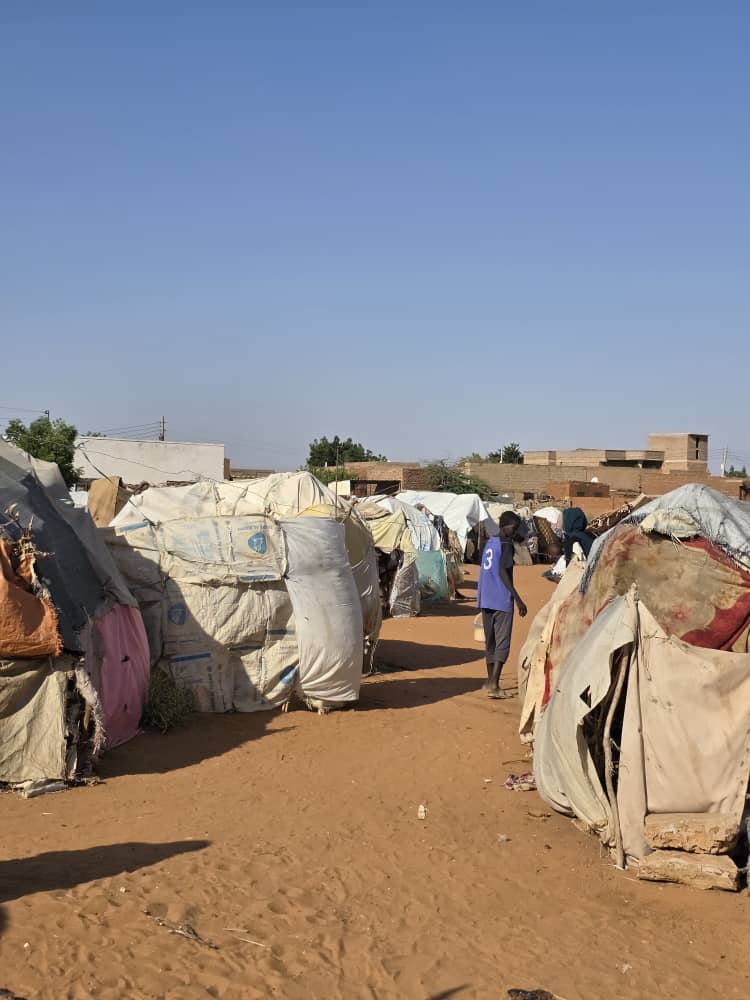
It is our belief that the rural nature of North Kordofan and the isolation of the region have exposed its population, particularly women and children, to significant violations. Crimes of CRSV experienced by communities in Barah and other parts of North Kordofan reflect the ongoing war against women, girls, and the Sudanese people as a whole.
We therefore call for the international community to provide immediate support to women, children, civilian more broadly and victims of sexual violence who are directly impacted by the violence in Barah and other parts of North Kordofan. With the vast scale of sexual violence being committed, we also call for an increase in the provision of protection, sexual and reproductive health services, and psychosocial support for survivors. This support must also extend to grassroots civil society organizations and human rights defenders supporting displaced communities who have fled from Barah to El Obeid in large numbers to escape the RSF’s campaign of terror.
We further call for existing international and regional human rights mechanisms, such as the African Union and United Nations Fact-Finding Missions on Sudan, to dedicate specific resources towards the documentation of these atrocities taking place in Barah and across North Kordofan.
The people of North Kordofan are enduring horrors no community should face. Silence and neglect from international and regional actors only deepen their abandonment, granting perpetrators the space to continue their crimes unchecked.