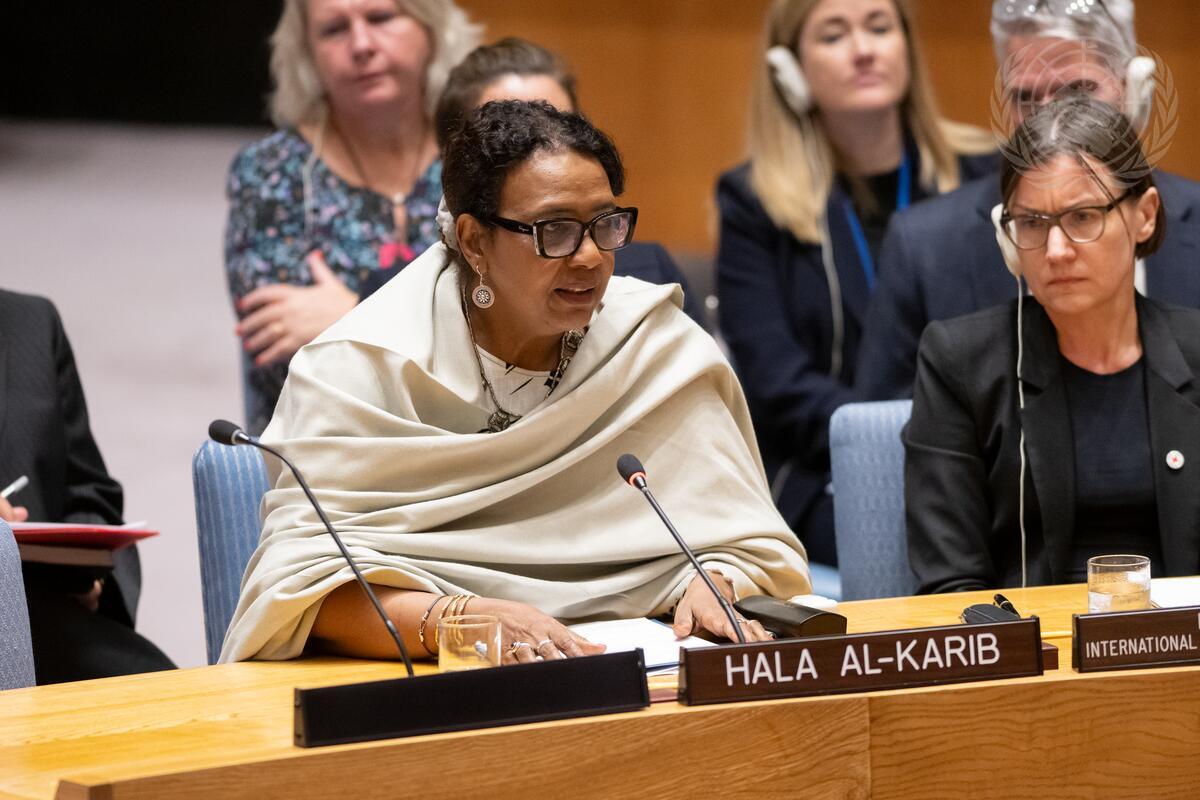
Statement by Ms. Hala Al Karib at the UN Security Council Open Debate on Women, Peace and Security

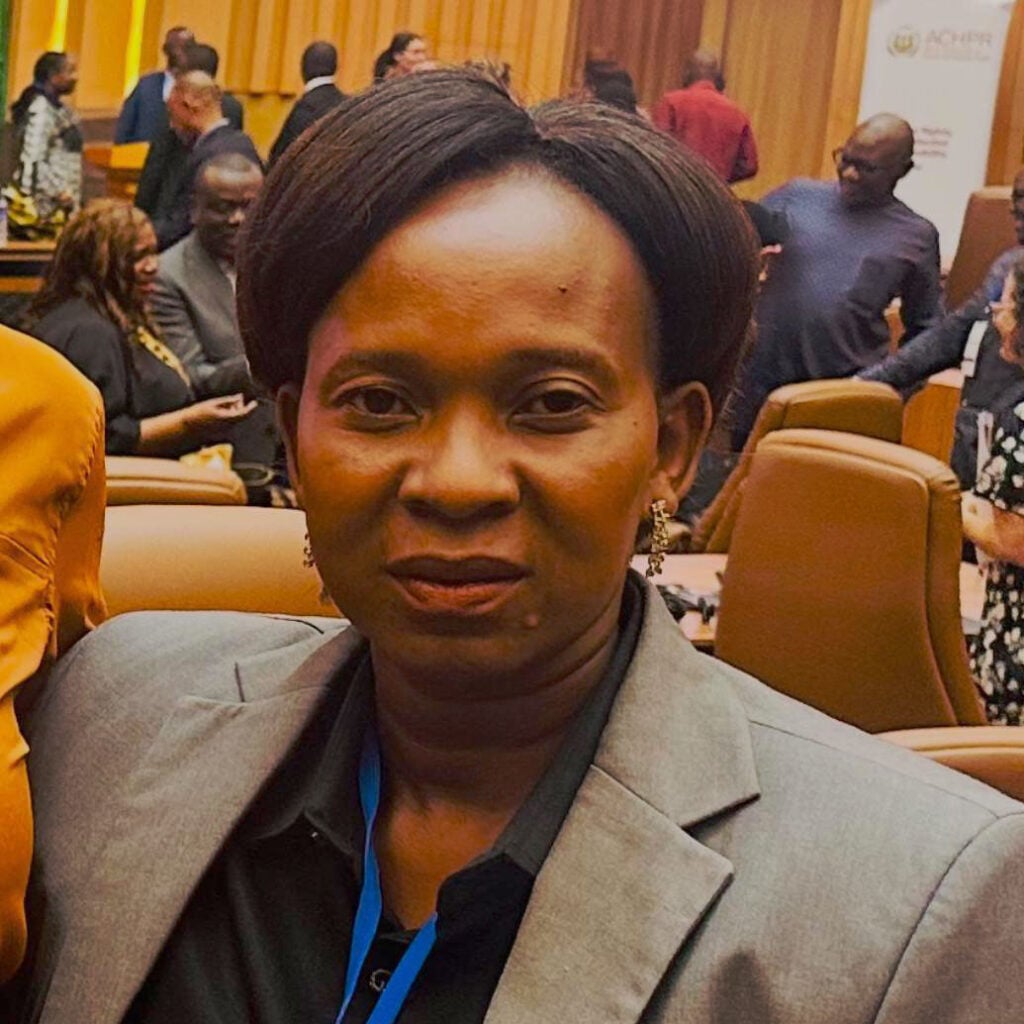
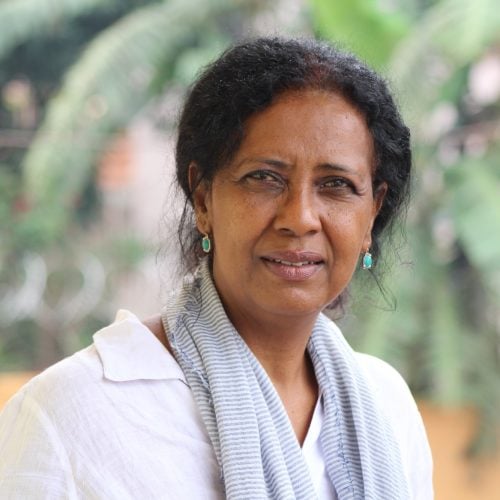
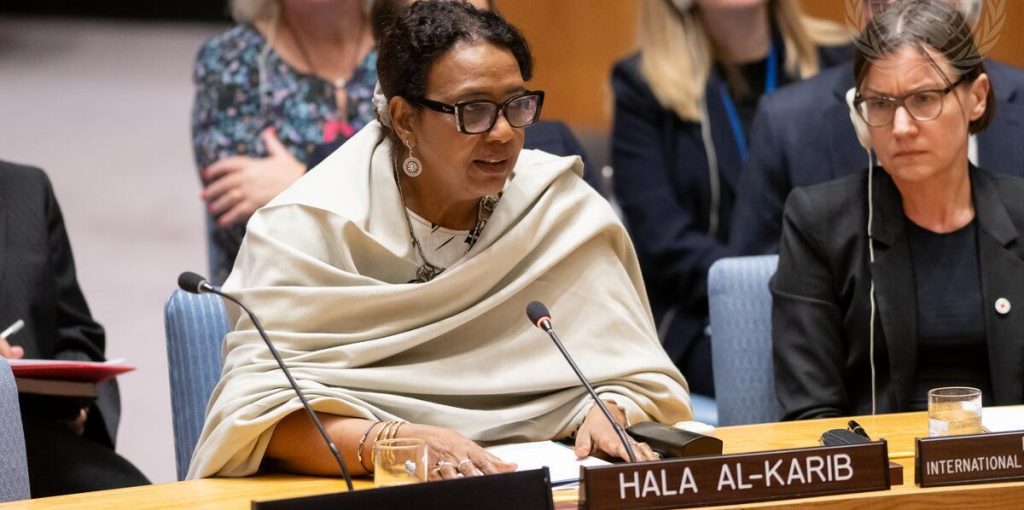
Hala Al-Karib, Regional Director of the Strategic Initiative for Women in the Horn of Africa, briefs the Security Council meeting on women and peace and security, with a focus on women’s participation in international peace and security: from theory to practice.

This statement was made by Ms. Hala Al Karib, Regional Director of the Strategic Initiative for Women in the Horn of Africa (SIHA), at the United Nations Security Council Open Debate on Women, Peace and Security.

President, Excellencies, civil society colleagues,

Thank you for the opportunity to brief you today. I am Hala Al Karib, Regional Director of the Strategic Initiative for Women in the Horn of Africa (SIHA), a network of about 100 women’s organizations across the region. Today’s open debate on women, peace, and security (WPS) is an opportunity to reflect on the urgency of this agenda and why women’s rights must be central to addressing any conflict or crisis. Sadly, my country, Sudan, starkly illustrates the consequences of failing to do so.

The current conflict in Sudan is a result of decades of violence against civilians, violence that has impacted nearly every aspect of women’s lives. During this time, mass atrocities, including sexual violence, rape, and other forms of gender-based violence, have been used against my people. These atrocities took place under former president Omar al-Bashir, who led a militarized regime reliant on the Sudan Armed Forces (SAF) and armed militias like the Janjaweed in Darfur, which later became the Rapid Support Forces (RSF).[1]

The mass protests led by women and youth that began in December 2018 and led to the fall of al-Bashir were, in part, a direct response to how women’s bodies and voices have been systematically under attack for over 30 years.[2] In 2019, this Council heard from Sudanese protestor Alaa Salah, whose voice was one of many calling for freedom, peace and justice.[3] Al-Bashir was forced out of office by this women-led movement. The transition between August 2019 and October 2021 saw popular support for inclusive civilian governance, increased attention to women’s rights and space for women’s civil society, adoption of a National Action Plan on WPS, and support for possible CEDAW ratification.[4]

The transition, however, was short-lived, and further change did not come. Violence continued against civilians in Darfur and the women and youth protestors across the country.[5] Transition authorities failed to address systemic violence, discrimination against women, and the impunity that has plagued Sudan. Perpetrators, in some instances, were appointed to top government positions.[6] The subsequent military takeover illustrates how only paying lip service to the WPS agenda, without insisting on women’s rights and women’s meaningful participation in peace and political processes, is not enough to overcome the repressive patriarchal status quo.[7]

War erupted again in April, this time reaching Khartoum. The gendered nature of the conflict became clear mere hours after the fighting began.[8] The first case of gang rape was reported at noon on April 15, inside a woman’s home in Khartoum. Alerted by her screams, neighbors started gathering, and the perpetrators, identified as RSF soldiers, quickly fled. The same day, two other women were gang-raped inside their homes in the same area.[9] From that day on, reports of sexual violence and kidnapping flooded human rights and women’s organizations. Women were subject to brutal atrocities, torture and trafficking by the RSF in greater Khartoum and Nyala in South Darfur.[10] The RSF’s brutality was in full display in El Geneina city in West Darfur, where they raped women from Masalit and other native African tribes in front of their families, whom they then killed.[11] More than 4 million women and girls are now at risk of sexual violence in Sudan and countless others have been slaughtered.[12]

Both the SAF and RSF have committed serious violations of international human rights and humanitarian law. While calling on both parties to end such acts, UN experts have expressed concern at consistent reports of widespread violations by the RSF, including subjecting women and girls to enforced disappearance, sexual assault, exploitation and slavery, forced work, and detention in inhuman or degrading conditions.[13] Fear of stigma and reprisals means that we do not even know the full scale of violations.[14] This pattern of widespread, ethnically motivated attacks, including sexual violence, could amount to war crimes and crimes against humanity.[15] In my view, the targeted attacks on specific communities in El Geneina also poses a serious risk of genocide.

Life after experiencing violence and torture at the hands of the RSF is unbearable—a number of these women and girls have died by suicide.[16] Moreover, women’s access to health care, especially comprehensive sexual and reproductive health care, is limited, in part due to the lack of skilled medical service providers and attacks and occupation of hospitals.[17]

This war has also resulted in millions of women losing their livelihoods and savings, limiting access to food and essential health care.[18] Women and children are also the majority of the displaced and in dire need of humanitarian assistance.[19] Yet lack of funding, and denial of humanitarian access and security and administrative impediments imposed by the SAF, both pose serious challenges to reaching those in need.[20] Further, humanitarian delivery is rarely informed by women’s views, despite their prominent role in the response.[21]

The suffering of women in Sudan mirrors the suffering of women across Africa—we are being treated as collateral damage, rather than as agents of our own lives. The fundamental premise of the WPS agenda is that relegating women—and their rights—to the margins of decision-making further entrenches women’s exclusion and prolongs violence. This must change now.

I therefore urge the Security Council and its members to do the following:

  • Demand an immediate cessation of hostilities and the adoption of a comprehensive ceasefire in Sudan that will end all violence targeting civilians, ensure the safe passage of civilians, and halt the destruction of critical civilian infrastructure.
  • Reiterate that the full, equal, meaningful, and safe participation of Sudanese women and civil society is critical to any de-escalation efforts or building future peace, and further, all efforts must place respect for human rights at its center. We repeat our demand for the meaningful representation of women, including feminist movements, at 50%, at all levels, from beginning to end.[22] We further call on the UN to ensure women’s equal and direct representation in any peace processes it supports.
  • Call on all parties to ensure safe and unhindered humanitarian access in line with international law. Urgently fund the Humanitarian Response Plan and the Regional Refugee Response Plan. Direct more resources to local civil society, including women’s groups.
  • Pursue accountability for war crimes and crimes against humanity by calling for, and/or initiating independent and impartial investigations based on the principle of universal jurisdiction. Hold all parties accountable for any acts of sexual violence, and strengthen the existing sanctions regime to include sexual and gender-based violence as a stand-alone designation criteria.
  • Update and strengthen the mandate of the United Nations Integrated Transition Assistance Mission in Sudan (UNITAMS) so that the mission is directed to take all possible actions to support protection of civilians and human rights, maintain all existing WPS-related provisions, and meaningfully consult with civil society.
  • Condemn any threats or attacks against women human rights defenders and peace activists, and remove any restrictions on civic space or their right to continue their essential work.[23]

Excellencies,

The current conflict in Sudan is a result of the failure to uphold women’s rights and women’s participation in shaping my country’s future. I urge the international community not to repeat this mistake in other crises, where you have the power to do things differently. Stand with courageous women human rights defenders in crises around the world and show them you will not abandon them. Show solidarity with Palestinian women, who have suffered the world’s longest occupation, and today, an escalating crisis in Gaza, and support their calls for an immediate ceasefire. Support the calls of Afghan women to hold the Taliban accountable for gender apartheid. Show the women of Ethiopia, Myanmar, Somalia, South Sudan, Syria, Ukraine, Yemen and so many other conflicts around the globe that their rights are not dispensable. And demand that the UN take a principled stand by ensuring that women’s rights, and women’s full, equal and meaningful participation are always a fundamental part of any peace process it supports. Uphold the central principle of the WPS agenda, which is that there can be no peace without protection of women’s rights.

Thank you.


Photo credit: UN Photo/Manuel Elías

[1] By April 15 the war has erupted, and Sudan Armed forces declared RSF as a rebel militia. See Report of the International Commission of Inquiry on Darfur to the United Nations Secretary-General, (Jan. 25, 2005), https://www2.ohchr.org/english/darfur.htm.

Report of the Secretary-General, U.N. Doc. S/2009/362 (Aug. 20, 2009).

Human Rights Watch, “Good Girls Don’t Protest” Repression and Abuse of Women Human Rights Defenders, Activists, and Protesters in Sudan,” (2016), https://www.hrw.org/sites/default/files/report_pdf/sudan0316web.pdf.

OHCHR, “UN experts alarmed by reported widespread use of rape and sexual violence against women and girls by RSF in Sudan,” August 17, 2023, https://www.ohchr.org/en/press-releases/2023/08/un-experts-alarmed-reported-widespread-use-rape-and-sexual-violence-against.

[2] See “Shock in Sudan over remarks attributed to Bashir on rape of women in Darfur,” Sudan Tribune, March 30, 2010, https://sudantribune.com/article34387/.

SIHA Network & The Redress Trust, “Criminalisation of Women in Sudan: A Need for Fundamental Reform,” November 2017, https://redress.org/publication/criminalisation-of-women-in-sudan/.

Mia Archambault, “A Women’s Revolution in Sudan,” The McGil International Review, April 19, 2022, https://www.mironline.ca/a-womens-revolution-in-sudan/.

[3] “Statement by Ms. Alaa Salah at the UN Security Council Open Debate on Women, Peace and Security,” NGO Working Group on Women, Peace and Security, October 29, 2019, https://www.womenpeacesecurity.org/resource/statement-unsc-wps-open-debate-october-2019/.

[4] CIVICUS, “Civic Space on a Downward Spiral,” (2020), https://findings2020.monitor.civicus.org/downward-spiral.html.

“Sudan,” PeaceWomen, accessed October 19, 2023, https://1325naps.peacewomen.org/index.php/sudan-nap/.

See “Sudan’s cabinet approves CEDAW ratification,” Sudan Tribune, April 27, 2021, https://sudantribune.com/article67601/.

“Activists disappointed as Sudan government votes to ratify women’s rights convention with reservations,” The New Arab, April 30, 2021, https://www.newarab.com/news/sudan-votes-ratify-womens-rights-convention-exceptions.

[5] See “Sudan: Security forces kill protesters in Eastern Sudan,” Human Rights Watch, December 21, 2020, https://www.hrw.org/news/2020/12/21/sudan-security-forces-kill-protesters-eastern-sudan.

“Sudan: Lethal force used against protesters,” Human Rights Watch, May 19, 2021, https://www.hrw.org/news/2021/05/19/sudan-lethal-force-used-against-protesters.

[6] Rogaia Abusharaf, “The Women of Sudan Will Not Accept Setbacks,” Brookings (2022), https://www.brookings.edu/articles/the-women-of-sudan-will-not-accept-setbacks/.

[7] Katie Whipkey, “Sudan – Khartoum, Al Gezira, East Darfur, South Darfur Rapid Gender Analysis,” October 2023, CARE, https://careevaluations.org/wp-content/uploads/RGA-Sudan-October-2023.pdf.

[8] OHCHR, “UN experts alarmed by reported widespread use of rape and sexual violence against women and girls by RSF in Sudan.”

[9] Documentation by SIHA Network on April 15, 2023.

[10] Documentation by SIHA Network as of October 16, 2023.

Further see: Maggie Michael & Ryan Mcneill, “How Arab fighters carried out a rolling ethnic massacre in Sudan,” Reuters, September 22, 2023, https://www.reuters.com/investigates/special-report/sudan-politics-darfur/.

“Darfur: Rapid Support Forces, allied militias rape dozens,” Human Rights Watch, August 17, 2023, https://www.hrw.org/news/2023/08/17/darfur-rapid-support-forces-allied-militias-rape-dozens.

“Women speak out about sexual violence in Sudan fighting,” AlJazeera, May 16, 2023, https://www.aljazeera.com/news/2023/5/16/women-speak-out-online-about-reports-of-sexual-violence-in-sudan.

[11] “Darfur: Rapid Support Forces, allied militias rape dozens,” Human Rights Watch.

 “Sudan: Attacks based on ethnicity may amount to war crimes,” UN News, June 13, 2023, https://news.un.org/en/story/2023/06/1137647

[12] Dr. Ahmed Al-Mandhari & Dr. Matshidiso Moeti, “Three months of violence in Sudan: Health hanging in the balance,” World Health Organization, July 24, 2023, https://www.emro.who.int/media/news/three-months-of-violence-in-sudan-health-hanging-in-the-balance.html.

[13] OHCHR, “UN experts alarmed by reported widespread use of rape and sexual violence against women and girls by RSF in Sudan.”

[14] Katie Whipkey, “Sudan – Khartoum, Al Gezira, East Darfur, South Darfur Rapid Gender Analysis.”

Report of the Secretary-General, U.N. Doc. S/2023/413 (July 6, 2023).

Fred Harter, “Women in Sudan facing a ‘tragedy’ of sexual violence as rape cases rise,” The Guardian, August 29, 2023, https://www.theguardian.com/global-development/2023/aug/29/women-in-sudan-facing-a-tragedy-of-sexual-violence-as-cases-rise.

[15]  “Sudan: Attacks based on ethnicity may amount to war crimes,” UN News.

Amnesty International, “‘Death Came to Our Home’: War Crimes and Civilian Suffering in Sudan” (2023), https://www.amnesty.org/en/documents/afr54/7037/2023/en/.

[16] Documentation by SIHA Network as of October 16, 2023.

[17] See “Khartoum: Women are not collateral damage! Perpetrators must be held accountable for rampant sexual violence in Sudan’s capital,” SIHA Network, October 4, 2023, https://sihanet.org/khartoum-women-are-not-collateral-damage-perpetrators-must-be-held-accountable-for-rampant-sexual-violence-in-sudans-capital/.

UNFPA, Sudan Emergency Situation Report No. 1, May 2023, https://www.unfpa.org/sites/default/files/resource-pdf/UNFPA%20-%20Sudan%20Emergency%20Situation%20Report%20No.1.pdf.

“Urging more aid, solidarity and attention to Sudan crisis,” Norwegian Refugee Council, September 13, 2023, https://www.nrc.no/news/2023/september/sudan-crisis-need-for-more-aid/.

WHO, “Sudan: Women and girls hit hard by attacks on health,” Africa Renewal, June 21, 2023, https://www.un.org/africarenewal/magazine/june-2023/sudan-women-and-girls-hit-hard-attacks-health.

[18] Katie Whipkey, “Sudan – Khartoum, Al Gezira, East Darfur, South Darfur Rapid Gender Analysis.”

Jacob Goldberg & Haydar Abdelkarim Ibrahim, “Sudanese aid workers face hundreds of job losses,” The New Humanitarian, August 1, 2023, https://www.thenewhumanitarian.org/news/2023/08/01/exclusive-sudanese-aid-workers-face-hundreds-job-losses.

UN Women, “Initial Rapid Gender Assessment Sudan” (2023), https://africa.unwomen.org/sites/default/files/2023-08/initial_rapid_gender_assessment_in_sudan.pdf.

“WHO nutrition interventions help save the lives of malnourished Sudanese children,” World Health Organization, August 16, 2023, https://www.emro.who.int/sdn/sudan-news/who-nutrition-interventions-help-save-the-lives-of-malnourished-sudanese-children.html

[19] Katie Whipkey, “Sudan – Khartoum, Al Gezira, East Darfur, South Darfur Rapid Gender Analysis.”

UNHCR, Sudan Situation – UNHCR External Update #30 – 9 October 2023, October 2023, https://data.unhcr.org/en/documents/details/103995.

[20] “Sudan: ‘Civilians need life-saving assistance now,’ says UN relief chief,” UN News, August 29, 2023, https://news.un.org/en/story/2023/08/1140197.

UNOCHA, Sudan Humanitarian Update (22 September 2023), September 2023, https://reports.unocha.org/en/country/sudan/card/2yKgfZBxFP/.

[21] Katie Whipkey, “Sudan – Khartoum, Al Gezira, East Darfur, South Darfur Rapid Gender Analysis.”

UN Women, “Initial Rapid Gender Assessment Sudan.”

Katie Whipkey, “Gender Analysis in Sudan: Exploring Gender Dimensions of Humanitarian Action and Women’s Voice and Leadership in East Darfur, Gadarif, Kassala, South Darfur, and South Kordofan,” April 2023, CARE, https://careevaluations.org/wp-content/uploads/Gender-Analysis-in-Sudan-April-2023.pdf.

“Women are leading the humanitarian response in Sudan,” UN Women, July 5, 2023, https://www.unwomen.org/en/news-stories/feature-story/2023/07/women-are-leading-the-humanitarian-response-in-sudan

[22] “Statement by Ms. Alaa Salah at the UN Security Council Open Debate on Women, Peace and Security,” NGO Working Group on Women, Peace and Security.

[23] “Sudanese activists detained following women-led anti-war protest,” Sudan Tribune, August 30, 2023, https://sudantribune.com/article276679/.
Share the Post:

Ayan Mohamed Djama

Legal and Social Consultant

Ayan Mohamed Djama is a Legal and Social Consultant with strong expertise in judicial, port, and associative matters, and solid experience in designing, managing, and evaluating high-impact social, legal, and educational programmes. Internationally trained in Senegal, Kenya, France, and the United States, she supports NGOs, institutions, and private sector actors while leading community initiatives focused on the training, empowerment, and leadership of young women, girls, and youth to foster more just, inclusive, and resilient societies.

Bibiana Joseph Awad

SOUTH SUDAN PROJECTS OFFICER

Bibiana Joseph Awad holds a Master’s degree in Education in Emergency from the University of Juba. She is an activist and the Projects Officer at the SIHA Network in South Sudan, where she oversees critical initiatives focused on supporting survivors of gender-based violence (GBV). Bibiana manages the One Stop Centre at Wau Teaching Hospital, a facility that provides comprehensive services to GBV survivors, including medical care, psychosocial support, and legal assistance. She works closely with local communities, healthcare providers, legal institutions, and women’s coalitions to address the urgent challenges of GBV in South Sudan.

Through the One Stop Centre, Bibiana has strengthened the capacity of service providers and protection groups while advocating for the rights of women and girls affected by violence. In her free time, she enjoys reading books, listening to music, and engaging on social media.

Jackie Bless Pinyoloya

UGANDA PROJECT OFFICER

Jackie Bless Pinyoloya is the Project Officer at SIHA Network in Uganda; where she passionately champions feminist principles and gender justice. With a solid foundation in gender issues, advocacy, and economic empowerment for women, Jackie brings a wealth of expertise, particularly in the informal sector.

Currently pursuing a Master’s Degree in Gender Studies at Makerere University School of Women and Gender Studies, Jackie is committed to advancing her knowledge and understanding of gender dynamics. She also holds a Bachelor of Arts (BA) in Social Sciences with a major in Gender Studies from Makerere University Kampala, reflecting her dedication to exploring and addressing social inequalities.

In her role, Jackie combines her academic background with practical experience, contributing significantly to the organization’s mission of promoting gender equality and empowerment. Her dedication to feminist principles is evident in her work towards creating positive change in the lives of women in Arua and beyond.

Adla Abubker

SUDAN PROTECTION & EMERGENCY RESPONSE COORDINATOR

Adla Abubker is a women’s rights activist from Sudan with more than 15 years’ experience of working toward gender equality in Sudan. She holds a Bachelor’s Degree in Rural Development from Ahfad University for Women in Sudan. Her areas of expertise include working with grassroots communities, women’s economic empowerment, gender activism and negotiating with men to change inequitable attitudes.

Currently, Ms Abubker a Program Officer with SIHA in Sudan, where she oversees SIHA’s work on building women movement, and women in Islam, reforming gender-discriminatory legislation, and engaging youth on issues of gender, religion, and race. She believes that the link between religion and law is in dire need of reform, and that discriminatory interpretations of Islam are a root cause of violence against women in Sudan.

Neimat Abas

SUDAN COUNTRY COORDINATOR

Neimat Abas brings over ten years of experience in the nonprofit sector. She holds a bachelor’s degree in law from Juba University and a master’s degree in Gender and Governance from Ahfad University for Women in Sudan, where her research focused on women’s political participation at the local level. Neimat is currently the Coordinator for the SIHA Network in Sudan.

Before joining SIHA Network, Neimat worked with the Arab Association for Constitutional Law in Tunisia, Oxfam America in Sudan, and Women for Women International in Washington, DC. She has played a key role in the development, implementation, and ongoing enhancement of high-quality women’s empowerment programs in eight conflict-affected countries.

Neimat has also been actively involved in the leadership of the Students Association and various political and civil society organizations for several years. As a result, she has developed strong skills in working with university students to organize political campaigns, raise public awareness about civil rights, and build democratic organizations and institutions.

Yousef Ahmed Abdi (Timacade)

SOMALI REGION PROGRAMME COORDINATOR

Yousef Ahmed Abdi (Timacade) is a Lawyer and Legal Analyst holding a Master’s Degree in Law and Executive Management. Over the past decade, he has consistently demonstrated dedication through his work with national and international non-governmental organizations, focusing on critical areas such as human rights, program management, and research within Somalia and Somaliland.

Currently serving as the Somali Region Programme Coordinator for the SIHA Network, Yousef embodies not only legal prowess but also a deep commitment to women’s human rights advocacy. He is also known for his prolific blogging and commentary, dedicated to raising awareness about human rights issues. His unwavering dedication to gender equality propels him into the role of advocate for marginalized communities, striving to amplify their voices and effect transformative change. Yousef specializes in championing egalitarian ideals and advancing progressive reforms in the Somali region, with a particular emphasis on achieving gender parity.

Yousef is a valued member of the editorial board of the Women in Islam journal. His numerous writings delve into the intricacies of human rights, particularly those affecting Muslim women.

Zemdena Abebe

ETHIOPIA PROGRAM COORDINATOR

Zemdena Abebe is the founder of Afri-colors, a social-enterprise startup, curating made-in-Africa products, crafted by women. As a Pan-Africanist -womanist- she refuses to be erased and amplifies the voices of women through her research, writing, multimedia -storytelling, organizing, and activism: disrupting intersecting oppressive systems. Her social justice advocacy work started in high school; Chaired Addis Ababa Girls’ Forum– which facilitated discussions amongst girls laying the foundation for legislative intervention against sexual abuse in Ethiopia. As the first women president of Addis Ababa University Students’ Union: she reaffirmed the need and organized various youth-led movements despite the hostile university context. One of the 22 young African women selected as part of the writing for social change workshop organized by AWDF and FEMRITE in Kampala, Uganda. An alumnus of the prestigious Mandela Washington Fellowship.

Amongst her multilayered affiliations, she sits on the advisory council of ActionAid Ethiopia. Previously, she worked with UNICEF Ethiopia and consulted many other local and international organizations such as the EU, FEMNET.HBF, FHS, TRUST AFRICA, etc. Volunteered for the African Union (African Academy of languages in Bamako, Mali: as a research and Marketing Assistant. Zemdena is a graduate of Political Science & International Relations, who often likes to dance her way to freedom. Asserting the notion that African women, girls & non-binary folks have the right to a life free of heteronormative -capitalist -anti-black -patriarchal terror based on their overlapping otherness: her work reaffirms that human progress is achieved through imagining a better world through the realization of a transnational strong justice-centered human kinship. Zemdena’s writings of resistance can be found on Pambazuka, Africa is a Country, HBF, African Feminism et al

Ramatoulie Isatou Jallow

REGIONAL ADVOCACY & RESEARCH OFFICER

Ramatoulie Isatou Jallow (L.L.M Graduate in National Security Law, Georgetown, 2023 and in Human Rights and Democratization in Africa University of Pretoria, Centre for Human Rights, 2021) is a peace practitioner and attorney from Botswana and the Gambia, specializing in human rights, democratization, national security, conflict prevention and women, peace and security. In her previous professional experiences, she worked for the African Union, the United States Institute for Peace, and the Georgetown Center for National Security. Immediately before joining SIHA Network, Ramatoulie was also the Mary Frances Berry Senior Fellow at the Center for Ethics and Rule of Law, affiliated with the Annenberg Public Policy Center at the University of Pennsylvania. Here she led research on the military coups in the Sahel and West African region, civic education in the military and indefinite detention.

Her publications include Covid- 19 and Intrastate Armed Conflicts in Africa, Beyond the Outbreak: Creating a Sustainable Peace Culture in Botswana and Intergenerational Peacebuilding Among Women: Leveraging the Power of Collaboration, which she co-authored.

Outside of work, Ramatoulie is an avid reader, lover of poetry, culture, art and music.

Martin Maate Bwambale

REGIONAL HUMAN RESOURCE OFFICER

Martin Maate Bwambale is the Regional Human Resource Officer at SIHA Network, with over 8 years of progressive HR experience in both the private and not-for-profit sectors across the Greater Horn of Africa. As a member of the Human Resource Managers Association of Uganda, Martin is passionate about creating human capital-centric environments that foster a positive employee experience and contribute to the achievement of organizational goals. He is dedicated to helping individuals unlock their potential and become better versions of themselves by implementing sound HR practices and policies.

One of Martin’s key accomplishments includes serving as the Chairperson of the HR COVID-19 SOP Taskforce Committee, which was established by the Uganda INGO Country Directors Forum. He played a vital role in drafting standard operating procedures for workplace COVID-19 prevention, response, and control, as well as work-from-home policies, which were adopted in 2022.

Martin holds a Bachelor of Business Administration in Production and Operations from Bugema University and is currently pursuing a Master of Business Administration in Human Resource Management at Cavendish University.

Outside of his professional life, Martin enjoys playing soccer with C Club, a corporate soccer team in Kampala, Uganda, for health, leisure, and networking. He is also passionate about singing and traveling.

REGIONAL SENIOR FINANCE OFFICER

REGIONAL SENIOR FINANCE OFFICER

Sauda Kayaga is SIHA Network’s Regional Senior Finance Officer. A trained Statistician, she holds a bachelor’s degree in Statistics from Makerere University. Sauda has 2 years of experience in statistical research and analysis, 3 years in cashiering and banking, and over 5 years in project financial management. She has a strong aptitude for working with complex financial modelling and analysis and a deep understanding of financial systems and procedures. Sauda is highly passionate about her work and brings a keen attention to detail and expertise to every aspect of her role.

Justine Namuyanja

REGIONAL PROCUREMENT & COMPLIANCE OFFICER

Justine Namuyanja is the Procurement & Compliance Officer at SIHA Network, bringing over a decade of experience to the organization. Throughout her career at SIHA, she has made significant contributions to the finance, procurement, administration, human resources, and compliance sectors. Justine has consistently demonstrated her ability to manage procurement processes efficiently while ensuring compliance with both internal and external standards. Her expertise also includes optimizing operational workflows and improving the transparency and efficiency of financial systems, all of which are essential to the success of SIHA’s work. Justine’s role is also critical in upholding the integrity and accountability of SIHA’s operations.

Sandra Nassali

REGIONAL ADVOCACY & COMMUNICATIONS COORDINATOR

Sandra is an accomplished communication professional passionate about building knowledge and conducting strategic advocacy initiatives that advance the rights of women and girls.

In addition to feminist activism works, she has, in the last 15 years, pursued her career ambitions in areas of climate change mitigation and adaptation, agriculture and food security, social enterprise development, public health, as well as ICT for Development.

Sandra holds a Master of Arts in Development Journalism and Communication (Strategic & Corporate Communication Management major), plus a Bachelor of Mass Communication (Public Relations & Marketing major) from Makerere University in Kampala Uganda.

Furthermore, she holds a Post Graduate Diploma in ICT for Development and Social Good from the Spanish Telecentres and ICT Spaces Academy in Spain.

Twitter: @SandraNassali

Shinaz Rehema Ali-Zaids

REGIONAL GRANTS AND CAPACITY BUILDING COORDINATOR

Shinaz Rehema Ali-Zaids (She/Her) is a passionate and dedicated advocate for social justice. Her professional journey has focused on women’s rights, marginalized communities, natural resource governance, and climate change. With over a decade of experience in the women’s funding sector, she has offered strategic guidance to international organizations on community-driven, participatory grantmaking.

Deeply committed to her local Nubian community, Shinaz actively engages in local initiatives and serves on various boards to amplify the voices of marginalized groups. Her work addressing human rights gaps at the grassroots level has shaped her passion for strengthening social systems that protect the rights of vulnerable populations. A strong advocate for wellness, Shinaz prioritizes self-care and collective care within teams, recognizing that sustainable social change is rooted in both individual and collective well-being.

Throughout her career, Shinaz has collaborated closely with women to develop long-term, sustainable solutions to their most pressing needs. Her expertise in movement building has been key to expanding programs across diverse regions of Africa. In her current role as the Regional Grants and Capacity Building Coordinator, she supports SIHA Network’s country teams in executing impactful work and scaling their initiatives. Shinaz also provides critical support to women and communities in conflict and post-conflict settings, ensuring their safety, security, and ongoing activism in advancing women’s rights.

Mercy Apiyo Owuor

REGIONAL COORDINATOR: MONITORING, EVALUATION & LEARNING

Mercy is a Public Health Professional with a keen interest in gender equality, equity, and social inclusion. She has over 15 years of experience in programme design and management, as well as monitoring, learning, and evaluation.

This is expertise Mercy has gathered by managing and coordinating multiple projects while working with government entities and civil society organisations at the grassroots, national, and international levels.

Mercy holds a Master of Community Health and Development from the Great Lakes University of Kisumu, and a Bachelor’s Degree in Sociology from Moi University in Eldoret Kenya.

Twitter: @MercyOwuor2

Mayada Eltayeb

HEAD OF FINANCE & ADMINISTRATION

Mayada Eltayeb is the Head of Finance and Administration at SIHA Network. She joined the organization in 2008 with over a decade of experience in finance and organizational management, leading SIHA’s strategic financial planning and resource management. Born in Sudan and raised in the United Arab Emirates, Mayada earned her bachelor’s degree in accounting from Ahfad University in Sudan in 2005.

Before joining SIHA, she had gained extensive experience working with various audit and accounting firms, refining her skills in financial analysis and reporting. Under her leadership, SIHA’s Finance and Administration division has strengthened financial processes and policies, ensuring compliance, transparency, and the effective allocation of resources. Mayada’s efforts have been pivotal in supporting the organization’s sustainability and operational excellence. She has also completed several specialized training courses in NGO financial management in Uganda and South Africa, further enhancing her expertise and leadership capabilities.

Faizat Badmus-Busari

REGIONAL PROGRAMME MANAGER

Faizat Badmus-Busari is the Regional Programme Manager at SIHA Network. With a strong background in program management and a Doctor of Juridical Science (SJD) degree from Emory University School of Law, she expertly navigates the crossroads of gender, law, religion, and social justice, serving marginalized communities, especially women and girls.

Before SIHA, Faizat held significant positions in international organizations like The Carter Center and various United Nations agencies. There, she managed projects ranging from grassroots efforts to global initiatives, focusing on gender equity, social inclusion, democracy, and human rights. At SIHA, she oversees the network’s regional programs, ensuring the mission and vision are effectively carried out across the Horn of Africa. Faizat brings her extensive gender-transformative, legal, and program management expertise to the role. Guided by a belief in collective action and intersectional feminism, Faizat collaborates with organizations and partners to promote women’s rights, peacebuilding, and social justice in the region.

Hala Al-Karib

REGIONAL DIRECTOR

Hala Al karib was born and raised in Sudan and later lived in Canada. She currently lives and works in Uganda. She has lived and worked in South Sudan, Kenya and Egypt as well the Eastern and Horn of Africa for over 20 years. Hala’s work specifically focuses on women and girls rights activism and social movement as well as refugees and displaced persons and minority community’s challenges. She has wide and comprehensive expertise on the Horn and Eastern Africa regions, as a civil society worker/activist, and social and gender research practitioner. Her educational background is on Human rights, women studies and Psychology. In addition to her work as the Regional Director of SIHA Network, she worked for various international and regional organizations/institutions among them; The College of Social & Economic Studies, Juba University in South Sudan where she worked as a Research Assistant; The sociology department at the American University in Cairo as an Assistant Researcher; Immigrant Women of Saskatchewan Inc. in Canada as the Program Director; Trocaire, an Irish Organization as Grant Officer based in Sudan. She has also worked as a consultant with various international and UN Humanitarian organizations, including; Goal Ireland, World University Services, Accord International and Concern International.

She is a regular contributor to many online and print media outlets. Her writing is focused on activism, women’s rights and social justice. Some of her recent articles are published in: Aljazeera, Open Democracy, Sudan Tribune The Pambazuka, the New Humanitarian and the East African Newspaper. She is the Editorial head of SIHA Journal – Women in Islam in the Horn of Africa (Arabic & English).

Twitter: @Halayalkarib

Kadra Omar

Kadra is a Social Worker from Djibouti currently working with the Ministry of the Promotion of Women & Family Welfare & Social Affairs- Djibouti. She is also a member of the Djiboutian Women’s Union. Kadra currently serves on the Program Advisory.

Dr. Lyn Ossome

Dr. Lyn Ossome is the Director of the Makerere Institute of Social Research (MISR), Makerere University. She received her PhD in Political Studies from Wits University. Her specializations and taught courses are in the fields of feminist political economy and feminist political theory, with particular research interests in land and agrarian studies, gendered labour, queer feminist histories and the political economy of gendered violence. She currently serves on the Program Advisory

Aluel Atem

Aluel Atem is a seasoned development economist, blogger, and African Feminist Activist hailing from South Sudan. With over eight years of dedicated experience, her primary focus has been on gender and conflict transformation. Currently serving as a Senior Program Officer at the United States Institute of Peace (USIP), Aluel holds the role of USIP’s In-country (Kenya) lead for the Border Security Training Program (BSTP). In addition to her role at USIP, Aluel is a co-founder of two women’s rights initiatives: Ma’ Mara Sakit Village and Crown the Woman-South Sudan, both based in South Sudan.

Rose Baryamutuma

Rose is a programme monitoring and evaluation expert with over 15 years of experience providing specialized services for program design, organization capacity assessments, facilitating training and M&E. She has also provided technical support to institutions to develop and cost strategic plans. Rose has broad research experience/evaluation in the areas of HIV and AIDS, Sexual and Reproductive Health. As GBV Focal Person she provides technical support to the GBV National TWG on general program and M&E specifically.

Kimberley Armstrong

Kimberley Armstrong holds a PhD in Anthropology from McGill University in Canada. Her research focused on transitional justice, conflict, and displacement in Northern Uganda, with previous studies on rural-to-urban migration of women in Senegal. She is currently working with the Ministry of Social Development and Poverty Reduction in Vancouver, British Columbia, Canada, as the Manager of Program Evaluation and Reporting. Prior to joining the Ministry, she served as SIHA Network’s Regional Programmes Manager for over six years.

Jemimah Naburri-Kaheru

Currently serving as the Association for Women’s Rights in Development [AWID]’s Deputy Director of Human Resources, is an accomplished international Human Rights [HR] strategist with a significant experience in the Horn of Africa region. With a background in Development Studies from Makerere University (Uganda) and an ongoing MBA in Human Resource Management, Jemimah is dedicated to continuous professional development. Her contributions to building high-performance workforces and her leadership in international HR make her an invaluable asset to any global enterprise. Additionally, Jemimah serves as the Program Advisor, supporting with operations at SIHA Network.

Abdifatah Hassan Ali

Abdifatah is a Somali human rights defender with extensive experience in advocacy within the civil society arena. He is the Founder of the Digital Shelter – a local initiative founded in March 2018 by activists who are passionate about the intersection between technology and human rights in Somalia with the aim of promoting digital safety, digital rights and inclusion and internet freedom in the growing digital civic space of Somalia. He holds a Masters Degree in Human rights. Currently works for the UN as a Human rights officer in Somalia

Guleid Ahmed Jama

​Guleid is an active human rights defender and an Attorney at law the Xaqdoon Law Firm​, based​ in Somaliland. He is the ​C​o-founder and former ​C​hairperson of Human Rights Center (HRC), a human rights advocacy organization ​also based in Somaliland. ​​Guleid currently serv​es​ as a Program Advisor.

Asmahan Hassen

Ms. Asmahan is one of the founders of SIHA, currently serving as Advisor to the SIHA Board. She is currently Chairperson of Nagaad Network in Somaliland. She has also served as Chairperson of the Somaliland Women’s Research and Action Group (SOWRAG). Asmahan is actively involved in the Somaliland women rights arena as a women human rights defender. Her tenure spans 23 years. She is a graduate of Arts and Humanities from the University of Khartoum.

Peace Twine Kyamureku

Peace Twine Kyamureku is the Executive Director of the Ruth Fund Uganda. She is a secondary school teacher by profession, holding a Master of Arts Degree from Makerere University and has trained in Gender, Human Rights and Civil Society Studies. She currently serves on the Advisory to the SIHA Board.

Saba Gebremedhin

Saba is currently the Executive Director of the Network of Ethiopian Women’s Associations (NEWA), a member organization of SIHA Network. Saba is a Lawyer in the Ethiopian Courts of Law by training and profession having served as a Special Prosecutor. She is also one of the founders of the Ethiopian Women Lawyers Association (EWLA). In her tenure, she has served as a Consultant at the IGAD Gender Unit and the African Union Women, Gender and Development Directorate (WGDD).

Kaltun Hassan

Ms. Kaltun is a Gender Expert and Women Rights Activist from Somaliland. She has served in a number of positions within civil society organizations advocating for, and working in women’s rights, gender equality, and peace-building. She serves on the Board of Directors of Women Advocacy and Progress organization (WAAPO). Kaltun was recently re-elected as the only woman on the Somaliland Electoral Commission.

Fadwo Hassan

Fadwo Hassan Jimale is a Somali woman rights activist with experience spanning 10 years in gender-mainstreaming and social protection of women and children in Somalia. I have Ten (10) years’ experience in excellence of general protection and development of gender mainstreaming. Her experience in GBV survivor work in Somalia has necessitated her participation in women’s movement-building work particularly with the women and Child Cluster in Somalia. Fadwo has represented SIHA in a number of national and regional spaces contributing to SIHA’s mandate of advocating for the acknowledgment of women rights in view of the lived realities of women and girls in the region.

Rigbe Gebrehewariat Hagos

Rigbe is a passionate women rights activist from Ethiopia, trained as a Lawyer and Social Worker, who has dedicated her career to advocating for people with disabilities, especially women. She works to spread awareness about people with disabilities and what they are able to achieve. She is the Co-founder and treasurer of Ethiopian Lawyers with Disabilities Association (ELDA), Co-founder and board chair of Setawit and a member of the United Nations Women Civil Society Advisory Group She is also a 2016 Mandela Washington Fellow. Rigbe sits on the Board of Directors of the Ethiopian Women Lawyers Association (EWLA) – a member of SIHA Network. She currently serves on the SIHA Board of Directors.

Zabib Loro Musa

Zabib Loro Musa is the Executive Director of Women for Justice and Equality (WOJE), a feminist advocacy organization dedicated to advancing and advocating for the rights of women in marginalized communities across South Sudan. At WOJE, she leads the organization’s efforts to implement the Women’s Peace and Security agenda in grassroots communities throughout South Sudan.

Keltun Qasim

Kaltun Qasim is the Director of Women’s Human Rights Education and Environment in Somaliland. Her organization works in different rural and urban centres in Somaliland and has been a member of SIHA for more than 10 years.

Lillian Byarugaba Adriko

Lilian Byarugaba Adriko is the CEO of FIDA-Uganda and is a very well known woman advocate and rights defender in the country playing a significant role in improving the status of women by promoting their socio-economic rights and justice and advancing gender equality within Uganda.

Omayma Elmardi

Ms. Omayma Amin Elmardi is the Director at the National Sudanese Women Association (NSWA) a member organisation of SIHA Network. She holds a Bachelors of Science from Cairo University – Khartoum branch, a Post-graduate Diploma in Development Studies and a Master of Science in Development Planning from the Development Studies and Research Institute (DSRI) University of Khartoum. Omayma currently serves as the Chairperson of the SIHA Board of Directors.